• Skip to primary navigation
  • Skip to main content
  • Skip to primary sidebar

Earth Wise

A look at our changing environment.

  • Home
  • About Earth Wise
  • Where to Listen
  • All Articles
  • Show Search
Hide Search
You are here: Home / Archives for federal lands

federal lands

Clean energy and jobs

October 30, 2025 By EarthWise Leave a Comment

The clean energy industry is creating lots of new jobs

America’s clean energy industry is unquestionably under attack by the Trump administration.  The administration is blocking renewable energy projects on federal lands, slashing clean tech tax credits, and putting in place new regulatory hurdles for solar and wind power and electric vehicles.  During the first half of the year, businesses cancelled $22 billion worth of clean energy projects, which would have created more than 16,000 jobs, ironically mostly in Republican areas.  Federal clean energy tax credits have generated billions of dollars in economic value annually, providing a strong return on investment for every federal dollar spent.

Last year, clean energy jobs grew three times faster than the rest of the economy.  The U.S. added nearly 100,000 jobs in solar, wind, batteries, energy efficiency, grid upgrades, biofuels, and electric cars.  In total, more than 3.5 million Americans hold jobs related to clean energy. 

Clean energy investments create substantial economic growth.  The clean energy transition creates opportunities in manufacturing, engineering, installation, and maintenance.  These new jobs far outweigh job losses in the fossil fuel sector.  Investments in clean energy had been projected to create massive numbers of new jobs and significantly boost the U.S. GDP by 2030, often providing new opportunities for rural communities.

Overall, clean energy has been one of the hottest and most promising job sectors in the country.  Now that clean energy job growth is at serious risk, so is the health of the overall economy.

**********

Web Links

More Americans Working in Clean Energy Than as Servers or Cashiers

Photo, posted July 28, 2025, courtesy of Bronx Community College via Flickr.

Earth Wise is a production of WAMC Northeast Public Radio
Good owls and bad owls

May 29, 2024 By EarthWise Leave a Comment

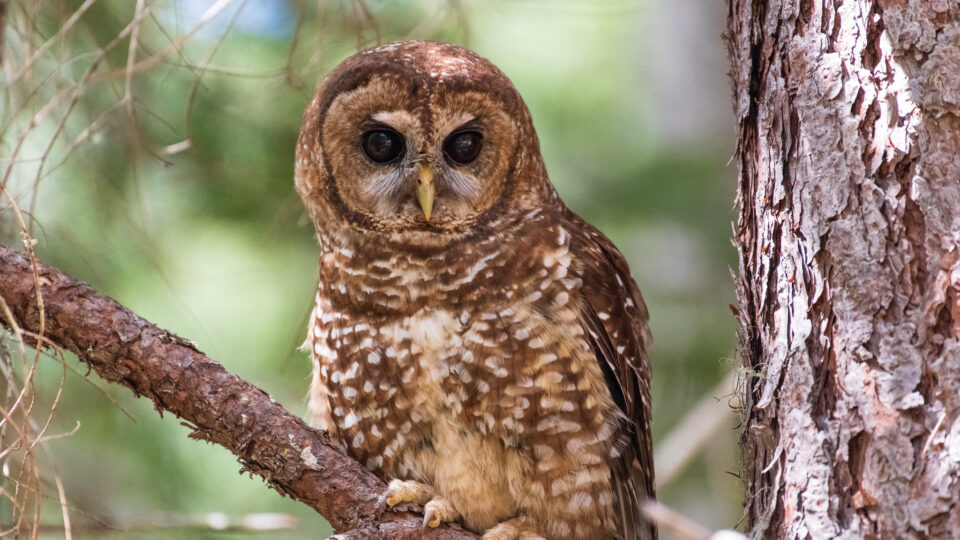
In the forests of the Pacific Northwest, spotted owls have been the subject of environmental concern for more than 30 years.  Over the past 20 years, northern spotted owl populations have declined by up to 80% as the birds have faced marginalized territories and increasing numbers of wildfires.  Only about 3,000 of them remain on federal lands.  Spotted owls are picky eaters and are not very adaptable.

The barred owl, a larger and more ornery species, has been moving in on spotted owl turf for 50 years, competing for food and space, and out-reproducing them and chasing them out of their nesting spots.

A last-ditch effort to rescue the northern spotted owl from possible extinction has been proposed by the U.S. Fish and Wildlife Service.  The plan would be to eradicate up to half a million barred owls over the next 30 years in Washington, Oregon, and Northern California.  The owls would be dispatched using cheap and efficient methods, such as shotguns.

The concept of killing off vast numbers of barred owls is awful, and nobody likes the idea.  However, other strategies have failed, and time is running out.  The only way to preserve the northern spotted owl is to protect and increase its habitat and have fewer barred owls.

To say that the proposed plan is controversial is a massive understatement.  A coalition of 75 wildlife and animal welfare organizations described it as a “colossally reckless action.”

A central issue in the debate is whether humans are responsible for this situation and should try to rectify it or, despite our desire to protect the spotted owl, we should just let nature take its course.

**********

Web Links

They Shoot Owls in California, Don’t They?

Photo, posted April 4, 2022, courtesy of Kyle Sullivan / BLM via Flickr.

Earth Wise is a production of WAMC Northeast Public Radio
Rewilding The American West | Earth Wise

September 14, 2022 By EarthWise Leave a Comment

Re-establishing ecosystems in the American West

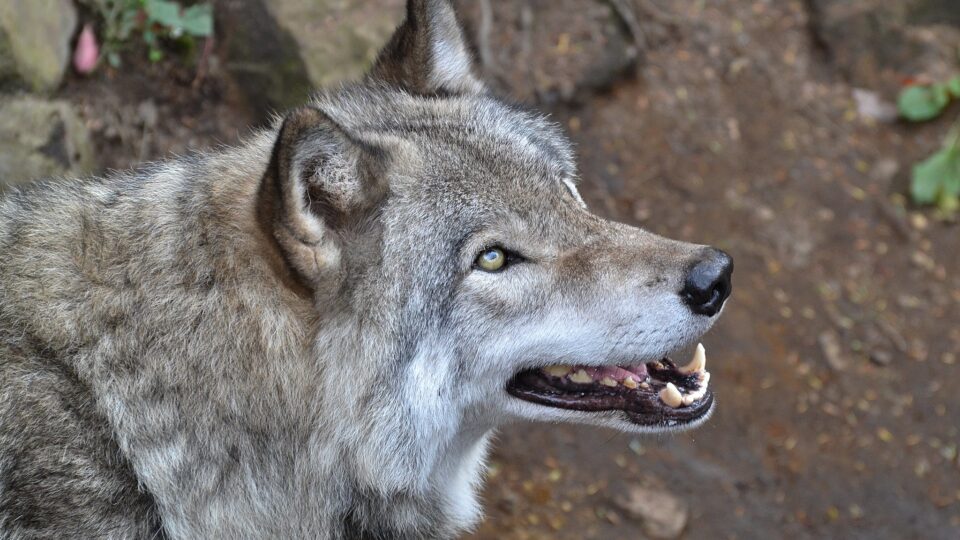
Oregon State University scientists have proposed a series of management changes for western federal lands aimed at re-establishing ecosystems there.  Their proposal would result in more gray wolves and beavers in nearly 200,000 square miles of federal lands in 11 states.

In each of those states, the researchers identified areas containing prime wolf habitat.  Gray wolves were hunted to near extinction in the West but have been gradually reintroduced in some areas starting in the 1990s.  Wolf restoration offers significant ecological benefits by helping to naturally control the population of grazing animals such as elk.  This in turn facilitates the regrowth of vegetation species such as aspen, which ultimately supports diverse plant and animal communities.

Beaver populations, which used to be robust across the West, declined roughly 90% after settler colonialism and are now nonexistent in many areas.  By felling trees and shrubs and constructing dams, beavers enrich fish habitat, increase water and settlement retention, maintain water flows during droughts, and increase carbon sequestration.

According to the researchers, the biggest threat to these western lands is livestock grazing, which has degraded ecosystems to a great extent.  They recommend the removal of grazing on about 30% of the federal lands being used for that purpose and instead would have rewilding efforts go on. 

The American West is going through a period of converging crises including extended drought and water scarcity, extreme heat waves, massive fires, and loss of biodiversity.  Rewilding is a way to reestablish long-standing ecosystems.

**********

Web Links

More wolves, beavers needed as part of improving western United States habitats, scientists say

Photo, posted October 1, 2020, courtesy of Tina DaPuglet via Flickr.

Earth Wise is a production of WAMC Northeast Public Radio.

Primary Sidebar

Recent Episodes

  • An uninsurable future
  • Clean energy and jobs
  • Insect declines in remote regions
  • Fossil fuel producing nations ignoring climate goals
  • Trouble for clownfishes

WAMC Northeast Public Radio

WAMC/Northeast Public Radio is a regional public radio network serving parts of seven northeastern states (more...)

Copyright © 2025 ·