• Skip to primary navigation
  • Skip to main content
  • Skip to primary sidebar

Earth Wise

A look at our changing environment.

  • Home
  • About Earth Wise
  • Where to Listen
  • All Articles
  • Show Search
Hide Search
You are here: Home / Archives for failure

failure

Self-healing concrete

June 25, 2025 By EarthWise Leave a Comment

Concrete is the most widely used building material on Earth.  It has a dangerous and costly flaw:  it cracks easily.  Cracks in concrete can lead to inconvenient damage or to catastrophic structural failures such as collapses of buildings, bridges, or highways.

Concrete is made by mixing crushed stone and sand with powdered clay and limestone and adding water.  The mixture hardens and once set becomes extremely strong.  However, natural forces like freeze-thaw cycles, drying shrinkage, and heavy loads can cause cracks.  Even very tiny cracks can allow liquids and gases to seep into embedded steel reinforcements causing corrosion and weakness. 

For over 30 years, researchers have investigated microbe-mediated self-healing concrete.  It involves introducing microbial healing agents into cracks and injecting nutrients for the healing agents to produce repair materials.  It is not a very practical solution.

Researchers at Texas A&M University have developed a technique inspired by the behavior of lichen systems. Their system, like lichen, uses a combination of cyanobacteria which turns air and sunlight into food, and filamentous fungi, which produces minerals that seal the cracks. 

In lab tests, the paired microbes were able to grow and produce crack-filling minerals even in challenging environments such as concrete.  If it is possible to produce concrete that can heal itself, it would significantly reduce maintenance costs, extend its longevity, and even protect lives through increased safety.

**********

Web Links

Cracking the Code: Deciphering How Concrete Can Heal Itself

Photo, posted May 21, 2009, courtesy of DesignMag via Flickr.

Earth Wise is a production of WAMC Northeast Public Radio

Thawing permafrost in the Arctic

February 18, 2025 By EarthWise Leave a Comment

Permafrost covers about a quarter of the landmass in the Northern Hemisphere.  It stores vast quantities of organic carbon in the form of dead plant matter.  As long as it stays frozen, it is no threat to the climate.  But as permafrost thaws, microorganisms start breaking down that plant matter and large amounts of carbon are released into the atmosphere in the form of carbon dioxide and methane.

Scientists estimate that there could be two and a half times as much carbon trapped in Arctic permafrost as there is in the atmosphere today.

Thawing permafrost poses various risks to the Arctic environment and the livelihoods of its people.  According to a new study led by researchers from the University of Vienna in Austria, Umeå University in Sweden, and the Technical University of Denmark, thawing permafrost threatens the way of life of up to three million people.

To identify these risks, the research team studied four Arctic regions in Norway, Greenland, Canada, and Russia between 2017 and 2023.  The research, which was recently published in the journal Communications Earth and Environment, identified five key hazards posed by the thawing permafrost: infrastructure failure, disruption of mobility and supply, decreased water quality, challenges for food security, and exposure to diseases and contaminants.

These are present developments – not future dangers.  Global scientific cooperation, policy interventions, and investment in research are critical to mitigate the impact of thawing permafrost and address the broader consequences it brings.

**********

Web Links

A transdisciplinary, comparative analysis reveals key risks from Arctic permafrost thaw

Thawing permafrost threatens up to three million people in Arctic regions

Photo, posted February 9, 2017, courtesy of Benjamin Jones / USGS via Flickr.

Earth Wise is a production of WAMC Northeast Public Radio
Limiting global warming

December 4, 2024 By EarthWise Leave a Comment

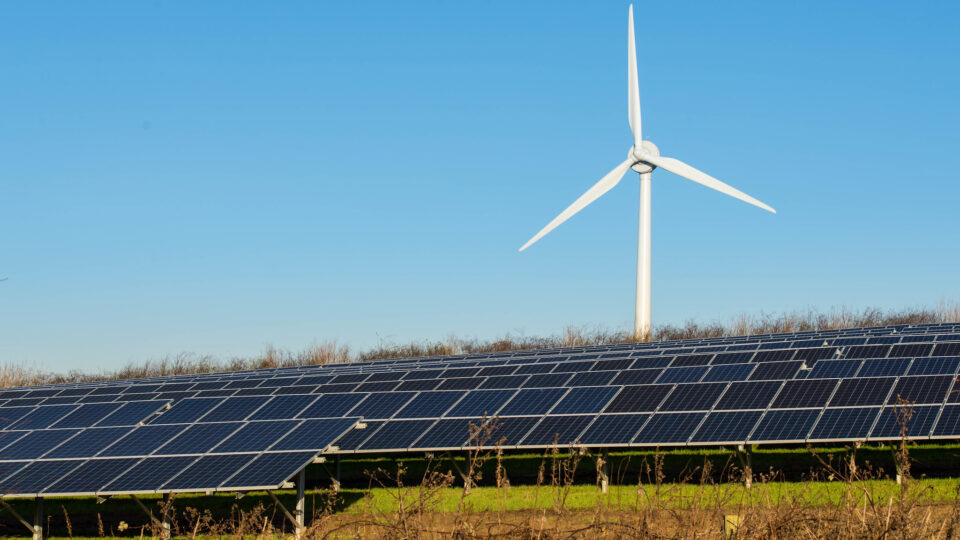
Limiting global warming is going to require some countries to do much more

A pressing question from the recently concluded 29th annual United Nations Climate Change Conference in Azerbaijan is how to transition away from fossil fuels and speed up climate mitigation in line with the 1.5 °C global warming target.

Keeping global average temperatures below 1.5 °C above pre-industrial levels is crucial to avoid the most severe impacts of climate change, including extreme weather, rising seas, biodiversity loss, and disruptions to food and water security. 

According to a new study by researchers from Stockholm University, Chalmers University of Technology, and Uppsala University in Sweden, it is still possible to limit global warming to 1.5 °C.  But the study found that the United States, the European Union, and 16 other countries will have to exceed their own current targets in order to achieve this global goal.  

The study, which was recently published in the journal Nature Communications, introduced an “additional carbon accountability” indicator, which quantifies countries’ responsibility for mitigation and carbon dioxide removal in addition to achieving their own targets.

The study identified 18 countries that should be accountable for increasing their ambitions to stay within their equal per capita share of the global carbon budget for 1.5 °C.  Additional carbon accountability is highest for the United States and China, and highest per capita for the United Arab Emirates, Russia, Saudi Arabia, and the U.S.

Failure to limit global warming risks catastrophic impacts of climate change.

**********

Web Links

COP29: Possible to limit climate change to 1.5°C – if EU and 17 other countries go beyond their own targets

Photo, posted December 27, 2015, courtesy of Gerry Machen via Flickr.

Earth Wise is a production of WAMC Northeast Public Radio
Seashells inspire better concrete

July 10, 2024 By EarthWise Leave a Comment

Seashells inspiring better concrete

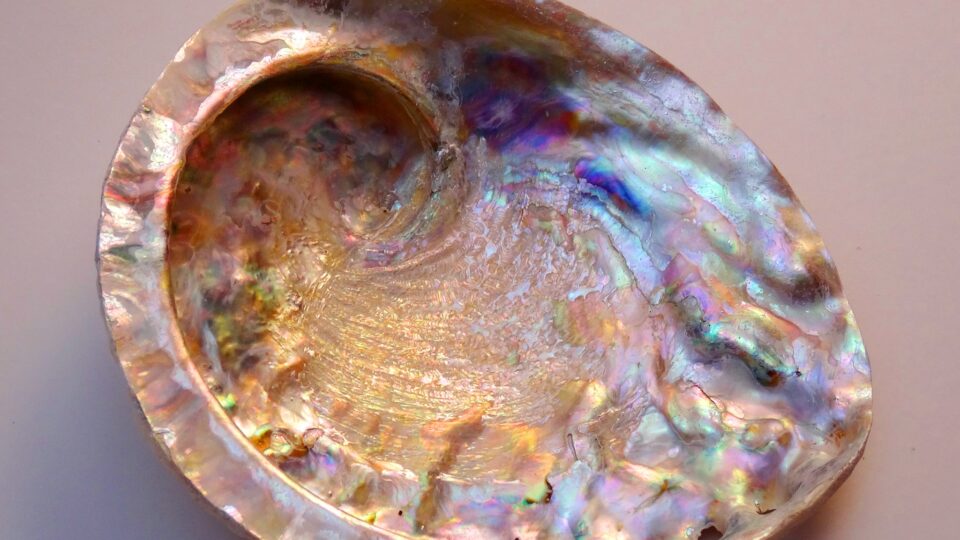
Mother of pearl – also known as nacre – is a natural material found in certain seashells such as those of oysters and abalone.  On the microscopic level, it consists of hexagonal tablets of the hard mineral aragonite glued together by a soft biopolymer.  The aragonite gives nacre its strength, and the biopolymer adds flexibility and crack resistance. 

Scientists at Princeton University have developed innovative composite materials inspired by nacre by utilizing conventional construction materials like Portland cement paste combined with a limited amount of polymer.  The new material consists of alternating layers of cement paste sheets with the highly stretchable polymer polyvinyl siloxane.

The materials were subjected to bending tests to evaluate crack resistance or fracture toughness.  Three different versions of the material were tested that used different ways of interposing the polymer layers.  The new materials were compared with similar structures composed entirely of cement.

The concrete-only samples were brittle, breaking suddenly and completely upon reaching their failure point.  The samples with alternating cement and polymer layers demonstrated increased ductility and resistance to cracking. 

By fully mimicking the structure of nacre – using completely separated hexagonal cement tablets – the researchers demonstrated materials with 19 times the ductility and 17 times the fracture toughness of cement while retaining nearly the same strength as solid cement samples.

Engineered materials inspired by nature could eventually help increase the durability of a wide range of brittle ceramic materials, from concrete to porcelain.

**********

Web Links

From seashells to cement, nature inspires tougher building material

Photo, posted January 2, 2016, courtesy of Yantra via Flickr.

Earth Wise is a production of WAMC Northeast Public Radio

How will we know if the world is 1.5 degrees warmer?

January 12, 2024 By EarthWise Leave a Comment

How is climate warming measured?

The Paris Climate Agreement has a goal of limiting global warming to less than 1.5 degrees Celsius above pre-industrial levels.  How do we know if we are succeeding and, more importantly, how would we know if we have failed?

This may seem like something fairly obvious, but it isn’t.  Global temperatures are definitely creeping upward.  This past year has been the warmest on record.  In fact, the global average temperature was more than 1.4 degrees above pre-industrial levels.  November was 1.75 degrees above pre-industrial levels.  So, does that mean that our climate goals have already failed?  Not really.

On a monthly scale there have already been individual months where warming has exceeded 1.5 degrees in 2016, 2017, 2019, 2020, and 2023.  Would an entire year above the target constitute failure?  Not necessarily.  There really isn’t an agreed-upon answer and that in itself represents something that could undermine global efforts to tackle climate change.

If we don’t know whether we are succeeding or failing, it is more difficult to pursue success.  The United Nations IPCC says the threshold will be surpassed when average warming exceeds 1.5 degrees for 20 years.  But that seems like a building a mountain highway with no guardrails and hoping to be safe.

Scientists are calling for new approaches to defining a universally agreed-upon measure of global warming that could trigger urgent action to avoid further rises.  What we really don’t need are justifications and excuses for continued inaction.  Clearly the climate is not waiting for us to debate the issue.

**********

Web Links

Why We Won’t Know When We’ve Passed the 1.5-Degree Threshold

Photo, posted August 2, 2018, courtesy of J Bartlett Team Rubicon/BLM for USFS via Flickr.

Earth Wise is a production of WAMC Northeast Public Radio
Trouble For Emperor Penguins | Earth Wise

September 18, 2023 By EarthWise Leave a Comment

Emperor penguins are in trouble

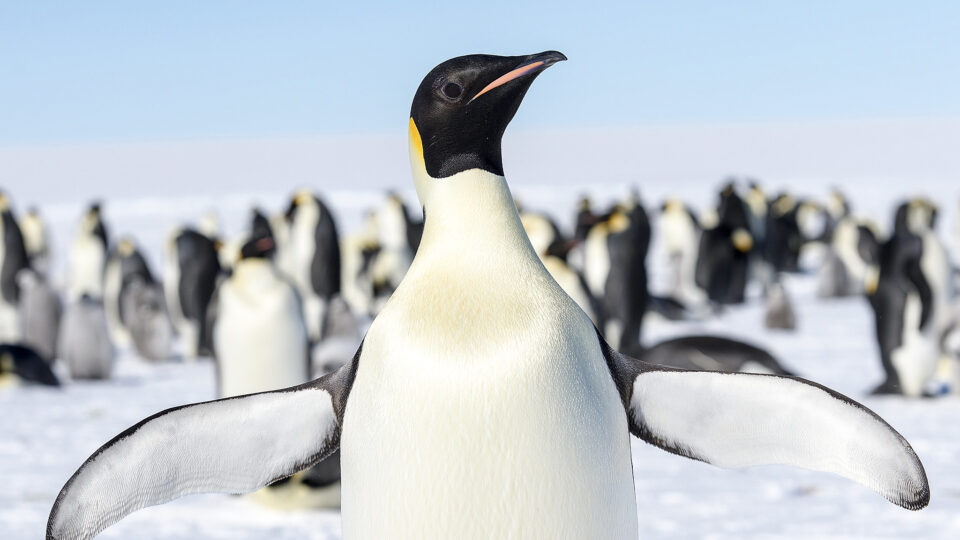
Emperor penguins are the tallest and heaviest of all living penguin species.  The loss of sea ice in Antarctica last year has led to unprecedented breeding failure in some emperor penguin colonies.

In a study published by the British Antarctic Survey, researchers found that no chicks survived from four of the five known emperor penguin colonies in the central and eastern Bellinhausen Sea.   Satellite images showed the loss of sea ice at breeding sites, well before chicks would have developed waterproof feathers.

Emperor penguins are dependent on stable sea ice that is firmly attached to the shore from April through the end of the year.  Arctic sea ice reached an all-time low in December 2022 with the most extreme loss seen in the central and eastern Bellinghausen Sea where there was a 100% loss of sea ice late the year.

This year, the sea ice extent in Antarctica is still far below all previous records for this time of year.  As of August, when oceans normally are freezing up, there were still areas that were ice-free.

Emperor penguin populations have not had to contend with large-scale hunting, habitat loss, overfishing, or other human-caused problems in the modern era, but climate change may be their undoing.  They have previously responded to incidents of sea ice loss by moving to more stable sites in the following year.  But this strategy will not be successful if the sea ice habitat is affected across entire regions of Antarctica.

Scientists are predicting that 90% of emperor penguin colonies will be quasi-extinct by the end of the century, assuming current global warming trends continue.

**********

Web Links

Loss of sea ice causes catastrophic breeding failure for emperor penguins

Photo, posted October 7, 2017, courtesy of Christopher Michel via Flickr.

Earth Wise is a production of WAMC Northeast Public Radio
Not All Eggs In One Basket | Earth Wise

March 2, 2021 By EarthWise Leave a Comment

Loggerhead turtles don't put all their eggs in one basket

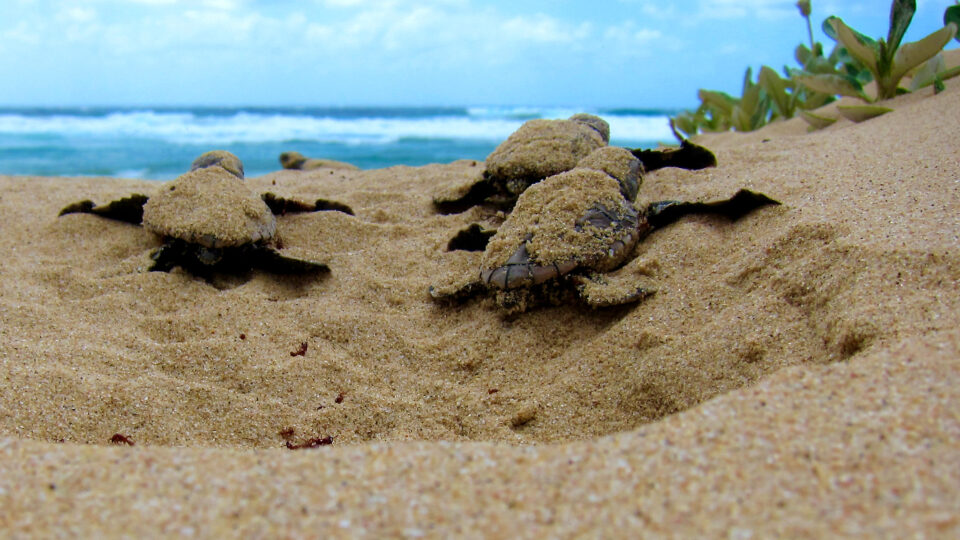
Sea turtles lay their eggs in burrows on sandy beaches.  Many species lay their eggs on the exact same beach year after year.  On average, sea turtles lay over 100 eggs in a nest and produce between 2 and 8 nests per season.

Animals that produce such large numbers of eggs have this reproductive strategy because so few survive to adulthood.   Sea turtle eggs and hatchlings face numerous threats including powerful storms, poachers, marauding birds, and more.  Estimates are that only one in thousand sea turtle eggs leads to an adult turtle.

A recent study by the University of South Florida looked at the reproductive strategy of loggerhead sea turtles nesting on Keewaydin Island off the southwestern Gulf coast of Florida.  The researchers found that individual females lay numerous clutches of eggs in locations as much as six miles apart from each other to increase the chance that some of their offspring will survive.

As the saying goes, nesting loggerhead turtles don’t lay all their eggs in one basket.  The researchers compare the turtles’ strategy to investing in a mutual fund.  The female turtles divide their resources among many stocks rather than investing everything in a single stock.

During their 50-year lifetime, a single female loggerhead will produce over 4,000 eggs and scatter them at 40 different sites.  This strategy helps reduce the risk of complete reproductive failure caused by hurricanes and thunderstorms that could wash out or flood all their clutches.  The combination of unpredictable patterns of nests over time and space results in nearly two-thirds of loggerhead sea turtle hatchlings making it into the Gulf of Mexico.  The species still faces significant challenges but it is doing its part to try to survive.

**********

Web Links

Not all in one basket: Loggerhead sea turtles lay eggs in multiple locations to improve reproductive success

Photo, posted January 27, 2012, courtesy of Jeroen Looye via Flickr.

Earth Wise is a production of WAMC Northeast Public Radio.

Primary Sidebar

Recent Episodes

  • An uninsurable future
  • Clean energy and jobs
  • Insect declines in remote regions
  • Fossil fuel producing nations ignoring climate goals
  • Trouble for clownfishes

WAMC Northeast Public Radio

WAMC/Northeast Public Radio is a regional public radio network serving parts of seven northeastern states (more...)

Copyright © 2026 ·