• Skip to primary navigation
  • Skip to main content
  • Skip to primary sidebar

Earth Wise

A look at our changing environment.

  • Home
  • About Earth Wise
  • Where to Listen
  • All Articles
  • Show Search
Hide Search
You are here: Home / Archives for evapotranspiration

evapotranspiration

Tree plantings and climate impact

October 1, 2025 By EarthWise Leave a Comment

Assessing the climate impact of tree plantings

Planting trees is a key strategy in the fight against climate change.  Trees absorb carbon dioxide, regulate temperature, support biodiversity, and improve air and water quality, offering benefits that extend well beyond their boundaries.

But according to a new study by researchers from University of California – Riverside, where those trees are planted makes a big difference.  The study, which was recently published in the journal Climate and Atmospheric Science, found that tree plantings are almost always a net positive for the climate because trees pull CO2 out of the atmosphere. But the impact of trees on temperature varies a lot by region.

In tropical regions, trees deliver the biggest cooling benefits.  They not only absorb carbon but also cool the air through a process called evapotranspiration.  Roots draw water from the soil, and when it evaporates from the leaves, it cools both the tree and the air around it.  This also raises humidity, which can lead to more clouds.  Both effects block some sunlight from reaching the ground, which adds to the cooling.

The researchers estimated that tropical tree plantings could cool regions like central Africa by as much as eight-tenths of a degree Fahrenheit. 

In contrast, planting trees at higher latitudes may have a slight warming effect.  Darker tree canopies absorb more sunlight, which can offset some of the cooling.  In some places, such as Canada and the northeastern U.S., trees may even increase fire risk.  But this does not mean trees in those regions are unhelpful.  They provide many other benefits for biodiversity, ecosystems, and the environment. 

But one thing is clear: planting trees in the tropics offers the strongest returns for the climate.

**********

Web Links

Trees in the tropics cool more, burn less

Photo, posted September 15, 2024, courtesy of Jan Helebrant via Flickr.

Earth Wise is a production of WAMC Northeast Public Radio

Vegetation and climate change

May 20, 2025 By EarthWise Leave a Comment

More urban vegetation could prevent many heat-related deaths around the world

Temperatures have been steadily rising around the world as a result of the increased greenhouse gas emissions from human activities.  This warming trend has led to more frequent and intense heat waves, droughts, and other extreme weather events.  Rising temperatures are also impacting human health, leading to increased risks of heat-related illnesses and a higher number of fatalities during extreme heat events.

One simple but effective way to reduce the health risks from extreme heat is to increase urban vegetation.  According to new research led by scientists from Monash University in Australia, increasing urban vegetation by 30% could save more than one-third of all heat-related deaths.  The study, which was recently published in The Lancet Planetary Health, examined more than 11,000 urban areas and found that increasing greenery could have saved up to 1.16 million lives worldwide between 2000 and 2019.

The impact of increasing urban vegetation on heat-related deaths varies by climate, greenness, socioeconomic, and demographic factors, with the greatest benefits seen in Southern Asia, Eastern Europe, and Eastern Asia. 

Vegetation has a cooling effect on temperature.  Vegetation helps regulate the Earth’s climate by absorbing carbon dioxide during photosynthesis, which helps to reduce greenhouse gases in the atmosphere. Vegetation also cools the environment through shading, moisture release, and evapotranspiration, which reduces temperatures and mitigates heat-related health risks.

Incorporating more vegetation into urban areas is a powerful solution to mitigate the impacts of climate change and protect human health.

**********

Web Links

Increasing urban vegetation could have saved over 1.1m lives in two decades

Photo, posted July 1, 2023, courtesy of Lauri via Flickr.

Earth Wise is a production of WAMC Northeast Public Radio
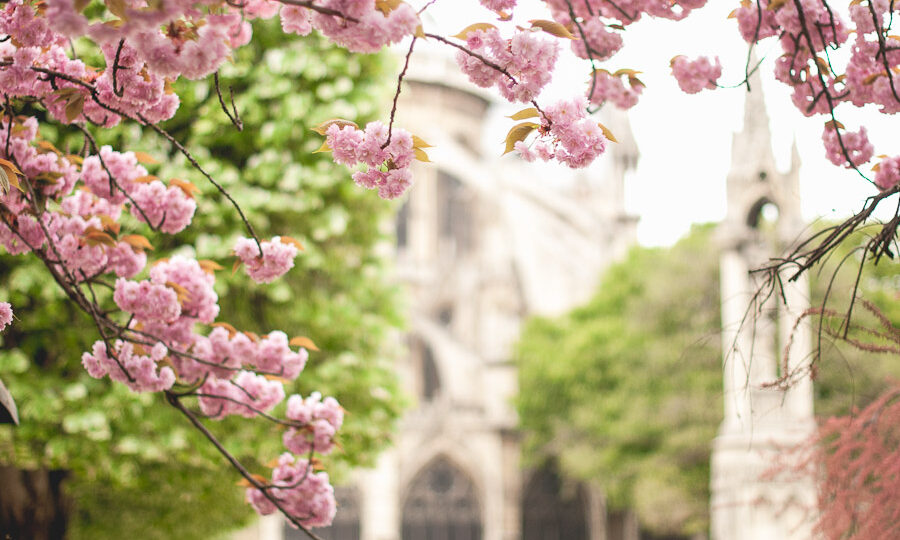
Planting trees in Europe

January 7, 2025 By EarthWise Leave a Comment

Planting lots of trees is one of many strategies being pursued to combat climate change.  Trees are storehouses of carbon from the atmosphere and planting more of them helps remove carbon dioxide.  But trees do more than that.  Trees are natural air conditioners in cities.

Trees significantly cool urban environments by providing shade and via a process called evapotranspiration by which they release water vapor into the air, which provides cooling.  This helps mitigate the urban heat island effect. Areas under trees in cities can be as much as 25 degrees cooler than in unshaded areas covered in asphalt.

The city of Paris has laid out a plan to help the city prepare for increasing amounts of extreme heat.  The goal is to replace 60,000 parking spaces across the city with trees by the end of this decade.  The plan to rip up parking spaces is part of a greater aim to create more than 700 acres of green space by 2030.  The Paris plan also includes creating more car-free zones and installing reflective roofs on 1,000 public buildings.  Nearly 80% of the buildings in Paris have zinc roofs – an affordable, corrosion-resistant and pretty much inflammable innovation of the 19th century.  However, these roofs can heat up to 194 degrees on a summer day, transferring heat into largely uninsulated top-floor garrets below.

Elsewhere in Europe, Danish lawmakers have agreed on a plan to rewild 10% of the country’s farmland and plant one billion trees.   According to the Danish government, this plan would bring about the biggest change to the Danish landscape in over 100 years.

**********

Web Links

To Cope with Extreme Heat, Paris Will Swap Parking Spaces for Trees

Photo, posted April 11, 2014, courtesy of Val H. via Flickr.

Earth Wise is a production of WAMC Northeast Public Radio

Primary Sidebar

Recent Episodes

  • An uninsurable future
  • Clean energy and jobs
  • Insect declines in remote regions
  • Fossil fuel producing nations ignoring climate goals
  • Trouble for clownfishes

WAMC Northeast Public Radio

WAMC/Northeast Public Radio is a regional public radio network serving parts of seven northeastern states (more...)

Copyright © 2026 ·