• Skip to primary navigation
  • Skip to main content
  • Skip to primary sidebar

Earth Wise

A look at our changing environment.

  • Home
  • About Earth Wise
  • Where to Listen
  • All Articles
  • Show Search
Hide Search
You are here: Home / Archives for environmental degradation

environmental degradation

Bad news for birds

April 1, 2025 By EarthWise Leave a Comment

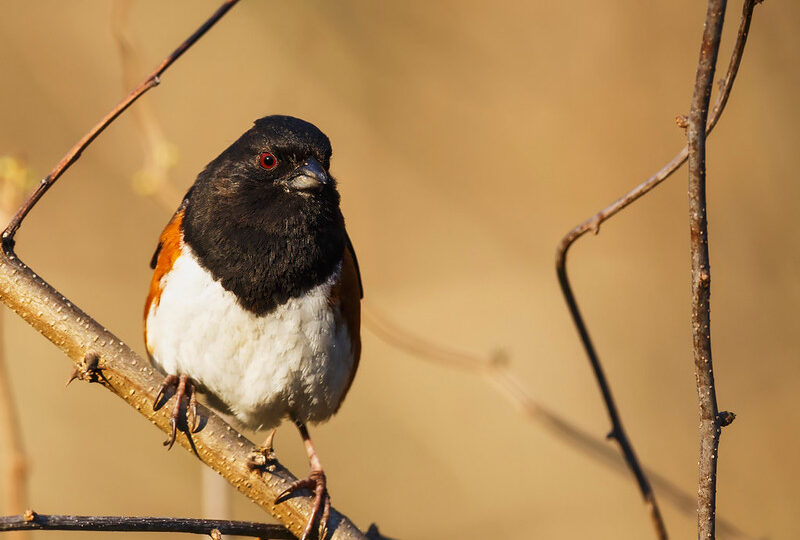
The 2025 U.S. State of the Birds report was released recently.   The report is produced by a coalition of leading science and conservation organizations.  The bottom line is that there have been continued widespread declines in American bird populations across all mainland and marine habitats. 

More than one-third of U.S. bird species are of high or moderate conservation concern.  Among these, 112 are tipping point species that have lost more than 50% of their populations over the last 50 years. 

Protecting bird species is not just about biodiversity and stewardship of nature.  Wild birds have surprisingly large economic impact.  Nearly 100 million Americans are engaged in birding activities which contribute substantially to local and state economies.  The 2022 National Survey of Fishing, Hunting, and Wildlife-Associated Recreation estimated that the total economic output related to bird watching activities was an amazing $279 billion and birding-related activities support 1.4 million jobs.  Bird watching and other encounters with nature are beneficial for human well-being, including reducing stress, anxiety, and depressive symptoms.

The rapid declines in birds are related to habitat loss, environmental degradation, and extreme weather events.  Moreover, if conditions are not healthy for birds, they are unlikely to be healthy for people as well.  Fortunately, many actions that are good for birds are good for us, so conservation efforts going forward are important.

**********

Web Links

State of America’s birds: Population declines continue

Photo, posted October 30, 2018, courtesy of Shenandoah National Park via Flickr.

Earth Wise is a production of WAMC Northeast Public Radio
Adirondack lakes becoming inhospitable for trout

February 15, 2024 By EarthWise Leave a Comment

Trout and other fish struggling in New York's Adirondack lakes

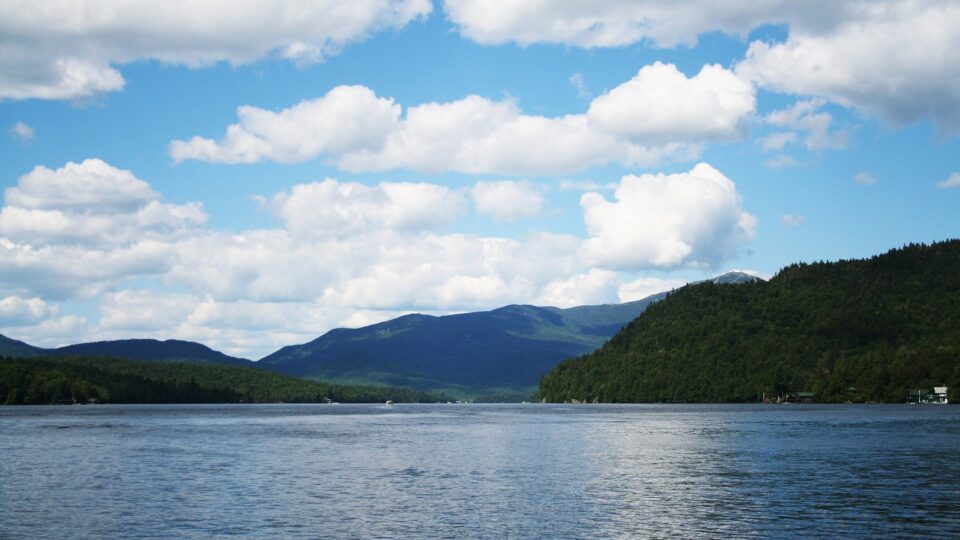
A combination of the warming climate and the phenomenon of lake browning are making the bottom of most lakes in New York’s Adirondack Mountains unlivable for cold water fish – such as trout, salmon, and whitefish – in the summer.

Lake browning occurs when dissolved organic matter from forests turns the water tea-brown.  Browning is the legacy of a century of acid rain and subsequently the fact that forest soils have suffered reduced capacity to absorb weak organic acids, leading to more dissolved plant matter flowing into lakes.  Climate change has increased the frequency of extreme precipitation events and the length of growing seasons, leading to more runoff of organic matter.

Browner water traps more of the sun’s heat at the top of the lake and blocks the sun’s rays from reaching deeper.  The result of the browning is lakes that are either too warm or too deoxygenated to support trout populations.

A study of 1,467 Adirondack lakes by Cornell University researchers found that only about 5% of them may continue to maintain water that is cold and oxygenated enough to support cold-water fish.

Deeper lakes fare much better because they have so much water that their oxygen is hard to deplete, but only 1% of all Adirondack lakes are deeper than 30 meters.  Another 4% are very clear because the influx of cold water outpaces the expansion of low-oxygen zones and limits the effects of browning.

The study urges the protection of as many lakes as possible from species invasions, nutrient and salt pollution, and other forms of environmental degradation. 

**********

Web Links

Most Adirondack lakes will likely become unsuitable for trout

Photo, posted July 17, 2011, courtesy of Lida via Flickr.

Earth Wise is a production of WAMC Northeast Public Radio
Onshore Algae Farms | Earth Wise

November 9, 2022 By EarthWise Leave a Comment

According to some estimates, food production will need to increase by 50% by 2050 in order to feed a projected global population of 10 billion people.  How can this be achieved?  

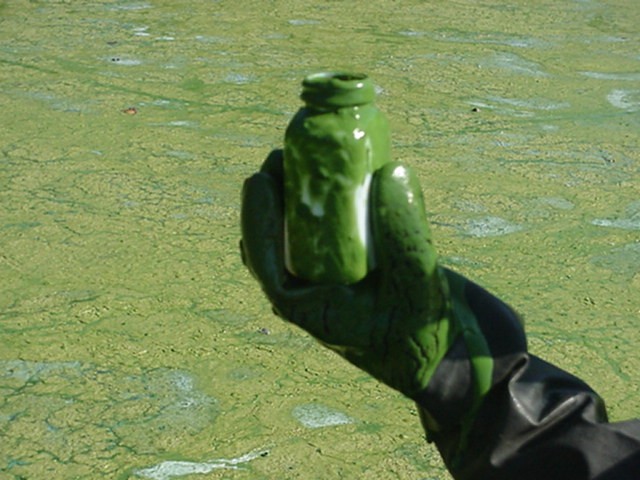
One solution, according to researchers at Cornell University, could be to grow nutritious and protein-dense microalgae in seawater-fed onshore aquaculture systems.

According to the research, which was recently published in the journal Oceanography, growing algae onshore could close a projected gap in society’s future nutritional demands while also improving environmental sustainability.  

Climate change, environmental degradation, limited arable land, and lack of freshwater will all constrain the amount of food that can be grown in the coming decades.  Wild fish stocks are already heavily exploited, and there are limits to how much finfish, shellfish, and seaweed aquaculture can be produced in the coastal ocean. 

As a result, the researchers argue for expanding algae production in onshore aquaculture facilities.  The research team’s models found that the best locations for onshore algae farming facilities are along the coasts of the Global South, including desert environments. 

Algae can grow as much as ten times faster than traditional crops.  Algae can also be produced in a manner that is more efficient than agriculture in its use of nutrients.  In addition to its high protein content, algae also provides nutrients lacking in vegetarian diets, such as essential amino acids, minerals, and omega-3 fatty acids.

Algae could become the breadbasket of the Global South.

**********

Web Links

Onshore algae farms could feed the world sustainably

Photo, posted June 17, 2011, courtesy of NOAA Great Lakes Environmental Research Laboratory via Flickr.

Earth Wise is a production of WAMC Northeast Public Radio

Primary Sidebar

Recent Episodes

  • An uninsurable future
  • Clean energy and jobs
  • Insect declines in remote regions
  • Fossil fuel producing nations ignoring climate goals
  • Trouble for clownfishes

WAMC Northeast Public Radio

WAMC/Northeast Public Radio is a regional public radio network serving parts of seven northeastern states (more...)

Copyright © 2026 ·