
• Skip to primary navigation
  • Skip to main content
  • Skip to primary sidebar

Earth Wise

A look at our changing environment.

  • Home
  • About Earth Wise
  • Where to Listen
  • All Articles
  • Show Search
Hide Search
You are here: Home / Archives for electrical

electrical

Rare Earths And The Energy Transition | Earth Wise

May 19, 2023 By EarthWise Leave a Comment

Mining rare earths key to completing the energy transition

Limiting the rise in global temperature to no more than 1.5 degrees Celsius requires decarbonization.  This means slashing fossil fuel use, switching to renewable energy sources, and electrifying as many sectors of the economy as possible.  Doing these things requires huge numbers of wind turbines, solar panels, electric vehicles, and storage batteries.   All of them use rare earth elements and other critical metals.

The 17 rare earth elements are actually common, but they are called rare because they are seldom found in sufficient quantities to be extracted easily or economically. 

China once supplied 97% of the world’s rare earth elements as a result of government support, cheap labor, lax environmental regulations, and low prices.  Once the world started to realize the dangers of being so dependent on China, many countries began developing their own rare earth element production. (However, today China still produces 60-70% of the world’s rare earth elements).

It is difficult to mine rare earth elements without causing environmental damage.  The prevalent extraction techniques involve toxic chemicals that can leach into the environment and, because rare earths are often found near radioactive elements, mining often brings dangerous radioactive waste into the environment.

Researchers are working on ways to make rare earth mining more sustainable.  Some of these include biomining – which uses microbes to extract rare earths from ores, electrical methods to free rare earths from ores, and so-called agromining, which is growing plants that hyperaccumulate rare earths from the soil into their tissues.

Making rare earth mining more sustainable and less harmful to the environment is an essential part of the world’s future.

**********

Web Links

The Energy Transition Will Need More Rare Earth Elements. Can We Secure Them Sustainably?

Photo, posted November 18, 2008, courtesy of the Oregon Department of Transportation via Flickr.

Earth Wise is a production of WAMC Northeast Public Radio
A Room-Temperature Superconductor | Earth Wise

November 18, 2020 By EarthWise Leave a Comment

room temperature superconductor

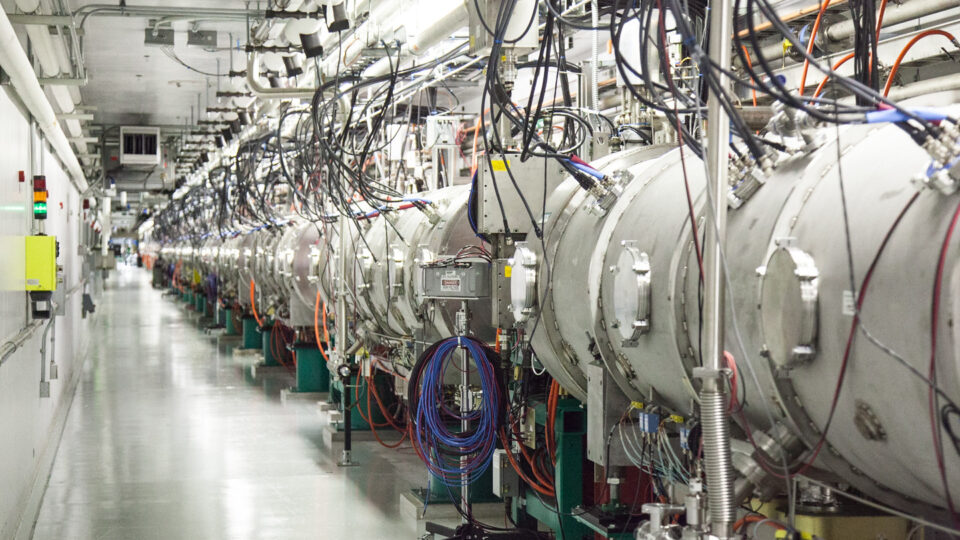
One of the Holy Grails of science has apparently been found:  a room-temperature superconductor.   In a paper recently published in Nature, scientists from the University of Rochester and collaborators announced that they had observed superconductivity at 59 degrees Fahrenheit in an exotic material they produced in the laboratory.

Superconductivity is a phenomenon occurring in certain materials characterized by the total absence of electrical resistance.  Current flowing in a closed loop of superconducting wire can go on forever.  Superconductors have other unique characteristics as well, all of which combine to make them quite useful in a number of applications.  Superconductors are used in high-powered magnets in particle accelerators and in MRI machines.  They continue to be developed for use in electrical power transmission, energy storage, communication filters, magnetic sensors, and more.

The problem with superconductors is that they only work at very low temperatures.  For most of a century – after superconductivity was discovered in 1911 – those temperatures were very close to absolute zero:  459 degrees below zero Fahrenheit.  (In the late 1980s, so-called high-temperature superconductors were discovered.  Those materials superconduct at the temperature of liquid nitrogen:  about 320 degrees below zero).

The dream has been to find a superconductor that works at ambient temperatures.  The Rochester team has produced tiny amounts of a mysterious combination of hydrogen, carbon, and sulfur which, when subjected to extraordinarily high pressures (over 2 million atmospheres), superconducts at the temperature of a pleasant fall day.

 There is no practical value for this first room-temperature superconductor, but it proves that superconductivity can exist at ambient temperature.  Once something is shown to exist at all, there is reason to hope that it can occur in ways that are easier and more practical to attain.

**********

Web Links

First room-temperature superconductor excites — and baffles — scientists

Photo, posted June 18, 2013, courtesy of Oak Ridge National Laboratory via Flickr.

Earth Wise is a production of WAMC Northeast Public Radio.

Primary Sidebar

Recent Episodes

  • An uninsurable future
  • Clean energy and jobs
  • Insect declines in remote regions
  • Fossil fuel producing nations ignoring climate goals
  • Trouble for clownfishes

WAMC Northeast Public Radio

WAMC/Northeast Public Radio is a regional public radio network serving parts of seven northeastern states (more...)

Copyright © 2026 ·