• Skip to primary navigation
  • Skip to main content
  • Skip to primary sidebar

Earth Wise

A look at our changing environment.

  • Home
  • About Earth Wise
  • Where to Listen
  • All Articles
  • Show Search
Hide Search
You are here: Home / Archives for ecosystem engineers

ecosystem engineers

Otters to the rescue

February 23, 2024 By EarthWise Leave a Comment

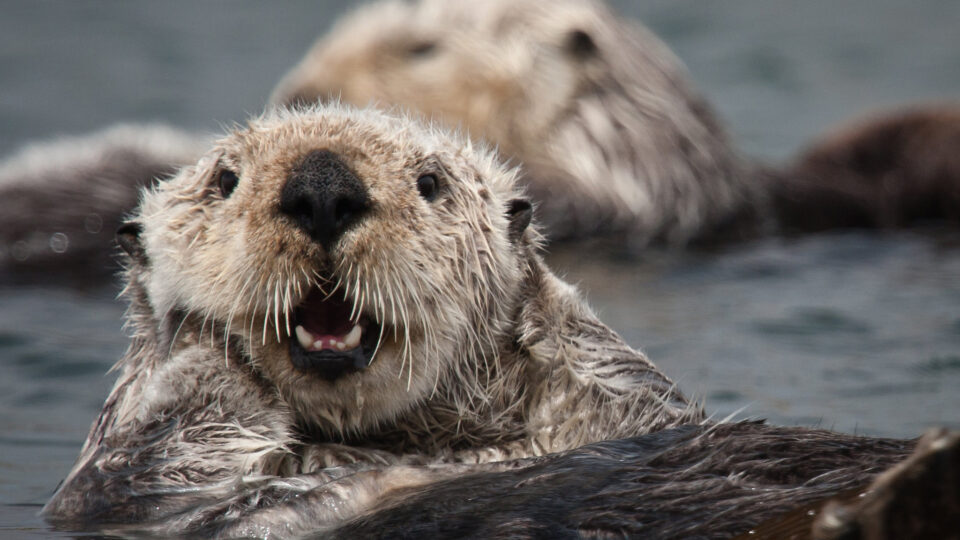
Otters to the rescue in California

California sea otters were hunted almost to extinction in the 19th century.  Only a small number survived along California’s central coast.  But over time, the otters recovered and increasingly recolonized their former habitats.

Sea otters are playing an important role in safeguarding California’s kelp forests and marshlands against the harmful effects of climate change.

Over much of the 20th century, increasing ocean heat had devastated underwater kelp forests by driving a population explosion of sea urchins that devour kelp.  But sea otters eat urchins and as the sea otter population has grown, kelp has flourished.  According to a new study published in PLOS Climate, the underwater kelp canopy along the central coast increased by 56% since 2016.  Kelp forests have become more extensive and resilient to climate change wherever sea otters have reoccupied the California coastline.

At the same time, sea otters started recolonizing their former habitat in a central California estuary several decades ago and erosion has slowed by as much as 90%.  The main reason is that otters love to eat the marsh crabs that were devouring the plants in this coastal ecosystem.  The marsh plants establish dense root systems that can withstand waves and flooding.  It would cost millions of dollars for humans to rebuild creekbanks and restore these coastal marshes.  Instead, sea otters have been stabilizing them for free in exchange for a crab feast.

Sea otters are playful creatures that people enjoy watching.  It turns out that they are also very valuable ecosystem engineers that are helping to mitigate the effects of the warming climate.

**********

Web Links

How Sea Otters Are Protecting the California Coast Against Climate Change

Photo, posted May 17, 2021, courtesy of Michael L. Baird via Flickr.

Earth Wise is a production of WAMC Northeast Public Radio
Bringing Back Bison | Earth Wise

August 23, 2022 By EarthWise Leave a Comment

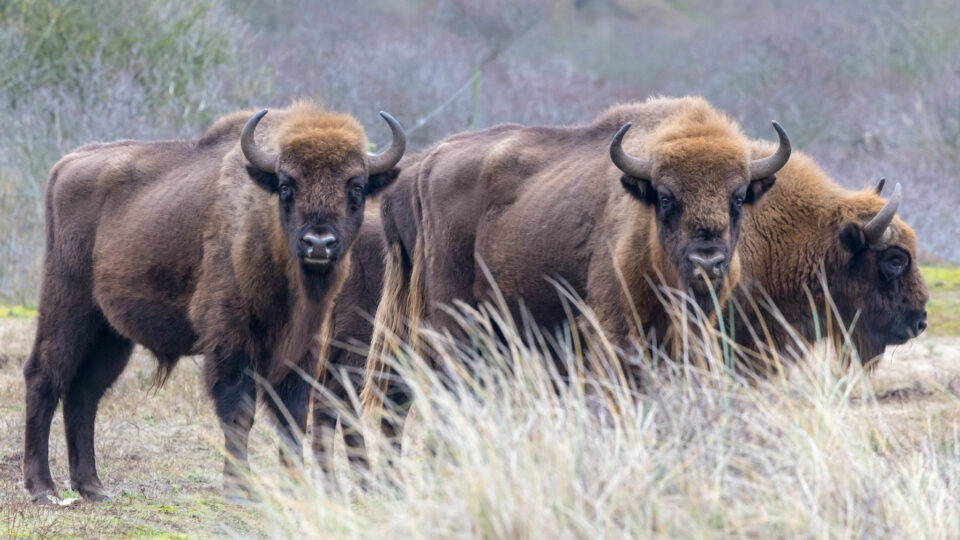
Over the past few decades, research has identified the importance of large mammals like bison as ecosystem engineers.  These animals shape and maintain various natural processes and, in the process, are responsible for the sequestering of large amounts of carbon.  But large mammals – both herbivores and predators – have seen their numbers dwindle over time.  At this point, nearly two-thirds of large carnivores are threatened with extinction.   Overall, less than 6% of worldwide ecosystems have the extensive, intact large-mammal communities that were dominant 500 years ago.

Conservationists around the world have embarked on programs of “rewilding”- reintroducing large mammals into ecosystems.  Some of the animals involved in these programs include brown bears, wild horses, jaguars, reindeer, Eurasian beavers, elk, moose, wolverines, tigers, hippos, and bison.

A group of bison raised in South Dakota have recently been transplanted to the Chihuhuan Desert at the US-Mexico border across Arizona, New Mexico, and Texas.  There used to be huge bison herds in that region, but it has been largely bison-free for 150 years.

Perhaps more remarkably, wild bison are also being reintroduced into a forest near Canterbury, England.  There haven’t been bison in the United Kingdom for thousands of years.  But conservationists are introducing European bison into the British forest to knock down trees, trample shrubs, and create space for a greater diversity of flora and fauna. 

Apart from the ecosystem goals of the British project, people in the UK, for the first time in over a thousand years, will be able to experience bison in the wild.

**********

Web Links

Gone for Thousands of Years, Wild Bison Return to the UK

Photo, posted December 31, 2018, courtesy of Marco Verch via Flickr.

Earth Wise is a production of WAMC Northeast Public Radio.

Whales As Ecosystem Engineers | Earth Wise

December 14, 2021 By EarthWise Leave a Comment

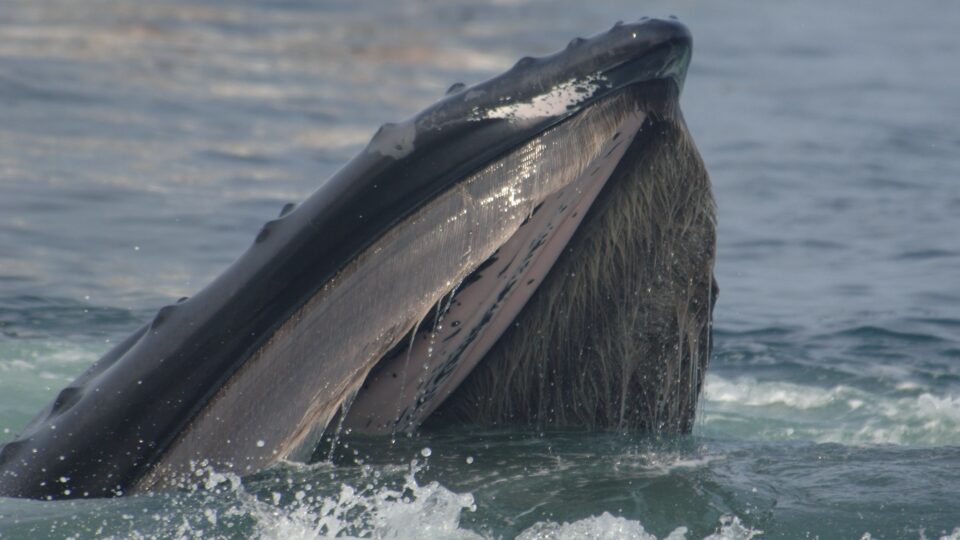
Whales are great ecosystem engineers

Researchers from Stanford University have been studying the role of large whales on ocean ecosystems with some surprising results.

From 1910 to 1970, people killed about 1.5 million baleen whales in the waters surrounding Antarctica.  The whales were hunted for their blubber, baleen, and meat.  Baleen is the filtering fringe that certain whales use instead of teeth to capture food from the ocean.  A primary food source for these whales is krill, small shrimp-like creatures.   One would assume that the decimation of the baleen whale population in the Southern Ocean would have led to a surge in krill populations.  But the new research has found that the opposite is the case.

The precipitous decline of large marine mammals has negatively impacted the health and productivity of ocean ecosystems.

New high-tech tagging devices that attach to whales for brief periods allow researchers to record their movements and activities.  For the first time, it has been possible to accurately determine how much krill whales actually consume, and the answer is that they eat two to three times as much as previously thought.  Interestingly, the same technology shows that fish-eating whales like humpbacks eat somewhat less than previously thought.

Baleen whales are essentially mobile krill processing plants.  They eat the krill, digest it, and produce iron-laden excretions that are needed by phytoplankton, which comprise the bottom of the food chain that nourish krill and other small creatures.  With fewer whales, there is less nourishment for the krill.  In fact, based on the new data, estimates are that the historic abundance of krill in the Southern Ocean had to be about five times what it is today.

Whales are important ecosystem engineers.

**********

Web Links

Stanford researchers find whales are more important ecosystems engineers than previously thought

Photo, posted November 18, 2010, courtesy of Dr. Brandon Southall, NMFS/OPR via Flickr.

Earth Wise is a production of WAMC Northeast Public Radio.

Alligator Security Guards

April 22, 2016 By WAMC WEB

https://earthwiseradio.org/wp-content/uploads/2016/04/EW-04-22-16-Alligator-Security-Guards.mp3

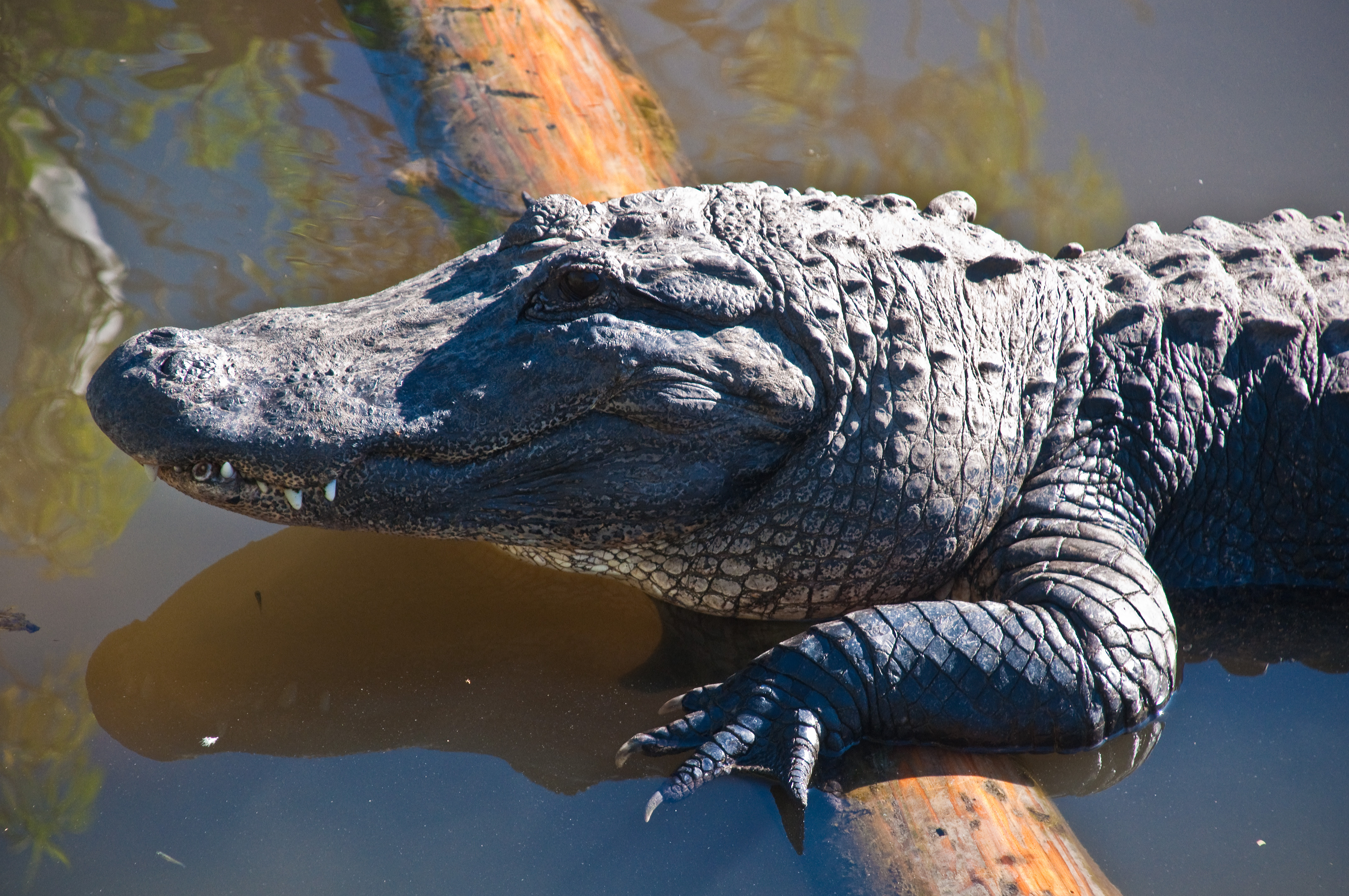
Complex ecosystems often create complex interrelationships between animals.  One of the more surprising ones is that between waterbirds and alligators in the Florida Everglades.

[Read more…] about Alligator Security Guards

Primary Sidebar

Recent Episodes

  • An uninsurable future
  • Clean energy and jobs
  • Insect declines in remote regions
  • Fossil fuel producing nations ignoring climate goals
  • Trouble for clownfishes

WAMC Northeast Public Radio

WAMC/Northeast Public Radio is a regional public radio network serving parts of seven northeastern states (more...)

Copyright © 2026 ·