• Skip to primary navigation
  • Skip to main content
  • Skip to primary sidebar

Earth Wise

A look at our changing environment.

  • Home
  • About Earth Wise
  • Where to Listen
  • All Articles
  • Show Search
Hide Search
You are here: Home / Archives for droppings

droppings

Biochar and poultry farm pollution

July 23, 2025 By EarthWise Leave a Comment

Poultry farms are a significant source of air and water pollution.  In the US, they are the largest source of ammonia emissions, followed by dairy and non-dairy cattle farms. Poultry farms emit over two million tons of ammonia per year. Ammonia is not directly produced or excreted by the birds but is a common by-product of poultry wastes.

Poultry manure is a rich source of phosphate and large amounts of it are used in agricultural land as an organic fertilizer.  This poses an environmental risk when phosphates are washed into rivers and streams by rainwater. Phosphates lead to the proliferation of algae, harming other aquatic life and resulting in toxic conditions.

Researchers at the UK Centre for Ecology & Hydrology are investigating the use of biochar as a means of reducing air and water pollution from poultry farms in the UK.  Biochar is produced by heating biomass – typically wood – to high temperatures in the absence of oxygen.  The resultant material is effective at absorbing nutrients and other substances.

In laboratory experiments, adding biochar to birds’ bedding has been shown to reduce ammonia emissions from droppings by 58%.  The biochar binds ammonium to its surface, preventing release into the atmosphere as ammonia gas.

Modified biochars are also proven to be highly efficient at adsorbing phosphorous.  Adding a cost-effective biochar to poultry manure fertilizer could support the safe use of an important and otherwise renewable fertilizer.  The biochar binds phosphates in the manure to its surface, preventing leaching and run-off into waterways.

**********

Web Links

Biochar could help restore River Wye

Photo, posted May 15, 2023, courtesy of Ark. Agricultural Experiment Station via Flickr.

Earth Wise is a production of WAMC Northeast Public Radio
Satellites discovering penguins

February 20, 2024 By EarthWise Leave a Comment

Satellites have discovered new colonies of emperor penguins

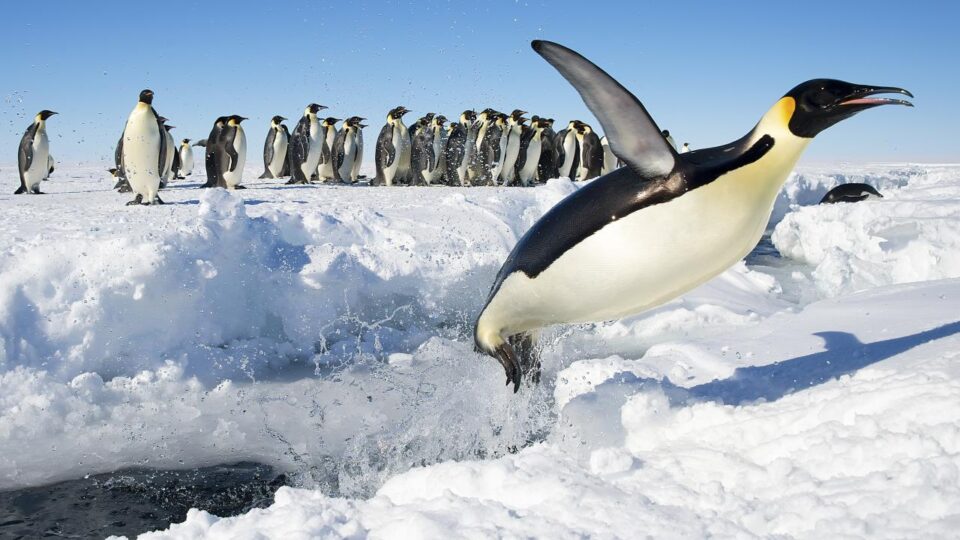
The loss of sea ice in Antarctica has forced emperor penguins to seek out new breeding grounds.  Some colonies have traveled more than 20 miles in search of stable ice.  Emperor females lay a single egg on a stretch of sea ice at the start of winter and males keep the eggs warm while the females go hunting for up to two months to bring back food for their hatchlings.

Emperor penguins are the tallest and heaviest of all living penguin species.  The loss of sea ice has led to unprecedented breeding failure in some emperor penguin colonies.  Emperor penguins are not threatened by hunting, habitat loss, or other human-caused problems, but the changing climate could be their undoing.

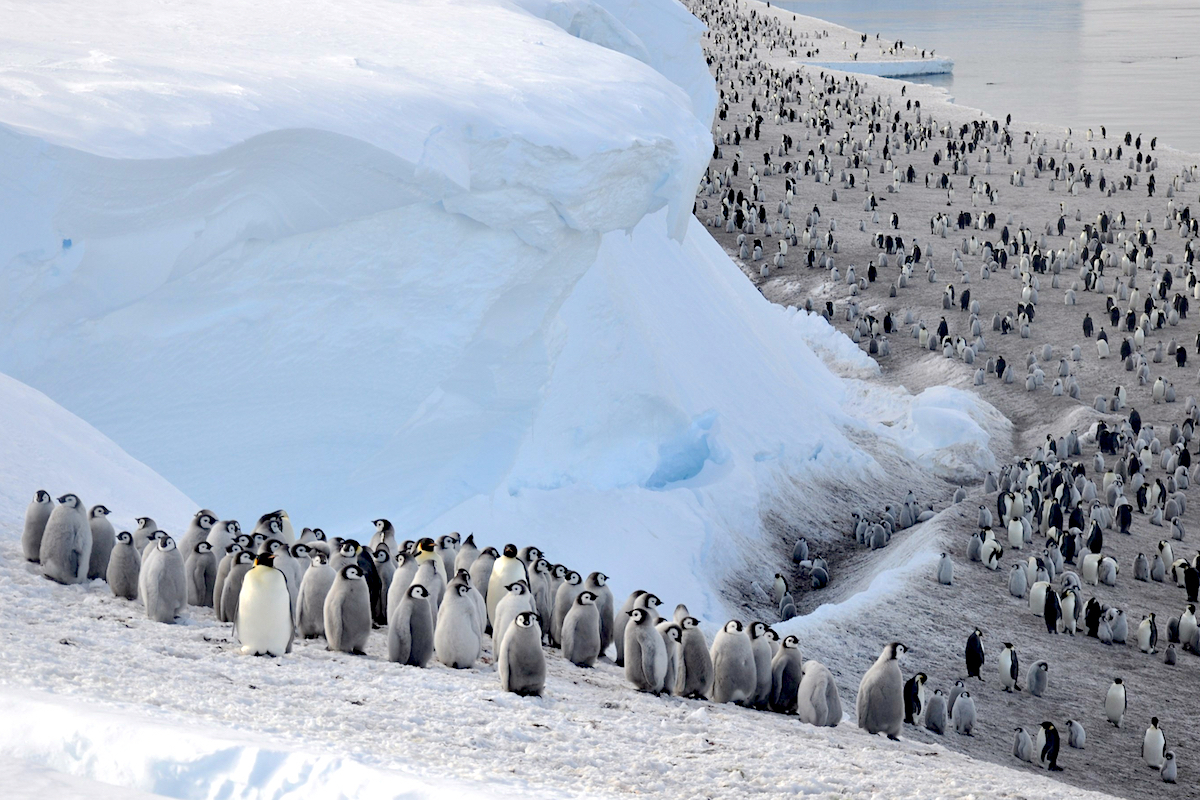
Emperor colonies are easy to spot from above.  The penguins are up to four feet tall and the droppings from large colonies stand out vividly against white snow.  A careful study of satellite imagery has revealed four previously unknown colonies of emperor penguins along the edges of Antarctica.  This is the first bit of good news about the penguins in quite a while.  The new discoveries, reported in the journal Antarctic Science, brings the total number of known colonies to 66.

The new discoveries are encouraging, but emperor penguins remain at risk from the warming climate.  Three of the four new colonies are small, with fewer than 1,000 birds.  So, the discovery does not have a big impact on the overall emperor penguin population.  The addition of the new colonies is overshadowed by the recently reported colony breeding failures resulting from early and rapid ice losses.

**********

Web Links

Thousands of Emperor Penguins Discovered by Satellite

Photo, posted January 19, 2014, courtesy of Christopher Michel via Flickr.

Earth Wise is a production of WAMC Northeast Public Radio
Seabirds rescuing coral reefs

January 8, 2024 By EarthWise Leave a Comment

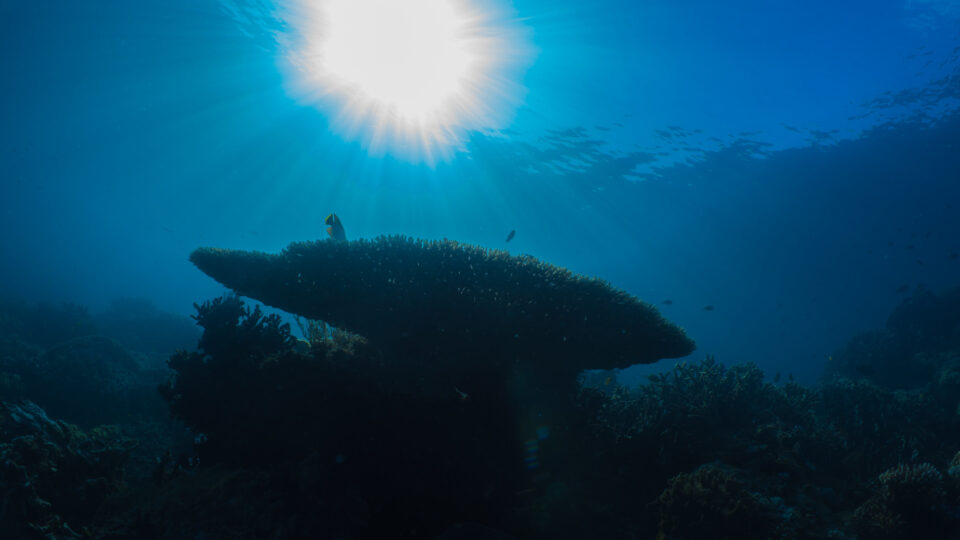
A new study by researchers at Lancaster University in the UK has found that the presence of seabirds on islands adjacent to tropical coral reefs can more than double the coral growth rates on those reefs.

The study found that when coral reefs grow faster, they can bounce back more quickly from bleaching events that occur when the seas become too warm.  The focus of the study was a type of coral called Acropora, which provides complex structures supporting fish populations and reef growth. 

The researchers found that Acropora around islands populated by seabirds recovered from bleaching events about 10 months faster than reefs located away from seabird colonies.  Speeding up coral recovery times could prove the difference between continuing to bounce back from bleaching events and dying off.

The seabirds are helping the coral reefs with their droppings.  The birds feed on fish in the open ocean far from islands and then return to the islands to roost.  They deposit nitrogen- and phosphorus-rich nutrients in the form of guano, some of which is washed off of the islands by rain and into the surrounding seas.  The nutrients fertilize corals and other marine species.

To determine whether the faster growth rates were really due to the bird-supplied nutrients, the researchers studied rat-infested islands that had no bird populations.  The study confirmed that it was the presence of seabirds that provided enhanced nutrients for the coral reefs.  In fact, a primary outcome of the study was to add further weight to the growing body of evidence of the ecological damage across ecosystems on land and sea from invasive rats on tropical islands.

**********

Web Links

Feathered friends can become unlikely helpers for tropical coral reefs facing climate change threat

Photo, posted September 15, 2019, courtesy of Rickard Zerpe via Flickr.

Earth Wise is a production of WAMC Northeast Public Radio
Primary Sidebar

Recent Episodes

  • An uninsurable future
  • Clean energy and jobs
  • Insect declines in remote regions
  • Fossil fuel producing nations ignoring climate goals
  • Trouble for clownfishes

WAMC Northeast Public Radio

WAMC/Northeast Public Radio is a regional public radio network serving parts of seven northeastern states (more...)

Copyright © 2026 ·