
• Skip to primary navigation
  • Skip to main content
  • Skip to primary sidebar

Earth Wise

A look at our changing environment.

  • Home
  • About Earth Wise
  • Where to Listen
  • All Articles
  • Show Search
Hide Search
You are here: Home / Archives for diversion

diversion

Curbing food waste

February 3, 2025 By EarthWise Leave a Comment

Efforts to curb food waste are failing

According to the U.S. Department of Agriculture, as much as 40% of the food supply in the United States is wasted.  In fact, Americans generate more food waste than all but two countries.

To address this problem, the federal government announced a goal nearly a decade ago to cut food waste in half by 2030 compared to 2016 levels.  Doing so would bring food waste down to approximately 164 pounds per person annually.

However, according to a new study led by researchers from the University of California – Davis, since 2016, per capita food waste has actually increased instead of decreasing. 

The study, which was recently published in the journal Nature Food, looked at how state policies align with federal targets.  The research team found that state policies focus more on recycling methods, such as composting and anaerobic digestion, rather than on prevention and rescue strategies, like food donations or repurposing food for animal feed.

In 2021, the EPA revised its definition of food waste to no longer include recycling methods.  But when food is wasted, the resources used to grow the food, including energy, water, and fertilizer, are also wasted. 

In the study, the researchers analyzed state-level food waste reduction efforts across four areas: prevention, rescue, repurposing, and recycling.  They found that recycling policies offered the most potential for diversion. Despite this, most states still fell short of the federal goal of 164 pounds per person annually. 

According to the research team, more comprehensive policies to address food waste must be implemented as soon as possible.

**********

Web Links

States Struggle to Curb Food Waste Despite Policies

Photo, posted June 28, 2021, courtesy of Ivan Radic via Flickr.

Earth Wise is a production of WAMC Northeast Public Radio

Saving the Great Salt Lake

January 27, 2025 By EarthWise Leave a Comment

For many years, scientists have warned that the Great Salt Lake in Utah is headed toward a catastrophic decline.  While the size of the Great Salt Lake fluctuates naturally with seasonal and long-term weather patterns, the lake has been experiencing significant and steady declines for decades.  In fact, the Great Salt Lake has lost more than 15 billion cubic yards of water over the past three decades, and it’s getting shallower at the rate of four inches a year. 

This reduction is primarily due to excessive water diversions from rivers and streams that feed into the lake for agricultural, industrial, and municipal use. These diversions, combined with prolonged drought and rising temperatures due to climate change, have significantly reduced the lake’s water level. 

According to a new study led by researchers from Oregon State University, 62% of the river water bound for the Great Salt Lake is diverted for human use, with agricultural activities responsible for nearly three-quarters of that percentage.  The analysis, which was recently published in the journal Environmental Challenges, found that reducing irrigation is necessary to save the lake. 

In order to stabilize and begin refilling the lake, the research team proposes cutting human water consumption in the Great Salt Lake’s watershed by 35%.  The researchers emphasize that farmers and ranchers facing income losses from using less water would require taxpayer-funded compensation.

The Great Salt Lake is a biodiversity hotspot, sustaining more than 10 million migratory birds.  The lake also directly supports 9,000 jobs and fuels $2.5 billion in economic activity annually. 

**********

Web Links

Reducing irrigation for livestock feed crops is needed to save Great Salt Lake, study argues

Photo, posted January 14, 2024, courtesy of Olaf Zerbock via Flickr.

Earth Wise is a production of WAMC Northeast Public Radio

The Colorado River crisis

May 15, 2024 By EarthWise Leave a Comment

The Colorado River serves nearly 40 million people in seven U.S. states and Mexico.  It provides water for 5 million acres of farmland.  Increasing demand from growing populations, damming, diversion, and drought have been draining the Colorado at alarming rates.  This critical resource supports countless economies, communities, and ecologies stretching from the Rocky Mountains to the Gulf of California.  The Colorado River essentially has made the cities of Las Vegas, Los Angeles, Denver, and Phoenix possible.

How the water of the Colorado is distributed is determined by an agreement that is over 100 years old:  the Colorado River Compact.  It was made at a time when people thought there was more water than really was there.  And at the time, no one thought that the seven states would need to use the water they were allocated down to the last drop.

There have been various measures over the years to conserve water from the Colorado River, including the Colorado River Interim Guidelines in 2007.  Those guidelines will expire in 2026 and negotiations are beginning to take place among the many stakeholders scrambling for water rights.  Apart from the seven U.S. states and Mexico, there are 30 tribal nations involved.  Collaborative governance is complicated when it crosses multiple jurisdictions with their own laws and legal precedents.  The goal is to put in place a new agreement to protect the Colorado River.

Rapidly-growing populations in major cities, a 20-year megadrought, and historically low water levels in America’s two largest reservoirs have put enormous pressure on the Colorado River.  Creating a plan to protect the lifeblood of the American West is essential.

**********

Web Links

Addressing the Colorado River crisis

Photo, posted June 18, 2022, courtesy of Jeff Hollett via Flickr.

Earth Wise is a production of WAMC Northeast Public Radio
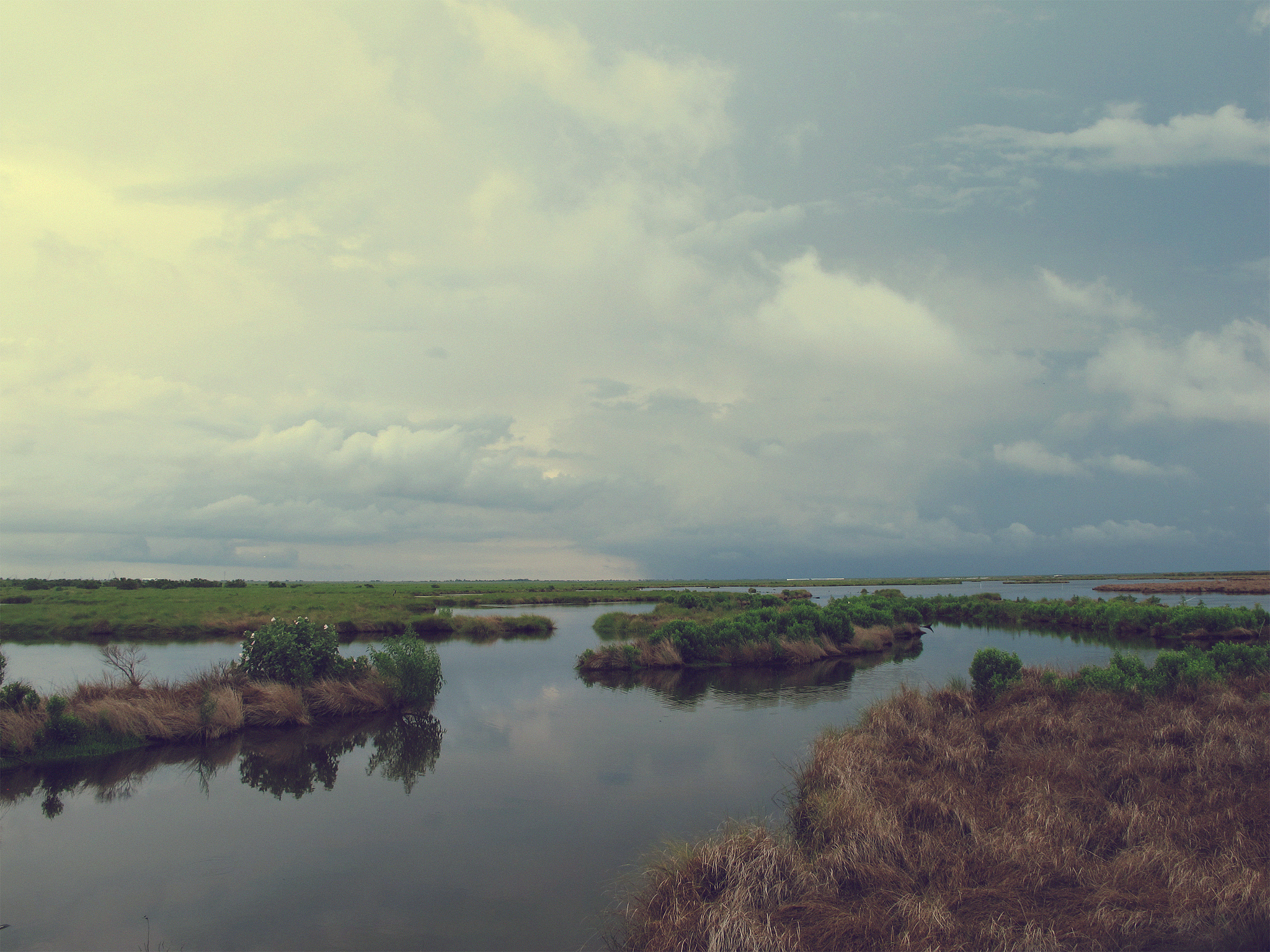
Restoring Sediment To Save Wetlands

August 25, 2017 By EarthWise

https://earthwiseradio.org/wp-content/uploads/2017/08/EW-08-25-17-Restoring-Sediment-to-Save-Wetlands.mp3

The world’s rivers carry billions of cubic yards of sediment – sand, silt and other material – and transport it to wetlands and coastal areas.  Until fairly recently, this was viewed as a negative thing.  But that has changed.

[Read more…] about Restoring Sediment To Save Wetlands

Primary Sidebar

Recent Episodes

  • An uninsurable future
  • Clean energy and jobs
  • Insect declines in remote regions
  • Fossil fuel producing nations ignoring climate goals
  • Trouble for clownfishes

WAMC Northeast Public Radio

WAMC/Northeast Public Radio is a regional public radio network serving parts of seven northeastern states (more...)

Copyright © 2025 ·