
• Skip to primary navigation
  • Skip to main content
  • Skip to primary sidebar

Earth Wise

A look at our changing environment.

  • Home
  • About Earth Wise
  • Where to Listen
  • All Articles
  • Show Search
Hide Search
You are here: Home / Archives for ditches

ditches

Rain Gardens And Residential Pollution | Earth Wise

July 12, 2023 By EarthWise Leave a Comment

Rain gardens are a solution to residential pollution of waterways

Stormwater runoff has become the largest source of residential pollution for waterways.  As rainwater runs down roofs, over driveways and patios, and off other hard surfaces, it can pick up pollutants as it flows directly into streams, wetlands, lakes, and groundwater aquifers.  That water is typically routed directly through stormwater pipes and ditches with little filtering or treatment.  The main emphasis is on getting the water off of people‘s property as quickly and efficiently as possible to avoid flooding.

Many municipalities are dealing with the problem by installing rain gardens, which are a type of green infrastructure in commercial spaces that slow down and treat water before it enters streams, wetlands, and other bodies of waters.  When designed and installed properly with appropriate plants, rain gardens are like miniature water treatment facilities   Water gathers in the rain garden, soaks into the soil, and is taken up by plants.  The plants filter nutrients, sediments, and toxic materials from the runoff before excess water ever gets to waterways.

Homeowners are being encouraged to build their own rain gardens.  They need to familiarize themselves with how runoff from their roof, driveway, sidewalk, and roads is currently being routed and treated.  The idea is to try to incorporate that runoff into a rain garden design with sufficient area and infiltration rates.  The runoff would ultimately flow out from a safe, designated location into storm drains at a slower rate than from the previous impervious surfaces.  Homeowners would need to work with their local jurisdictions to find out the requirements for re-routing water in their area and make sure any modifications prevent erosion and protect nearby homes, roads, and other infrastructure.

**********

Web Links

Rain gardens help keep pollutants out of waterways

Photo, posted March 3, 2017, courtesy of Jeremy Jeziorski / Oregon Convention Center via Flickr.

Earth Wise is a production of WAMC Northeast Public Radio
Electricity From Bacteria | Earth Wise

June 3, 2022 By EarthWise Leave a Comment

Producing electricity from bacteria

Microbiologists at Radboud University in the Netherlands have demonstrated in the laboratory that methane-consuming bacteria can generate electrical power.  Their study was recently published in the journal Frontiers in Microbiology.

The bacteria studied is called Candidatus Methanoperedens and in the natural environment it consumes methane in water sources that are contaminated with nitrogen including places like water-filled ditches and some lakes. The bacteria in the study make use of the nitrates in the water to break down and digest the methane. Methanogens, which are bacteria that reduce carbon dioxide to form methane, are the source of the methane in these places. 

The researchers exploited these complex interactions of bacteria to create a source of electrical power that is essentially a kind of battery with two terminals.  One of the terminals is a chemical terminal and one is a biological terminal.  They grew the bacteria on one of the electrodes where the bacteria donate electrons that result from its conversion of methane.  (Other microbiologists at the same institution had previously demonstrated electrical generation from a similar battery containing anammox bacteria that use ammonium rather than methane in their metabolic processing).

In the study, the Radboud scientists managed to convert 31% of the methane in the water into electricity but they are aiming at higher efficiencies. 

This approach represents a potential alternative to conventional biogas electricity generation.  In those installations, methane is produced by microorganisms digesting plant materials and the methane is subsequently burned to drive a turbine to generate power.  Those systems in fact have an efficiency of less than 50%.  The researchers want to determine whether microorganisms can do a better job of generating electricity from biological sources than combustion and turbines can do.

**********

Web Links

Bacteria generate electricity from methane

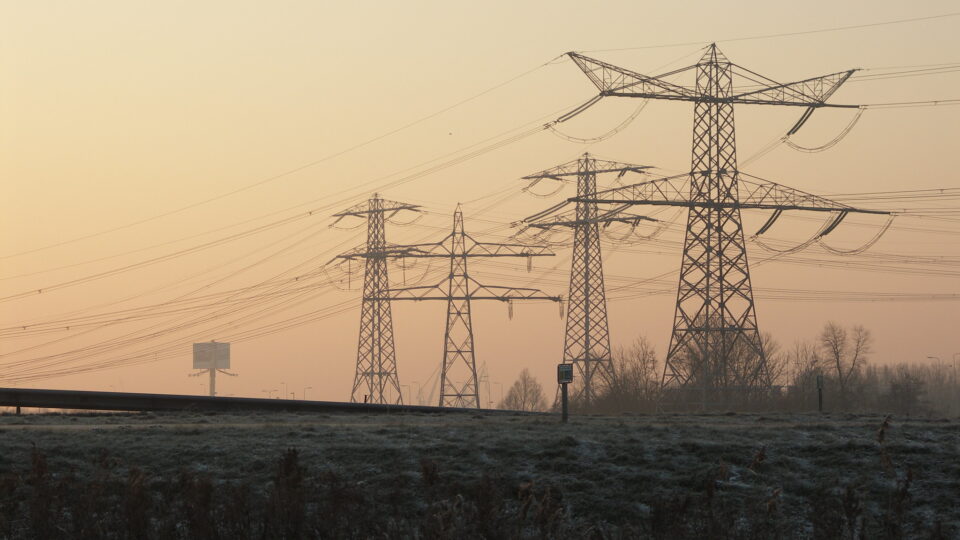
Photo, posted December 3, 2008, courtesy of Martin Sutherland via Flickr.

Earth Wise is a production of WAMC Northeast Public Radio.

Primary Sidebar

Recent Episodes

  • An uninsurable future
  • Clean energy and jobs
  • Insect declines in remote regions
  • Fossil fuel producing nations ignoring climate goals
  • Trouble for clownfishes

WAMC Northeast Public Radio

WAMC/Northeast Public Radio is a regional public radio network serving parts of seven northeastern states (more...)

Copyright © 2025 ·