• Skip to primary navigation
  • Skip to main content
  • Skip to primary sidebar

Earth Wise

A look at our changing environment.

  • Home
  • About Earth Wise
  • Where to Listen
  • All Articles
  • Show Search
Hide Search
You are here: Home / Archives for districts

districts

Progress towards electric school buses

November 8, 2024 By EarthWise Leave a Comment

Making progress on electrifying school buses

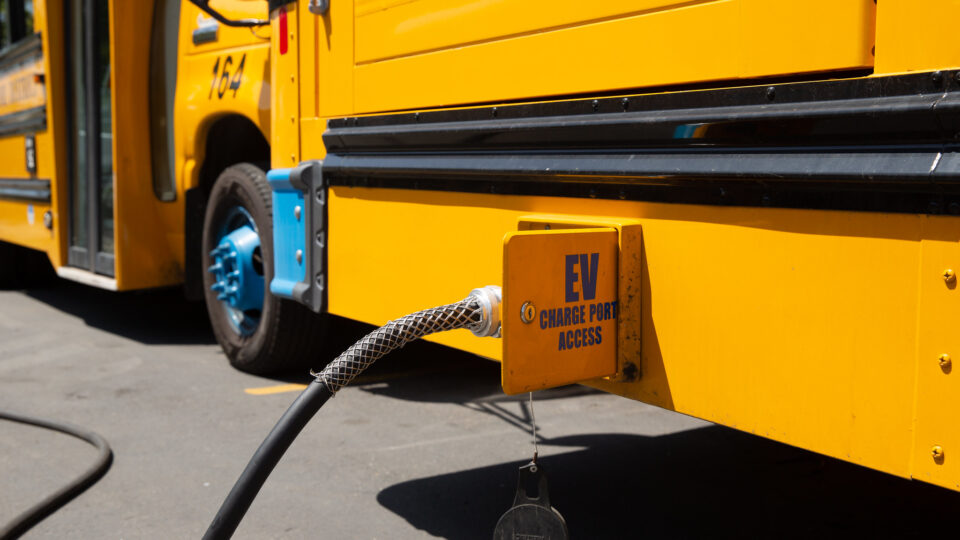
The U.S. has nearly half a million school buses providing daily transportation for about 20 million students.  Most of these buses are powered by diesel engines which not only dump greenhouse gases into the atmosphere but also fill kids’ lungs with harmful fumes.

Thanks to various federal and state incentive programs, this situation is starting to change.  School districts all over the country are beginning to swap out old diesel buses for emissions-free electric-powered school buses.

Electric school buses are finding their way into school districts of all sizes and demographics.  The first district in the country to go fully electric was in Martinsville, Texas, which last year converted its 4-bus fleet.  The first large urban district to go all-electric was the 74-bus fleet in Oakland, California this summer.

The EPA’s $5 billion Clean School Bus program and many state initiatives are providing incentives for the transition.  Five years ago, there were less than 1,000 electric school buses in the U.S.  Now there are about 5,000 and more than 7,000 additional buses are in the pipeline.

Apart from the climate implications, there is urgency to replacing diesel school buses from a health perspective.  Diesel exhaust is classified as a carcinogen by the World Health Organization, and it contains fine particles and nitrogen oxides, both of which are well-documented asthma triggers.

Electric buses are more expensive than diesel buses, but they are much cheaper to operate. School districts need to put in place charging infrastructure.  The transition is not so easy to accomplish, but it is an important step, and more and more school districts are taking it.

**********

Web Links

Slowly but Surely, U.S. School Buses Are Starting to Electrify

Photo, posted May 5, 2021, courtesy of California Energy Commission via Flickr.

Earth Wise is a production of WAMC Northeast Public Radio
Keeping The Colorado River Flowing | Earth Wise

July 5, 2023 By EarthWise Leave a Comment

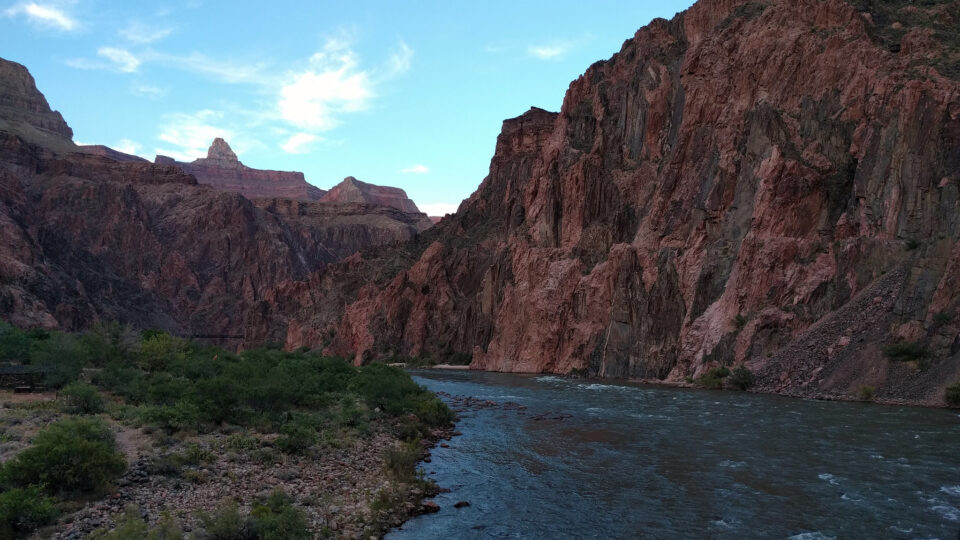
The Colorado River supplies drinking water to 40 million Americans in seven states as well as to many Mexicans and provides irrigation to 5.5 million acres of farmland.  Electricity generated by dams on the Colorado powers millions of homes and businesses in the West.

A combination of drought, population growth, and climate change has reduced the river’s flows by a third in recent years compared with historical averages.  Further reductions could trigger a water and power catastrophe across the Western states.

California, Arizona, and Nevada all get water from Lake Mead, the reservoir formed by the Colorado at Hoover Dam.  The Interior Department determines how much water each of these three states receives.  The other states that use Colorado River water get it directly from the river and its tributaries.  Last summer, water levels in Lake Mead and Lake Powell fell enough that officials feared that the hydroelectric turbines at the Colorado’s dams would soon cease functioning.

The three states have recently struck an agreement with the federal government to take less water from the Colorado.  The reductions amount to about 13% of the total water use in the lower Colorado.  The government will pay about $1.2 billion to irrigation districts, cities, and Native American tribes for temporarily using less water.  The states have also agreed to make additional cuts to generate the total reductions needed to prevent the collapse of the river.

The agreement runs only through the end of 2026.  At that point, all seven states that rely on the river – which includes Colorado, New Mexico, Utah, and Wyoming – may well be facing a deeper reckoning.  The forces driving the decline of the Colorado are not going away.

**********

Web Links

A Breakthrough Deal to Keep the Colorado River From Going Dry, for Now

Photo, posted June 16, 2017, courtesy Karen and Brad Emerson via Flickr.

Earth Wise is a production of WAMC Northeast Public Radio
Schools And Solar Power

June 19, 2019 By EarthWise Leave a Comment

A new study from Stanford University looked at the benefits of installing solar panels on the rooftops of schools.  According to the study, taking advantage of all the viable space for solar panels could allow schools to meet up to 75% of their electricity needs and reduce the education sector’s carbon footprint by as much as 28%.

Given the long list of spending priorities for schools, solar power seems like a luxury item.  But the Department of Energy estimates that K-12 schools spend more than $6 billion a year on energy and, in many districts, energy costs are second only to salaries.  In the higher education sector, yearly energy costs add up to more than $14 billion.  In total, educational institutions account for approximately 11% of energy consumption by U.S. buildings and 4% of the nation’s carbon emissions.

The Stanford study suggests that investments in the right solar projects combined with the right incentives from states could free up much-needed money in school budgets.

To no surprise, the study finds that three large, sunny states – Texas, California, and Florida – have the greatest potential for generating electricity from solar panels on school rooftops.

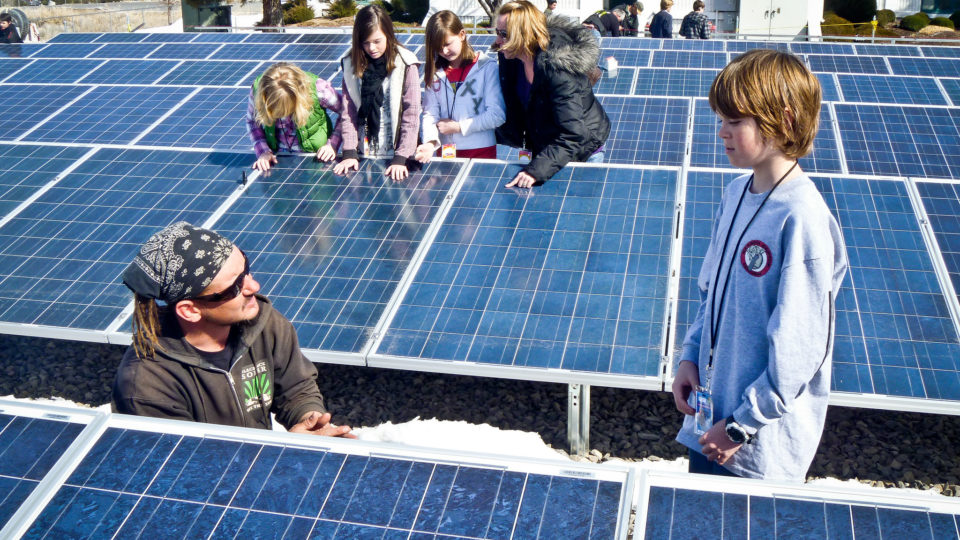
Apart from measurable effects on air pollution and electricity bills, solar installations at schools can also provide new learning opportunities for students.  In fact, some schools are already using data from their on-site solar energy systems to teach students basic ideas about fractions, as an example, as well as more sophisticated concepts such how shifting solar panel angles can affect power production.

According to the study, nearly all states could reap value from school solar projects.

**********

Web Links

What happens when schools go solar?

Photo, posted February 28, 2011, courtesy of Black Rock Solar via Flickr.

Earth Wise is a production of WAMC Northeast Public Radio.

Primary Sidebar

Recent Episodes

  • An uninsurable future
  • Clean energy and jobs
  • Insect declines in remote regions
  • Fossil fuel producing nations ignoring climate goals
  • Trouble for clownfishes

WAMC Northeast Public Radio

WAMC/Northeast Public Radio is a regional public radio network serving parts of seven northeastern states (more...)

Copyright © 2026 ·