• Skip to primary navigation
  • Skip to main content
  • Skip to primary sidebar

Earth Wise

A look at our changing environment.

  • Home
  • About Earth Wise
  • Where to Listen
  • All Articles
  • Show Search
Hide Search
You are here: Home / Archives for distribute

distribute

Feeding the future

June 9, 2025 By EarthWise Leave a Comment

Climate change is already affecting the yields of major staple crops around the world, and researchers warn that the impacts will become more severe over time. Rising temperatures, shifting rainfall patterns, and more frequent extreme weather events are disrupting growing seasons and reducing agricultural productivity.

Addressing these growing threats requires rethinking how we grow, distribute, and consume food.  To kick off Climate Solutions Week, we wanted to examine some solutions that could make food systems more resilient, sustainable, and adaptable to our rapidly changing environment.

One solution is Climate-Smart Agriculture, which blends traditional practices with modern techniques to boost productivity while reducing greenhouse gas emissions. Methods like zero tillage, intercropping, and crop diversification could improve soil health, conserve water, and help farms withstand climate extremes.

Expanding the production of highly nutritious and climate resilient food crops – like millet, sorghum, teff, quinoa, chickpeas, and tepary beans – will also have an important role to play.  At the same time, reducing food waste through better storage, labeling, and surplus food re-use could help meet demand without increasing production pressure.

Agriculture is the largest user of freshwater globally, and climate change is intensifying water shortages.  Farmers will need to transition to water-efficient farming practices, including drip irrigation, rainwater harvesting, and the reuse of treated wastewater. 

Together, these solutions could help revolutionize the global food system to both feed a growing population and help protect the planet. 

*********

Web Links

Climate-smart agriculture

Water for Prosperity and Peace

A Food For The Future

Photo, posted October 16, 2011, courtesy of Alliance of Bioversity International and CIAT via Flickr.

Earth Wise is a production of WAMC Northeast Public Radio

Hot water in Boise

May 9, 2025 By EarthWise Leave a Comment

Geothermal water systems in Boise form the foundation of what is the largest municipally-run geothermal system in the country

Boise is the capital of Idaho, and the Idaho Statehouse is the only one in the United States to use geothermal heat.  Geothermal heating is possible in Boise because of fault lines that expose its groundwater to hot rocks.  The underground water supply in Boise is heated to around 170 degrees Fahrenheit.  It is the basis of the largest municipally-run geothermal system in the country.

People in Boise began using this natural resource to supply heat to buildings in the 1890s by drilling wells into aquifers that yielded hundreds of thousands of gallons of piping hot water a day.  The water heated pools and public baths, a Victorian mansion, and, eventually, hundreds of homes in what was called the Boise Warm Springs Water District.

The number of buildings that the city of Boise heats with its geothermal resource has grown more than sixfold over the past 40 years.  The water is drawn from wells in the nearby foothills and pumped into a closed-loop network of pipes that reach into buildings.  In each building, the geothermal heat is transferred to water in separate adjoining pipes that distribute the heat throughout the building.  The well water goes back to the aquifer to be heated again.

Today, there are four separately run geothermal water systems in Boise.  One is run by the city, another by the Boise Warm Springs District, and two others that serve the Capitol and Veterans Affairs Buildings.

In 2024, city officials calculated that using geothermal heat reduced annual carbon dioxide emissions by 7,000 tons, the equivalent of removing 1,500 gas-powered cars from the road each year.

**********

Web Links

They’re in Hot Water in Idaho. Here’s Why That’s a Good Thing.

Photo, posted May 26, 2010, courtesy of Jason W via Flickr.

Earth Wise is a production of WAMC Northeast Public Radio
New York’s Polystyrene Foam Ban | Earth Wise

January 19, 2022 By EarthWise Leave a Comment

New York bans Styrofoam

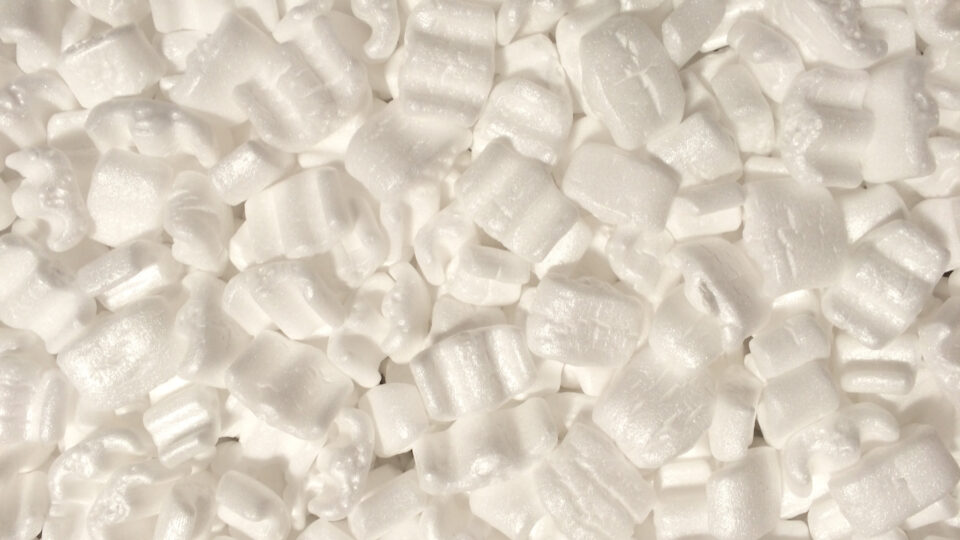
As of January 1, the state of New York now prohibits any person engaged in the business of selling or distributing prepared food or beverages from selling, offering for sale, or distributing disposable food service containers that contain expanded polystyrene foam in the state.  In addition, no manufacturer will be allowed to sell, offer for sale, or distribute polystyrene loose fill packaging in the state.

In other words, there will be no more Styrofoam bowls, cartons, clamshell containers, lids, plates, trays, or packing peanuts.

There are still some exceptions.  Raw meat, seafood, poultry, or fish sold for the purpose of cooking or preparing off-premises can still be packaged in polystyrene foam.  Prepackaged food filled or sealed prior to receipt by a food service provider can also still be packaged in polystyrene foam.

The New York State Department of Environmental Conservation is initially focusing its efforts on outreach and education to achieve compliance rather than on enforcement.   The DEC has provided detailed regulations to assist stakeholders with complying with the law.

Expanded polystyrene foam is a major contributor to environmental litter.  The material breaks apart easily and does not readily biodegrade, causing it to be persistent in the environment and contribute to microplastic pollution.  The foam causes negative impacts to wildlife, waterways, and natural resources.

An estimated 65% of New Yorkers were already living in communities that banned polystyrene foam, notably including New York City and Long Island which imposed a ban in 2019. 

New York becomes the fourth state to impose such a ban after Maine, Maryland, and Vermont.  Colorado and Virginia will follow suit in the next two years.

**********

Web Links

Expanded Polystyrene Foam Container and Polystyrene Loose Fill Packaging Ban

Photo, posted November 16, 2015, courtesy of Karim Ghantous via Flickr.

Earth Wise is a production of WAMC Northeast Public Radio.

Primary Sidebar

Recent Episodes

  • An uninsurable future
  • Clean energy and jobs
  • Insect declines in remote regions
  • Fossil fuel producing nations ignoring climate goals
  • Trouble for clownfishes

WAMC Northeast Public Radio

WAMC/Northeast Public Radio is a regional public radio network serving parts of seven northeastern states (more...)

Copyright © 2026 ·