• Skip to primary navigation
  • Skip to main content
  • Skip to primary sidebar

Earth Wise

A look at our changing environment.

  • Home
  • About Earth Wise
  • Where to Listen
  • All Articles
  • Show Search
Hide Search
You are here: Home / Archives for developments

developments

Thawing permafrost in the Arctic

February 18, 2025 By EarthWise Leave a Comment

Permafrost covers about a quarter of the landmass in the Northern Hemisphere.  It stores vast quantities of organic carbon in the form of dead plant matter.  As long as it stays frozen, it is no threat to the climate.  But as permafrost thaws, microorganisms start breaking down that plant matter and large amounts of carbon are released into the atmosphere in the form of carbon dioxide and methane.

Scientists estimate that there could be two and a half times as much carbon trapped in Arctic permafrost as there is in the atmosphere today.

Thawing permafrost poses various risks to the Arctic environment and the livelihoods of its people.  According to a new study led by researchers from the University of Vienna in Austria, Umeå University in Sweden, and the Technical University of Denmark, thawing permafrost threatens the way of life of up to three million people.

To identify these risks, the research team studied four Arctic regions in Norway, Greenland, Canada, and Russia between 2017 and 2023.  The research, which was recently published in the journal Communications Earth and Environment, identified five key hazards posed by the thawing permafrost: infrastructure failure, disruption of mobility and supply, decreased water quality, challenges for food security, and exposure to diseases and contaminants.

These are present developments – not future dangers.  Global scientific cooperation, policy interventions, and investment in research are critical to mitigate the impact of thawing permafrost and address the broader consequences it brings.

**********

Web Links

A transdisciplinary, comparative analysis reveals key risks from Arctic permafrost thaw

Thawing permafrost threatens up to three million people in Arctic regions

Photo, posted February 9, 2017, courtesy of Benjamin Jones / USGS via Flickr.

Earth Wise is a production of WAMC Northeast Public Radio

New approaches to nuclear power

November 18, 2024 By EarthWise 1 Comment

Researchers explore new approaches to nuclear power

The US is the world’s largest user of nuclear power.  Its 94 reactors supply nearly 19% of the country’s electricity. But the number of U.S. reactors has steadily fallen over the past 30 years and new nuclear power plants are a real rarity.  The reasons are a combination of perceived dangers following several nuclear accidents and the increasing costs associated with building plants that can meet a growing number of regulatory requirements.

There are recent developments associated with new advanced reactor technologies that may lead to a resurgence in the use of nuclear power.  Bill Gates’ energy company TerraPower is developing nuclear reactors that use sodium instead of water for cooling.  Such reactors operate at lower pressures and higher temperatures.  

Meanwhile, Kairos Power, a California-based energy company, has entered into an agreement with Google to build multiple small modular nuclear reactors that will supply electricity to that giant tech company.  The modular reactors use a molten-salt cooling system combined with a ceramic, pebble-type fuel in order to transport heat to a steam turbine to generate power.  The novel design of these reactors can reduce construction timelines, allow deployment in more places, and make final project delivery more predictable.

Surveys indicate that a majority of Americans favor the use of nuclear power, which has the advantages that it doesn’t create greenhouse gas emissions and can run 24-7.  But traditional nuclear power plants are too expensive and have too many potential problems.  These new nuclear power technologies may be the answer for allowing nuclear power to play an important role in the future energy system.

**********

Web Links

New nuclear clean energy agreement with Kairos Power

Photo, posted May 16, 2016, courtesy of Steve Jurvetson via Flickr.

Earth Wise is a production of WAMC Northeast Public Radio
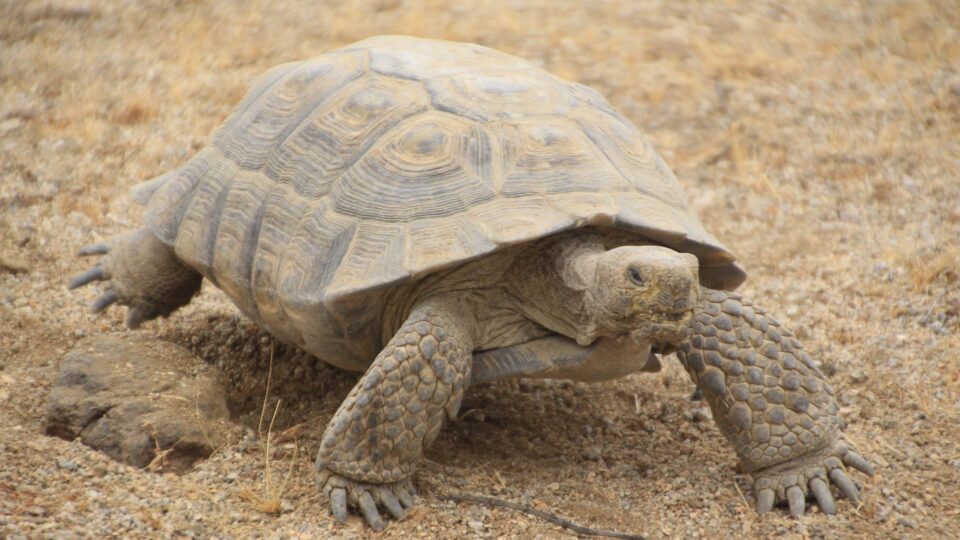
Genetic Variation And Survivability | Earth Wise

January 21, 2021 By EarthWise Leave a Comment

Genetic variation leads to greater chance of survival

A massive but unintended experiment in animal conservation has revealed an unexpected result.  Thousands of desert tortoises moved to a translocation site in Nevada had a greater chance of surviving if they had lots of genetic variation.

From 1997 to 2014, over 9,000 Mojave desert tortoises were moved to a 39-square-mile translocation site in the Ivanpah Valley.  The tortoises were either abandoned pets or were displaced by developments in suburban Las Vegas and by solar farms in the desert.

The U.S. Fish and Wildlife service took blood samples to screen for diseases and marked each animal before releasing them into the site, enabling them to be tracked in later surveys.

When the researchers compared tortoises that lived or died over the same time period after being relocated to the site, they found that survivors averaged 23% greater heterozygosity than those that perished.  Heterozygosity is a measure of genetic variation.  Like most organisms, tortoises have two copies of their entire genome, with one from each parent.  The more those copies differ from each other, the higher the organism’s heterozygosity.

Researchers are not really sure why greater genetic variation is linked to survival rates.  Potentially, individuals with higher heterozygosity have more genomic flexibility.  It is the case that tortoises with more genetic variation have a better chance of having at least one copy of a gene that works really well in stressful or new environments.

Human activity and the changing climate are increasing the need to relocate plants and animals.  Often the chances for success in doing this are not good, so anything we can learn about things that increase the chances for survival can be very important.

**********

Web Links

UCLA study of threatened desert tortoises offers new conservation strategy

Photo, posted August 23, 2016, courtesy of the Bureau of Land Management California via Flickr. Photo by Dana Wilson, BLM.

Earth Wise is a production of WAMC Northeast Public Radio.

Primary Sidebar

Recent Episodes

  • An uninsurable future
  • Clean energy and jobs
  • Insect declines in remote regions
  • Fossil fuel producing nations ignoring climate goals
  • Trouble for clownfishes

WAMC Northeast Public Radio

WAMC/Northeast Public Radio is a regional public radio network serving parts of seven northeastern states (more...)

Copyright © 2026 ·