• Skip to primary navigation
  • Skip to main content
  • Skip to primary sidebar

Earth Wise

A look at our changing environment.

  • Home
  • About Earth Wise
  • Where to Listen
  • All Articles
  • Show Search
Hide Search
You are here: Home / Archives for defense department

defense department

Geothermal energy may be safe

August 4, 2025 By EarthWise Leave a Comment

The Trump Administration is outwardly hostile to renewable energy, especially solar and wind power.  Federal support for these energy sources that are by far the most rapidly growing energy sources across the globe is being gutted while fossil fuels are being propped up.

There is also renewed enthusiasm for nuclear power and, somewhat surprisingly, geothermal heat.   Geothermal is a renewable and clean energy source that has long been mostly overlooked and underfunded.  The main reasons are its expense and the fact that its large-scale use is unproven. 

Historically, geothermal energy has relied upon naturally occurring features such as hot springs and shallow underground heat sources.  However, technological breakthroughs that began in 2013 have led to enhanced geothermal systems, or EGS.  EGS makes use of the fact that if you drill deep enough into the earth pretty much anywhere, you will encounter substantial amounts of heat.  EGS plants pump water three miles down or more where it encounters rock that reaches over 500 degrees.  The piping hot water is then brought to the surface where it spins turbines to generate electricity.

Several companies are developing EGS in the U.S.  financed by tech companies seeking power for their AI activities, the Defense Department, and even by fossil fuel companies who use comparable drilling technology for fracking.

The so-called Big Beautiful Bill passed by Congress in July that eliminates tax credits for wind and solar energy preserves tax credits for geothermal projects.

**********

Web Links

Why U.S. Geothermal May Advance, Despite Political Headwinds

Photo, posted September 30, 2019, courtesy of Stephen D Strowes via Flickr.

Earth Wise is a production of WAMC Northeast Public Radio
Minerals from seawater

June 27, 2024 By EarthWise Leave a Comment

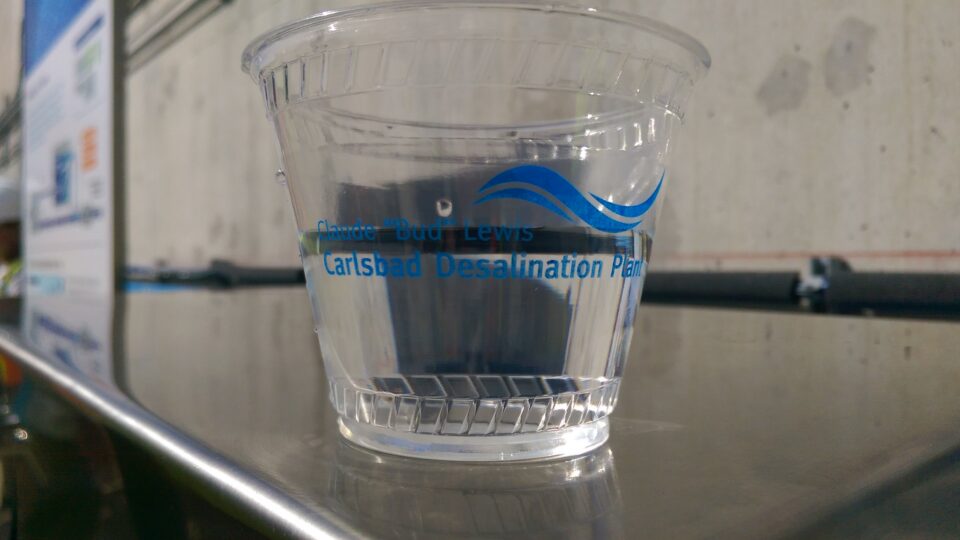
Using the minerals from desalination plants

There are about 18,000 desalination plants around the world that take in 23 trillion gallons of water each year.  The plants produce more than 37 billion gallons of brine – enough to fill 50,000 Olympic-size swimming pools – every day.  Disposing of this brine is an ongoing challenge.  Dumping it into the ocean can damage marine ecosystems.  Inland desalination plants either bury this waste or inject it into wells, adding further cost and complexity to the already expensive process of desalination.

According to researchers at Oregon State University, this waste brine contains large amounts of copper, zinc, magnesium, lithium, and other valuable metals.  A company in Oakland, California called Magrathea Metals has started producing modest amounts of magnesium from waste brine in its pilot projects.  With support from the U.S. Defense Department, it is building a larger-scale facility to produce hundreds of tons of the metal over two to four years. 

Most of the world’s magnesium supply comes from China, where producing it requires burning lots of coal and utilizing lots of labor.  Magrathea’s brine mining makes use of off-peak wind and solar energy and is much less labor intensive.

No large-scale brine mining operations currently exist and when there are some, they might end up having negative environmental impacts.  But in principle, the process should produce valuable metals without the massive land disturbance, acid-mine drainage, and other pollution associated with traditional mining.  Brine mining could turn a growing waste problem into a valuable resource.

**********

Web Links

In Seawater, Researchers See an Untapped Bounty of Critical Metals

Photo, posted February 18, 2017, courtesy of Jacob Vanderheyden via Flickr.

Earth Wise is a production of WAMC Northeast Public Radio

Primary Sidebar

Recent Episodes

  • An uninsurable future
  • Clean energy and jobs
  • Insect declines in remote regions
  • Fossil fuel producing nations ignoring climate goals
  • Trouble for clownfishes

WAMC Northeast Public Radio

WAMC/Northeast Public Radio is a regional public radio network serving parts of seven northeastern states (more...)

Copyright © 2026 ·