• Skip to primary navigation
  • Skip to main content
  • Skip to primary sidebar

Earth Wise

A look at our changing environment.

  • Home
  • About Earth Wise
  • Where to Listen
  • All Articles
  • Show Search
Hide Search
You are here: Home / Archives for defend

defend

The coastal squeeze

June 26, 2025 By EarthWise Leave a Comment

Globally, coastal areas are being squeezed between rising seas on one side and human development on the other.  The average distance from the high waterline to the first built-up area with human structures or paved roads is less than 400 yards around the world.  The narrower a coast, the sooner rising sea levels cause problems.

Narrow coasts have reduced ability to defend against storm surges and other weather events.  Construction close to the sea makes coastal areas extra vulnerable.  Narrow coasts are also bad news for biodiversity.  A study by the Royal Netherlands Institute for Sea Research investigated plant diversity in both the Netherlands and the United States.  They found that the wider the coast was, the greater the plant diversity.

In Florida and Georgia, whenever coastal zones reached a couple of kilometers in width, diversity increased rapidly.  In the Netherlands, only coastal areas at least 3.8 kilometers wide reached their maximum plant diversity, but such areas are rare.  Dutch sand dune areas are typically no more than a kilometer wide, leaving plant diversity at no more than half the possible level.

Limited biodiversity in narrow coastal strips can be somewhat boosted by nature management but would benefit much more by spatial planning.  In the Netherlands, a spot called The Sand Motor is where a gigantic amount of sand was deposited off the coast in 2011.  Since then, natural forces have spread it along the coast.  Such coastal expansion could increase biodiversity.  Biodiversity is not a luxury.  It makes for a better future for coastal defense, a healthy drinking water supply, and a better human food supply.

**********

Web Links

Coastal squeeze is bad for biodiversity, and for us!

Photo, posted June 21, 2017, courtesy of Mark Bias via Flickr.

Earth Wise is a production of WAMC Northeast Public Radio
Protecting New York City From Flooding | Earth Wise

April 21, 2023 By EarthWise Leave a Comment

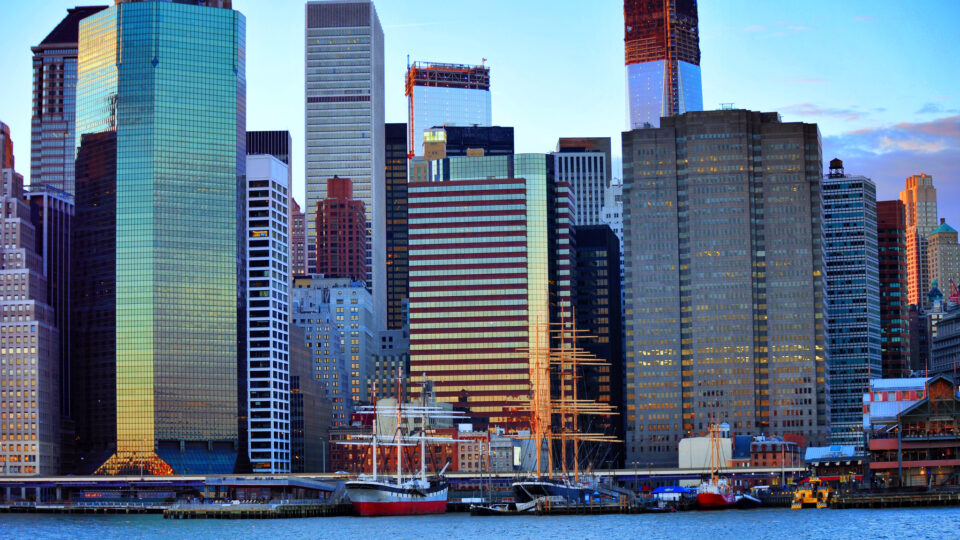
Hurricane Sandy flooded Lower Manhattan in October 2012, closing Wall Street, blacking out power for 250,000 people, and killing 44 New Yorkers.  Within a year, plans were in motion to build berms, floodwalls, and water gates along the city’s Lower East Side in a $770 million first phase of an overall plan to defend New York City from future floodwaters.

Plans got more and more complicated, and the price tag reached $1.45 billion before the existing plan was scrapped by former Mayor Bill de Blasio’s administration in 2018 without involving the community groups that were instrumental in creating the original plan.  After years of lawsuits and court actions, the revised East Side Coastal Resiliency Project is finally proceeding, now at a price tag approaching $3 billion. The project will include 18 moveable floodgates and will protect 110,000 New Yorkers, including 28,000 low-income public-housing residents and is expected to be completed in 2026.

The original larger overall plan was halted in 2020 after former President Trump mocked it and claimed that it would cost $200 billion.  The current plan, created by the U.S. Army Corps of Engineers and known as the 3B alternative, calls for a combination of deployable flood barriers, floodwalls, seawalls, and elevated promenades wrapping around the lower part of Manhattan.  The cost of the project is estimated to be $61 billion. 

In the meantime, over 10 years after Sandy, a similar storm would have almost the same effect today as Sandy had back then.

**********

Web Links

New York City Begins Its Climate Change Reckoning on the Lower East Side, the Hard Way

Photo, posted January 19, 2013 courtesy of Andres Alvarado via Flickr.

Earth Wise is a production of WAMC Northeast Public Radio

Primary Sidebar

Recent Episodes

  • An uninsurable future
  • Clean energy and jobs
  • Insect declines in remote regions
  • Fossil fuel producing nations ignoring climate goals
  • Trouble for clownfishes

WAMC Northeast Public Radio

WAMC/Northeast Public Radio is a regional public radio network serving parts of seven northeastern states (more...)

Copyright © 2026 ·