• Skip to primary navigation
  • Skip to main content
  • Skip to primary sidebar

Earth Wise

A look at our changing environment.

  • Home
  • About Earth Wise
  • Where to Listen
  • All Articles
  • Show Search
Hide Search
You are here: Home / Archives for days

days

How much energy storage is needed?

November 11, 2024 By EarthWise Leave a Comment

Exploring how much energy storage is needed

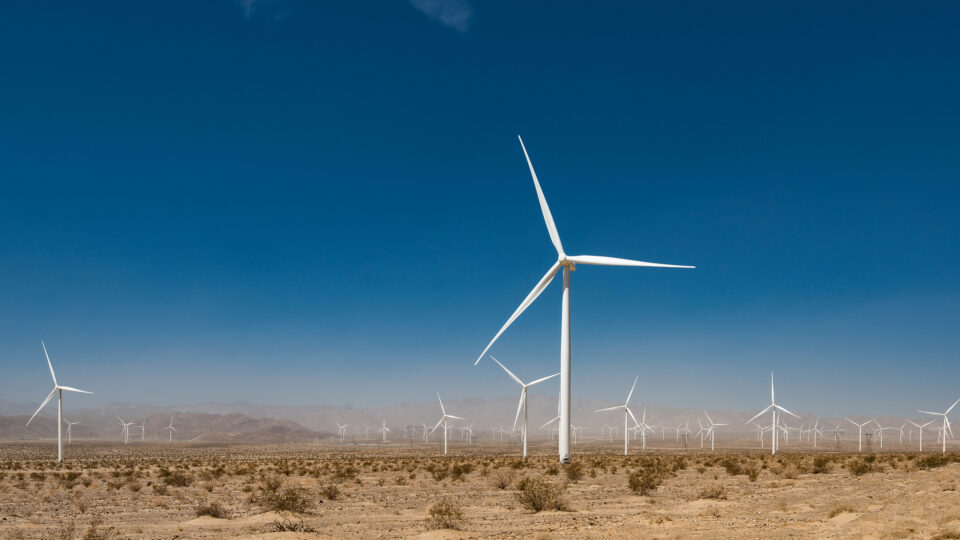
Energy storage is a critical aspect of modern energy systems as they move towards heavy dependence on renewable sources such as solar and wind that don’t produce energy at the same rate all the time.  Excess energy generated by solar power needs to be stored for when the sun isn’t shining; excess wind energy needs to be stored for when the wind isn’t blowing.  But how much storage capacity does the energy system need to have?

Researchers at North Carolina State University have developed a model that can be used to project what a system’s storage needs would be if it were to shift entirely to renewable sources.

The model accounts for how energy production from renewable sources would change during different times of day and different times of the year.  For example, there is much more solar energy generation in the summer when the days are longer, and it is sunny more often.

There is also the issue of short-term vs. long-term energy storage.  Short-term energy storage does not refer to how long a storage device can store the energy.  It refers to how long it can provide power at its rated level.

The study focused on Italy’s energy system, which has suffered in recent years because it had difficulties in obtaining natural gas from Russia due to the invasion of Ukraine.

As the world moves increasingly towards renewable power sources, energy systems need to be able to account for the variability of those sources.  The new model offers policymakers critical information for use in energy system planning.

**********

Web Links

Model Projects Energy Storage Needs for Fossil Fuel-Free Energy System

Photo, posted October 28, 2016, courtesy of Daxis via Flickr.

Earth Wise is a production of WAMC Northeast Public Radio
Predicting major earthquakes

October 10, 2024 By EarthWise Leave a Comment

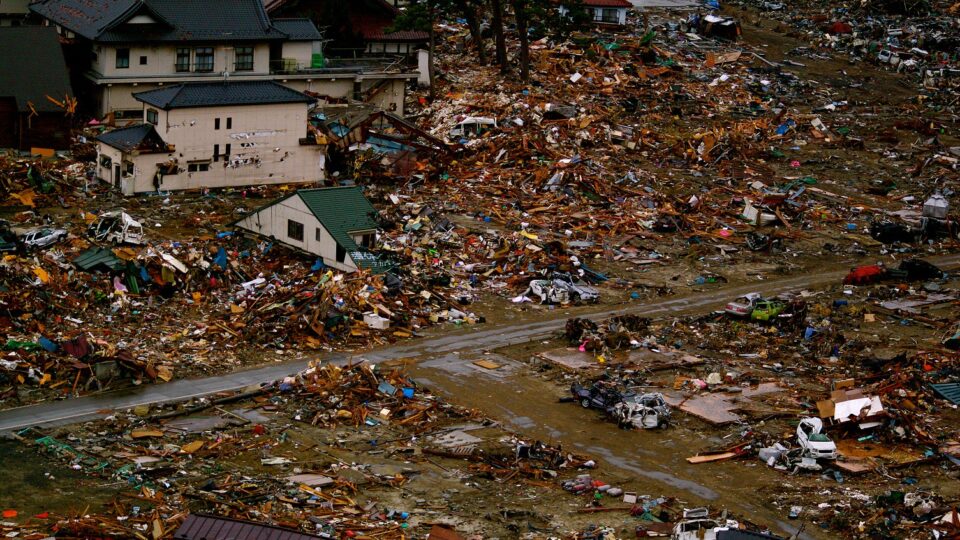
Researchers are exploring how to predict major earthquakes

Natural disasters continue to be major threats for people, just as they always have been.  But modern technology has greatly improved our ability to prepare for and, in many cases, escape from the worst effects of these events.  A good example is hurricane forecasting.  Nowadays, there is plenty of warning when a major hurricane is headed toward a populous area.  It is still up to people to get away from the danger zone, but at least there is the opportunity to do so.

Major earthquakes are a different story.  There is generally little or no warning when one will strike.  But scientists at the University of Alaska Fairbanks and the Ludwig Maximilian University in Munich, Germany have developed a technique that may provide days or even months of warning about an impending major earthquake.

The detection method is based on machine learning and is described in a paper in the journal Nature Communications.  The researchers wrote a computer algorithm that looks for abnormal seismic activity.  Advanced statistical techniques found that approximately three months of abnormal low-magnitude regional seismicity occurred in the regions where two major earthquakes took place.  One was the magnitude 7.1 Anchorage earthquake in 2018 and the other was a similar-sized quake in Ridgecrest, California in 2019.

Considerably more testing – particularly in real-time rather than looking at historical data – is needed.  But accurate earthquake forecasting has the potential to save lives and reduce economic losses.  However, there are ethical and practical questions to answer.  False alarms could lead to unnecessary panic, economic disruption, and loss of public trust.  On the other hand, missed predictions can have catastrophic consequences.

**********

Web Links

UAF scientist’s method could give months’ warning of major earthquakes

Photo, posted January 22, 2012, courtesy of the Climate and Ecosystems Change Adaptation Research University Network via Flickr.

Earth Wise is a production of WAMC Northeast Public Radio

Phoenix Is Frying | Earth Wise

August 15, 2023 By EarthWise Leave a Comment

Phoenix heat wave

The mythical Phoenix is a bird that repeatedly dies in a fire of its own making.  During July, the five million inhabitants of greater Phoenix Arizona may have felt like they were reliving that myth as multiple temperature records were shattered in a massive heatwave.

On June 30, the high temperature in Phoenix was 110 degrees.  From then on, the daily highs were relentlessly at or above 110 degrees, topping out at 119 on July 20.  The previous record for consecutive days at or above 110 was 18 set in June 1974.  The streak continued all the way until July 31, when incoming desert monsoons resulted in the high temperature dropping to 107 degrees – ending the streak at 31 days.  Along the way, there were 16 days with temperatures at or above 115 degrees. 

During the month, there were 17 consecutive days when the lowest temperature in Phoenix was at least 90 degrees.  The previous record for that was 7 days, set in 2020.  Because of these lofty low temperatures, July was also the hottest month in terms of average temperature with a reading well above 102 degrees.  It was the first time that the average temperature has ever been in three digits.  The previous record was 99.1 degrees in 2020.

Phoenix is an extreme case, but it was not alone in having a hot July.  Globally, it was the hottest July on record that included major heat waves in the U.S., Mexico, China, southern Europe, and elsewhere.  The daily record for the hottest average temperature on Earth ever measured was also broken several times during the month.

**********

Web Links

Phoenix heat wave is shattering temperature records

Photo, posted September 22, 2022, courtesy of Flickr.

Earth Wise is a production of WAMC Northeast Public Radio
Wildfire Smoke And Air Quality | Earth Wise

November 1, 2022 By EarthWise Leave a Comment

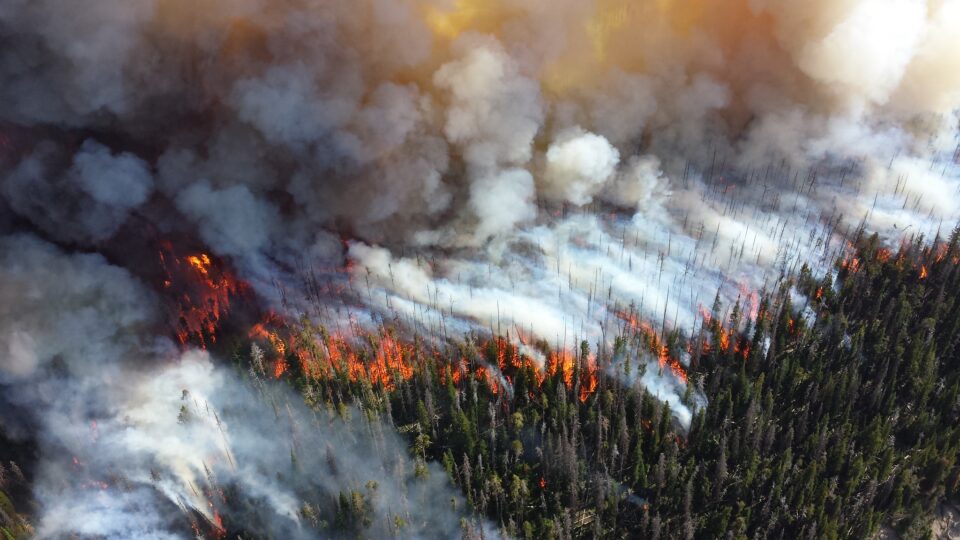
Wildfire smoke is wreaking havoc on air quality

According to a new study published by Stanford University, the average number of people in the U.S. exposed to unhealthy levels of airborne particulates at least one day a year has increased 27-fold over the last decade as a result of wildfires.

Millions of Americans are now routinely exposed to plumes of wildfire smoke that sometimes travel thousands of miles across the country.  Accumulations of deeply unhealthy air have emerged mainly in the West, where increasingly intense wildfires have become all too common.  Six of the seven largest wildfires in California recorded history have occurred since 2020.

Wildfire smoke has resulted in school closures, flight postponements, and even cancelled concerts.  Overall, the regression in air quality has undone much of the clean air progress that has taken place since the advent of the Clean Air Act in 1970.

Wildfire smoke has added about 5 micrograms of PM 2.5 particles per cubic meter of air on average in many places in the West.  This is a substantial increase from national levels, which are a total of about 10 micrograms per cubic meter and mostly result from emissions from cars, trucks, and power plants.

A decade ago, fewer than 500,000 Americans were exposed to any days of an air quality index of 100 or more due to smoke, which is a level that is deemed unhealthy.  In 2020, 25 million Americans were in areas with such levels at least one day during the year.

Ordinarily, if people don’t live near a highway or power plant, their air quality is likely to be pretty good.  But incursion from wildfire smoke is changing that, and the trend is likely to increase.

**********

Web Links

Number of Americans Exposed to Harmful Wildfire Smoke Has Increased 27-Fold

Photo, posted August 19, 2013, courtesy of Mike Lewelling / National Park Service via Flickr.

Earth Wise is a production of WAMC Northeast Public Radio

Coastlines and Climate Change | Earth Wise

August 16, 2021 By EarthWise Leave a Comment

Scientists predict how climate change will affect coastlines

Climate change poses a fundamental threat to life on earth and has already left observable effects on the planet.  For example, glaciers have shrunk, oceans have warmed, heatwaves have become more intense, and plant and animal ranges have shifted. 

As a result of the changing climate, coastal communities around the world are confronting the increasing threats posed by a combination of extreme storms and the predicted acceleration of sea level rise. 

Scientists from the University of Plymouth in England have developed a simple algorithm-based model to predict how coastlines could be affected by climate change.  This model allows coastal communities to identify the actions they need to take in order to adapt to their changing environment.

The Forecasting Coastal Evolution (or ForCE)  model has the potential to be a game-changer because it allows adaptations in the shoreline to be predicted over timescales of anything from days to decades. As a result, the model is capable of predicting both the short-term impact of extreme storms as well as predicting the longer-term impact of rising seas.   

The ForCE model relies on past and present beach measurements and data showing the physical properties of the coast.  It also considers other key factors like tidal, surge, and global sea-level rise data to assess how beaches might be impacted by climate change.  Beach sediments form the frontline defense against coastal erosion and flooding, and are key in preventing damage to valuable coastal infrastructure.

According to the study, which was recently published in the journal Coastal Evolution, the ForCE model predictions have shown to be more than 80% accurate in current tests in South West England.

**********

Web Links

New model accurately predicts how coasts will be impacted by storms and sea-level rise

Photo, posted April 17, 2016, courtesy of Nicolas Henderson via Flickr.

Earth Wise is a production of WAMC Northeast Public Radio.

Primary Sidebar

Recent Episodes

  • An uninsurable future
  • Clean energy and jobs
  • Insect declines in remote regions
  • Fossil fuel producing nations ignoring climate goals
  • Trouble for clownfishes

WAMC Northeast Public Radio

WAMC/Northeast Public Radio is a regional public radio network serving parts of seven northeastern states (more...)

Copyright © 2026 ·