• Skip to primary navigation
  • Skip to main content
  • Skip to primary sidebar

Earth Wise

A look at our changing environment.

  • Home
  • About Earth Wise
  • Where to Listen
  • All Articles
  • Show Search
Hide Search
You are here: Home / Archives for cycles

cycles

The cicadas are coming

June 18, 2025 By EarthWise Leave a Comment

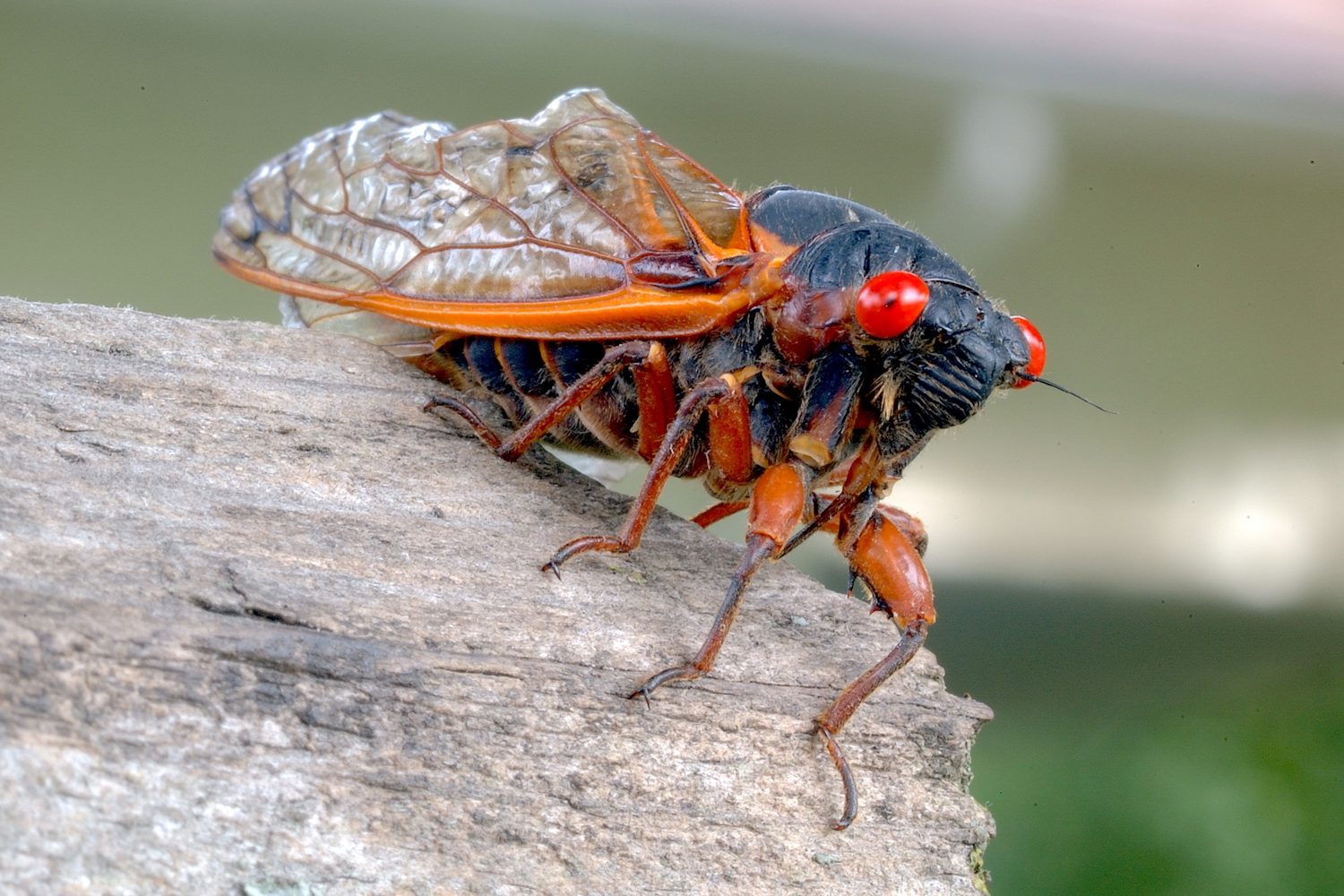
After hiding underground for the last 17 years, billions of cicadas are taking to the skies this summer.  This batch of insects, known as Brood XIV, will cover more of the U.S. than any other 17-year brood.  New York and at least 13 other states – Georgia, Kentucky, Maryland, Massachusetts, New Jersey, North Carolina, Ohio, Pennsylvania, South Carolina, Tennessee, Virginia, West Virginia, and parts of Indiana are being serenaded by the sound of cicadas in May and June.

There are 15 broods of periodical cicadas that emerge every 13 or 17 years.  They come out when soil temperatures reach 64 degrees.  Around the world there are annual cicadas while periodical cicadas can only be found in the eastern United States.

Once the insects emerge, they will issue their noisy, chirping mating calls for just a few weeks before they lay eggs and die.  The offspring from the eggs will burrow underground and remain dormant or in the nymph stage feeding on tree roots for another 17 years.  Surfacing in vast numbers is a way to overwhelm predators and ensure that at least some cicadas survive to reproduce. 

The emergence of these insects provides a bounty of food to squirrels, lizards, birds, and other creatures.  A study found that once cicadas emerge, the population of cuckoos, blue jays, and red-bellied woodpeckers grows.

As the climate changes, the timing of cicada cycles may also change.  Warmer weather will lead to cicadas emerging earlier in the year.  Eventually, even the time they spend underground may shorten.

**********

Web Links

After 17 Years Underground, Massive Cicada Brood to Swarm U.S.

Photo, posted July 16, 2017, courtesy of Renee Grayson via Flickr.

Earth Wise is a production of WAMC Northeast Public Radio

Battery life in electric cars

January 9, 2025 By EarthWise Leave a Comment

Most of us have lots of experience with the batteries in phones, computers, and other gadgets.  Batteries don’t last forever, and we sometimes have to replace them.  It’s a fact of life.   These days, it’s becoming more common to drive electric cars and the fundamental principle is the same.  However, the battery pack in an EV is the most expensive part of the car, so its reliability and lifespan is a greater concern.

EV batteries generally have generous warranties.  In the US, EV batteries are required by federal law to be covered for at least 8 years or 100,000 miles, whichever comes first.  So, the financial exposure from the battery pack is reasonably limited.  Even so, EV owners would like to know that their car’s battery pack is likely to last a long time.

Battery life is generally determined by laboratory tests involving repeated charge-discharge cycles over a relatively short period of time, as opposed to those cycles being spaced out over years.

A new study by Stanford University looked at battery performance under conditions much more like what would be experienced in the real world.  Cars experience frequent acceleration, braking that charges the batteries a bit, lots of stops, periods of rest, and so forth.  Nothing like just charging and discharging repeatedly.

The study found that today’s EV batteries may last up to 40% longer than expected.  Real-world stop-and-go driving benefits batteries more than standard test conditions.

The cost of EV batteries continues to get lower all the time and it is likely to be quite a long time before one is likely to need a new battery assuming one even keeps the car long enough.

**********

Web Links

Existing EV batteries may last up to 40% longer than expected

Photo, posted August 27, 2021, courtesy of Ron Frazier via Flickr.

Earth Wise is a production of WAMC Northeast Public Radio
Primary Sidebar

Recent Episodes

  • An uninsurable future
  • Clean energy and jobs
  • Insect declines in remote regions
  • Fossil fuel producing nations ignoring climate goals
  • Trouble for clownfishes

WAMC Northeast Public Radio

WAMC/Northeast Public Radio is a regional public radio network serving parts of seven northeastern states (more...)

Copyright © 2025 ·