• Skip to primary navigation
  • Skip to main content
  • Skip to primary sidebar

Earth Wise

A look at our changing environment.

  • Home
  • About Earth Wise
  • Where to Listen
  • All Articles
  • Show Search
Hide Search
You are here: Home / Archives for constraints

constraints

Politics and plastic

December 19, 2024 By EarthWise Leave a Comment

Political differences are blocking plastic reforms

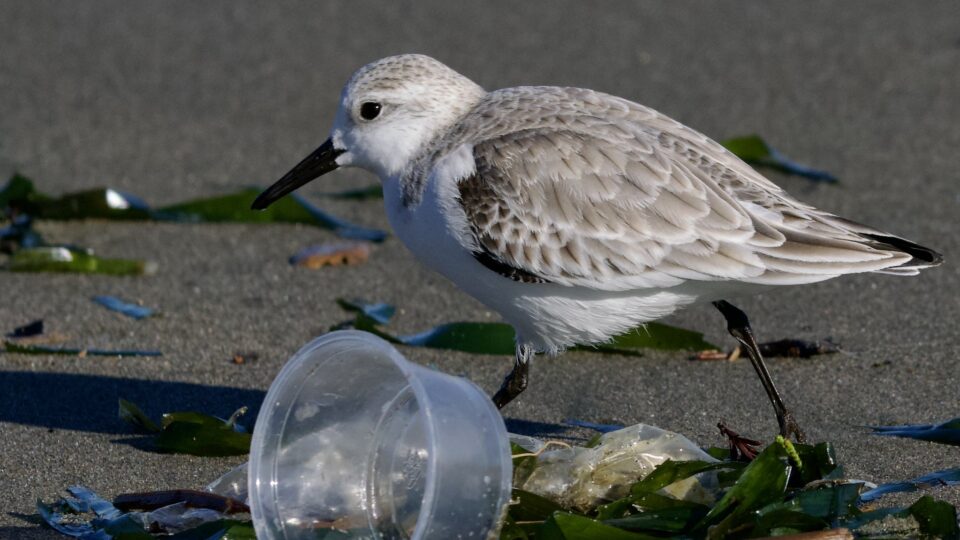
The world currently produces nearly half a billion tons of plastic each year.  This is more than twice the amount it produced 20 years ago.  Half of all plastics ever manufactured have been made in the past 20 years.  Plastic waste is everywhere.  About eight million tons of plastic waste escapes into the ocean each year.

Environmental groups have urged nations to adopt a legally binding treaty to address the ever-growing problem of plastic pollution. The United Nations climate conference in South Korea last month took up the issue of reaching agreement on such a treaty.  At what was supposed to be the final round of talks on the topic, delegates could not bridge wide differences on what such a treaty should contain.

The main bone of contention was whether the treaty should include limits on plastic production itself.  Saudi Arabia, Russia, Kuwait, and other oil-producing countries opposed any curbs on plastic production.   They also opposed the phase-out of harmful chemicals used in the production of plastic.

The Saudi delegation claimed that if the issue of plastic pollution is addressed, there should be no problem with producing plastics.  They said the problem is pollution itself, not plastics.  They proposed a focus on improving recycling and waste management.

Of course, preventing plastic pollution from occurring is an extremely challenging thing to do.  Delegates from countries pushing for a wide-ranging treaty – led by Rwanda – were unwilling to accept a toothless theory lacking real constraints on the plastics industry.

As the conference ended, delegates said that they would reconvene in future months to try again to produce a treaty.  No date or place has been announced.

**********

Web Links

Nations Fail to Reach an Agreement on Plastic Pollution

Photo, posted February 4, 2023, courtesy of Ingrid Taylar via Flickr.

Earth Wise is a production of WAMC Northeast Public Radio
Colorful Solar Panels | Earth Wise

September 22, 2022 By EarthWise Leave a Comment

Creating color solar panels

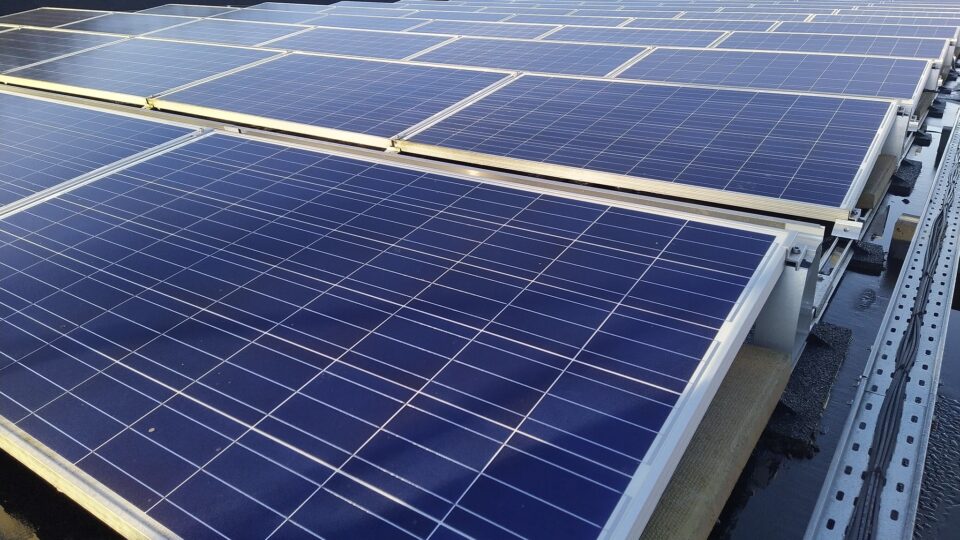
More and more buildings and public spaces are incorporating solar panels and not only just on rooftops.  Some buildings are incorporating power-generating structures all over their facades.

Using solar panels in this way puts some design constraints on buildings because solar panels are typically a deep black color.  This is because solar panels need to absorb light and making them any other color decreases their ability to do so and generate power.  But the problem is that people don’t necessarily want a black building.

One alternative to traditional solar panel design is to use structural sources of color that include microscopic shapes that only reflect specific light frequencies, like the scales on butterfly wings.  But this approach generally leads to iridescence – which might not be what is wanted – and is often quite expensive to implement.

A team of researchers at a university in Shanghai has now demonstrated a way to give solar panels color that is easy and inexpensive to apply and that does not reduce their ability to produce energy efficiently.

The technique involves spraying a thin layer of a material called a photonic glass onto the surface of solar cells.  The photonic glass is made of a thin, disorderly layer of dielectric microscopic zinc sulfide spheres.  Even though most light can pass through the photonic glass, certain colors are reflected back, depending on the sizes of the spheres.  By varying that size, the researchers created solar panels that were blue, green, or purple with only a very small drop in solar panel efficiency.

The solar panels made this way maintained their color and performance under durability testing.  With this new technology, there may soon be colorful solar panels on our buildings.

***********

Web Links

Colorful solar panels could make the technology more attractive

Photo, posted December 15, 2021, courtesy of Pete via Flickr.

Earth Wise is a production of WAMC Northeast Public Radio

Hacking Photosynthesis | Earth Wise

September 14, 2020 By EarthWise Leave a Comment

benefits of hacking photosynthesis

A team led by the University of Illinois has been pursuing a project called Realizing Increased Photosynthetic Efficiency or RIPE, which has the aim of improving photosynthesis in order to provide farmers with higher-yielding crops in an increasingly challenging climate.  Photosynthesis is the natural, sunlight-powered process that plants use to convert carbon dioxide into sugars that fuel growth, development, and for us, crop yield.

If we think of photosynthesis as a factory line composed of multiple machines, the growth of plants is limited by the slowest machines in the line.  The RIPE project has identified some steps in photosynthesis that are slower than others and are attempting to enable plants to build more machines to speed up those slower steps.

The researchers modeled a total of 170 steps in the process of photosynthesis to identify how plants could manufacture sugars more efficiently.  In the study, the team increased crop growth by 27% by resolving two constraints:  one in the first part of photosynthesis where plants turn light energy into chemical energy and one in the second part when carbon dioxide is turned into sugars.

The researchers effectively hacked photosynthesis by adding a more efficient transport protein from algae to enhance the energy conversion process. 

In the greenhouse, these changes improved crop productivity by 52%, but in field trials, which are a more important test, these photosynthetic hacks boosted crop production by 27%.

Ultimately, the team hopes to translate these discoveries to a series of staple food crops, such as cassava, cowpea, corn, soybean and rice, which are needed to feed the world’s growing population this century.

**********

Web Links

Photosynthetic hacks can boost crop yield, conserve water

Photo, posted June 14, 2017, courtesy of Alex Holyoake via Flickr.

Earth Wise is a production of WAMC Northeast Public Radio.

Primary Sidebar

Recent Episodes

  • An uninsurable future
  • Clean energy and jobs
  • Insect declines in remote regions
  • Fossil fuel producing nations ignoring climate goals
  • Trouble for clownfishes

WAMC Northeast Public Radio

WAMC/Northeast Public Radio is a regional public radio network serving parts of seven northeastern states (more...)

Copyright © 2025 ·