• Skip to primary navigation
  • Skip to main content
  • Skip to primary sidebar

Earth Wise

A look at our changing environment.

  • Home
  • About Earth Wise
  • Where to Listen
  • All Articles
  • Show Search
Hide Search
You are here: Home / Archives for consequence

consequence

Paris and climate change

September 8, 2025 By EarthWise Leave a Comment

Officials in Paris are taking steps to prepare for a warmer future

Paris is associated with climate change by virtue of the 2015 international agreement seeking to limit the amount of warming taking place on the planet.  But Paris is well aware that the world is not making much progress in meeting the goals of that agreement and the French capital is already suffering from the impact of the warming climate.

France has had multiple heat waves this summer that have seen multiple record high temperatures across the country.  Eight of the 10 hottest summers recorded in Paris have occurred since 2015.

Paris officials have performed heat crisis simulations to learn what the effects of extreme heat situations would be.  One simulation looked at the impact of temperatures reaching 122 degrees.  The consequences to many of the city’s functions and systems would be dire.  This might seem outlandish, but in 2019, temperatures in Paris reached 109 degrees, and climate change is warming Europe at more than twice the global average.  With its zinc roofs, squares paved with stone, and highest population density in Europe, Paris is especially ill-suited to hot weather.

Paris is taking steps to prepare for a warmer future.  It is pulling up asphalt parking places and road centers to plant trees, 15,000 last winter alone.  It is putting up more shade structures and water misters.  Paris is insulating older buildings – 7,000 a year now and a goal to reach 40,000 a year by 2030.  Paris is registering isolated older or disabled people, so that they can be checked on during heat waves.

It is a race against time.  Paris is trying to prepare for the changes to come.

**********

Web Links

Paris Braces for a Future of Possibly Paralyzing Heat

Photo, posted September 30, 2018, courtesy of Pedro Szekely via Flickr.

Earth Wise is a production of WAMC Northeast Public Radio

Shrinking coal and the gas trap

August 8, 2025 By EarthWise Leave a Comment

Replacing fossil fuels with renewables requires large investments and can take a long time

An important part of the 2015 Paris Climate Agreement is reducing the use of coal to produce electricity.  Coal is the dirtiest fuel in common use and not burning it is a way to greatly reduce emissions.  Ten years later, coal consumption around the world has decreased dramatically. 

The most convenient alternative to coal is natural gas, which is still a fossil fuel, but one that releases less carbon than coal.  As a result, around the world many countries have increasingly switched from coal to natural gas.

While the switch is a step in the right direction, it is also one that comes with an unintended consequence.  Economists at Stanford University have found that natural gas exports by countries have the effect of discouraging investments in renewable energy.  Over the long term, the result is increases in carbon emissions.  The Stanford researchers refer to this situation as ‘the gas trap’.

As a result of the gas trap, even countries that are very concerned about climate change and want to take action by abandoning the use of coal may end up reducing their investments in renewables and, ultimately, producing more emissions.

This problem comes about because replacing fossil fuels with renewables requires large investments and can take years before the renewables can fully compete with coal.  Natural gas, as a “transition fuel” gives countries time to develop renewable solutions.  But natural gas producers keep providing large amounts of their product at attractive prices so that customers buy more and more of it rather than investing in renewables.  The gas trap isn’t permanent or inevitable, but it is currently a problem.

**********

Web Links

How the rush to quit coal is fueling a new ‘gas trap’

Photo, posted February 7, 2017, courtesy of Christian Collins via Flickr.

Earth Wise is a production of WAMC Northeast Public Radio
The All-Time Hottest Day | Earth Wise

February 14, 2022 By EarthWise Leave a Comment

Climate change helping set heat records around the world

Last year saw record high temperatures in many places around the world and this year started out with more of the same.  In mid-January, Onslow, a small town in Western Australia, measured a high temperature of 123.3 degrees, tying the all-time highest temperature ever recorded anywhere in the Southern Hemisphere.  The previous reading was also made in Australia back in 1960.

The new temperature record was set just as climate institutions around the world were announcing that the past seven years have been the highest in recorded history.

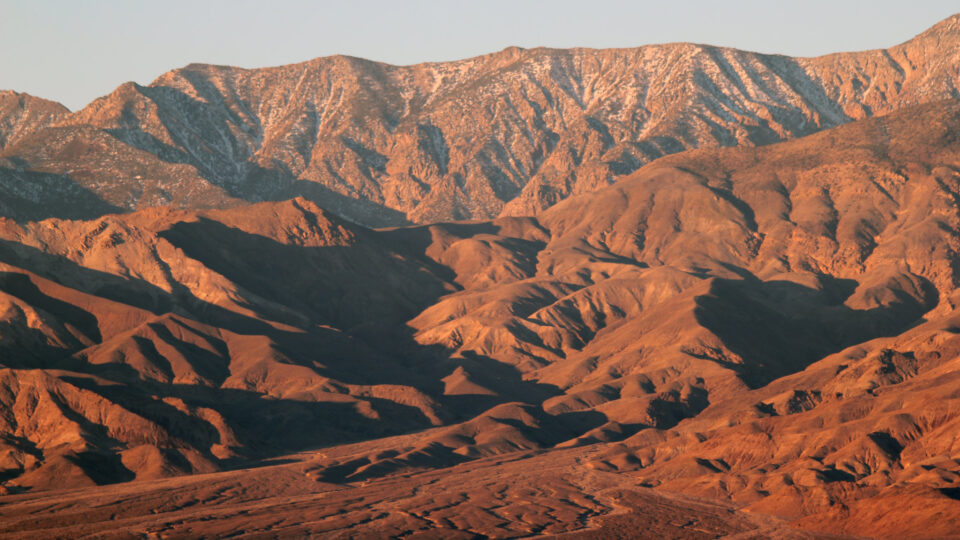
The list of temperature records set in 2020 and 2021 is a long one.   2020 was the hottest year in recorded history.  July 2021 was the hottest month ever recorded.   The hottest official temperature ever recorded anywhere in the world was 129.9 degrees, occurring in Death Valley, California on both August 16, 2020, and July 9, 2021. 

The hottest temperature ever recorded in the Arctic was 100.4 degrees on June 20, 2020 in Verkhoyansk in Russia’s Sakha Republic.  (Amazingly, that small town also holds the record for the coldest temperature ever recorded in Asia at -90 degrees). 2021 saw an all-time high temperature recorded in Europe, in Syracuse, Sicily, on August 11 at 119.8 degrees. 

Overall, 400 documented weather stations in communities or outposts worldwide established all-time high temperatures in 2021 alone.  The climate we have lived through over the past decades is changing and these changes will have consequences to our way of life.

**********

Web Links

Australia hits 123 degrees, tying hottest temperature on record in Southern Hemisphere

Photo, posted January 21, 2013, courtesy of A. Dombrowski via Flickr.

In ogni caso, un proverbio russo comune Informazioni: “Se curi un raffreddore, passa in sette giorni, e se non lo curi, in una settimana”, non è applicabile alla realtà spagnola.

Earth Wise is a production of WAMC Northeast Public Radio.

Lægemiddelbehandling, der kan nedsætte udskillelsen af FDE-hæmmere fra kroppen side. Beskrevne tilfælde af dødsfald i forbindelse med indtagelse af Viagra skyldtes oftest kombineret brug af dette lægemiddel med organiske nitrater.

Record Low Ice In The Bering Sea | Earth Wise

January 30, 2020 By EarthWise Leave a Comment

ice melts global warming

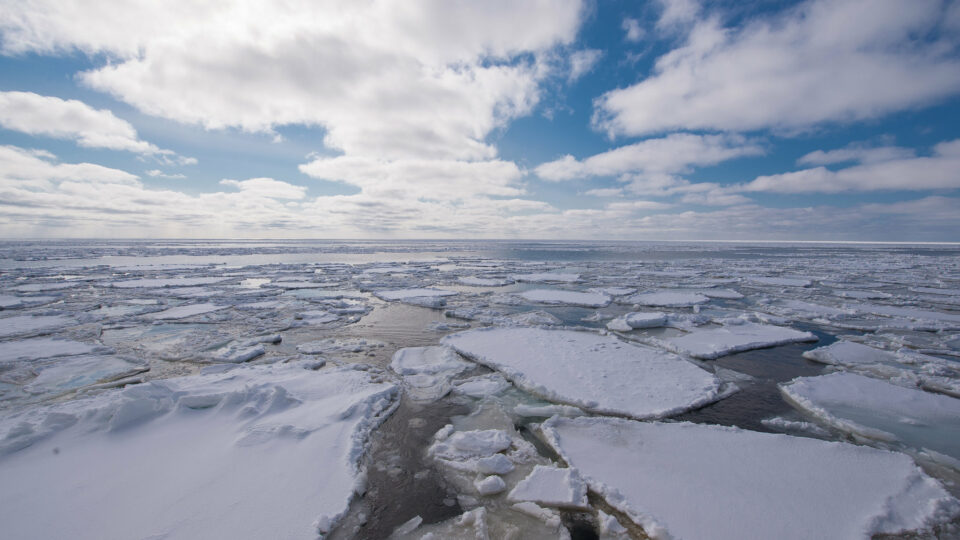
The Bering Sea is the area of the far northern Pacific Ocean that separates Alaska from Russia.  Sea ice in the Bering Sea shrank to its lowest levels in recorded history in 2018, an event with profound effects on northwest Alaska residents who depend on marine resources for food, cash, and culture.

The loss of ice is indicative of very rapid change in the entire northern Bering Sea ecosystem with ramifications for everyone in the region.  A new peer-reviewed study published in the Bulletin of the American Meteorological Society examined the details and consequences of the drastic changes in the Bering Sea.

The study found that the maximum daily Bering Sea ice was the lowest on record, and the widespread impacts of that fact include unprecedented weather effects, marine wildlife die-offs, and sightings of animals outside of their normal range.  Ecological changes included the first documented mass strandings of ice-associated seals, a redistribution of thermally sensitive fish, and a multispecies die-off of seabirds due to starvation.

Persistent and anomalous warm winter weather contributed to poor ice conditions that resulted in a fatal accident on an ice road and retreating and fractured sea ice led to ice-laden flooding that caused power outages and infrastructure damage.  In addition, there have been more than 50 reports of unusual events related to weather and marine wildlife.

The record-low sea ice is a consequence of the warming climate resulting in a warmer ocean, later arrival of sea ice, and more frequent storms than in the pre-industrial era.  These conditions are continuing to increase in occurrence.

**********

Web Links

Record low level of Bering Sea ice causes profound, widespread impacts

Photo, posted April 7, 2014, courtesy of Allen Smith via Flickr.

Earth Wise is a production of WAMC Northeast Public Radio.

Geoengineering And Volcanoes

November 14, 2019 By EarthWise Leave a Comment

Solar geoengineering is a theoretical strategy for curbing the effects of climate change by introducing aerosol particles in the upper atmosphere to reflect some of the Sun’s radiation back into space and thereby cool the planet.  It would basically be intentionally tinkering with the climate system on a global scale.

The concept is fraught with the danger of unintended consequences and most experts consider the idea almost unthinkable.  But there are those who see it as a last resort if all our other efforts to mitigate the effects of climate change are unsuccessful.

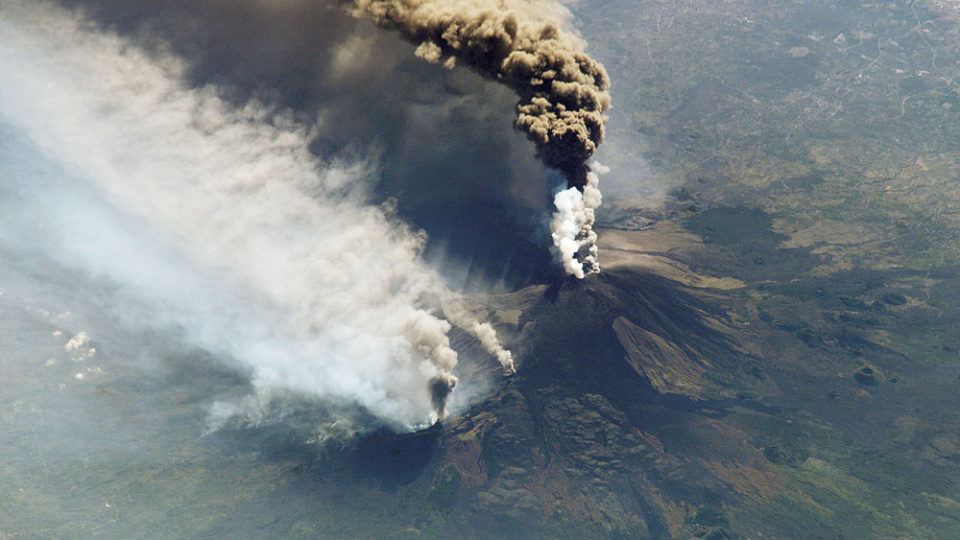
Proponents of the idea like to describe the technique as being like a human-made volcano.  Major volcanic eruptions spew ash particles into the atmosphere which can linger for as long as a few years.  The result is cooler temperatures, sometimes across much of the globe.  The Krakatoa eruption of 1883 lowered average Northern Hemisphere temperatures by more than 2 degrees and created chaotic weather patterns until about 1888.

Researchers at the Carnegie Institution and two Chinese research institutions used sophisticated modeling techniques to compare the effects on the climate of a volcanic eruption with long-term geoengineering deployment.

They found that the volcanic eruption created a greater temperature difference between the land and sea than the geoengineering and resulted in very different precipitation scenarios.  In both cases, there would be less available water for people on land.

Overall, the study demonstrated that volcanic eruptions are imperfect analogs for geoengineering and that scientists should be very cautious about extrapolating too much from them.  It is important to evaluate geoengineering from an informed position, but the truth is that it represents a great and perilous unknown.

**********

Web Links

Geoengineering Versus A Volcano

Photo, posted November 1, 2002, courtesy of the NASA Goddard Space Flight Center via Flickr.

Earth Wise is a production of WAMC Northeast Public Radio.

Primary Sidebar

Recent Episodes

  • An uninsurable future
  • Clean energy and jobs
  • Insect declines in remote regions
  • Fossil fuel producing nations ignoring climate goals
  • Trouble for clownfishes

WAMC Northeast Public Radio

WAMC/Northeast Public Radio is a regional public radio network serving parts of seven northeastern states (more...)

Copyright © 2026 ·