
• Skip to primary navigation
  • Skip to main content
  • Skip to primary sidebar

Earth Wise

A look at our changing environment.

  • Home
  • About Earth Wise
  • Where to Listen
  • All Articles
  • Show Search
Hide Search
You are here: Home / Archives for composites

composites

Breaking Down Polystyrene | Earth Wise

April 20, 2021 By EarthWise Leave a Comment

Scientists have developed a way to break down polystyrene

The proliferation of global plastic waste continues to be a growing problem for the world.  Hundreds of millions of tons of plastics are produced each year and most of it is used once and then discarded.  The properties that make plastics so attractive – durability and chemical stability – make it difficult to do anything with discarded plastics other than deposit them in landfills – where they don’t easily degrade over time – or burn them, which dumps carbon dioxide and various hazardous gases into the atmosphere.

Polystyrene is one of the most widely used plastics.  It is found in foam packaging materials, disposable food containers, plastic cutlery, storage containers, and many other places. 

Recycling plastics like polystyrene is generally not economically feasible.  Sorting plastics by type is time and labor intensive and the chemical processes required to break down plastics into usable precursor materials require significant energy input and the use of toxic solvents.

Recently, a team of scientists at Ames Laboratory in Iowa has developed a process based on ball-milling that deconstructs commercial polystyrene in a single step, at room temperature, in ambient atmosphere, and in the absence of harmful solvents.

Ball-milling is a technique that places materials in a milling vial with metal ball bearings which is then agitated to initiate a chemical reaction.  This approach is known as mechanochemistry.

The method represents an important breakthrough that enables dismantling of a polymer that includes its chemical breakdown without requiring solvents or the high temperatures generally needed to thermally decompose it.  This discovery opens up new avenues for low-temperature recovery of monomers from polymer-based systems that include composites and laminates.  It could be a very useful weapon in the battle against plastic waste.

**********

Web Links

Polystyrene waste is everywhere, and it’s not biodegradable. Scientists just found a way to break it down.

Photo, posted December 11, 2010, courtesy of Warrenski via Flickr.

Earth Wise is a production of WAMC Northeast Public Radio.
Car Parts From Agricultural Waste

January 11, 2019 By EarthWise Leave a Comment

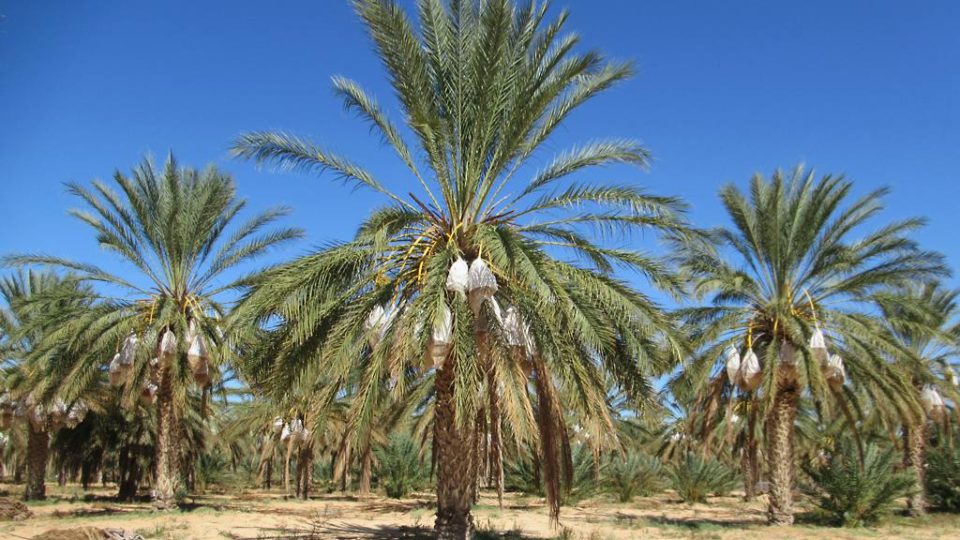
A new bio-composite material made from date palm fiber biomass could be used to produce sustainable, lightweight and low-cost parts for the automobile and marine industries.

A team of researchers from the UK has developed a date palm fiber polycaprolactone composite that is completely biodegradable, renewable,sustainable and recyclable, in contrast to synthetic composite materials reinforced by glass and carbon fibers. The team tested the mechanical properties of the material and found that it achieved better low-velocity impact resistance than traditional man-made composites.

The idea would be to use the material in non-structural auto parts such as car bumpers and door linings.   The result would be to reduce the weight of vehicles, contributing to less fuel consumption and lower emissions.  The new material can be produced using less energy than glass and carbon fibers and is biodegradable and therefore easier to recycle.

Date palm fibers are one of the most available natural fibers in many parts of the world.  The trees produce a large quantity of agricultural waste, which is mostly burned or land-filled,causing serious environmental problems.

Convincing industry to use a new class of materials such as natural-fiber reinforced composites is challenging.  First it is necessary to obtain consistent,reliable properties from the material. Then the industries need to work closely with the developers to test the materials and convince themselves of the viability of using them.  The team, led by researchers at the University of Portsmouth, has been working with industry to test the viability of parts made from a variety of other sustainable materials as well including flax, hemp, and jute.  Someday, our cars may have bumpers made from agricultural waste.

**********

Web Links

Agricultural waste drives us closer to greener transport

Photo, posted October 27, 2017, courtesy of David Stanley via Flickr. 

Earth Wise is a production of WAMC Northeast Public Radio.

Primary Sidebar

Recent Episodes

  • An uninsurable future
  • Clean energy and jobs
  • Insect declines in remote regions
  • Fossil fuel producing nations ignoring climate goals
  • Trouble for clownfishes

WAMC Northeast Public Radio

WAMC/Northeast Public Radio is a regional public radio network serving parts of seven northeastern states (more...)

Copyright © 2026 ·