• Skip to primary navigation
  • Skip to main content
  • Skip to primary sidebar

Earth Wise

A look at our changing environment.

  • Home
  • About Earth Wise
  • Where to Listen
  • All Articles
  • Show Search
Hide Search
You are here: Home / Archives for colder

colder

Toxic algae and West Coast marine life

June 5, 2025 By EarthWise Leave a Comment

Over the first several months of this year, hundreds of sea lions, dolphins, and seabirds have fallen ill or died after eating sardines or anchovies that had been feeding on an algal bloom along the California coast since winter.  The biotoxin in the algae accumulates in the feeder fish.

Two cases of whales dying from the biotoxin have been confirmed by two nonprofit organizations tasked with testing dead mammals.  These were a humpback that washed ashore in Huntington Beach in January and a minke whale found dead in Long Beach in April.

This is the fourth year a row that California has experienced major algal blooms.  Warmer waters are causing blooms to be bigger and more damaging than they have been before.  They enter into new areas and contaminate the food web for longer.  The warmer waters accelerate algae growth that is further fueled by nutrients that rise to the surface from deeper colder waters driven by winds that blow parallel to the coast.  This year’s algae event started earlier than usual and is lasting longer than normal.

More than a dozen animal rescue and rehabilitation groups that form NOAA’s West Coast Marine Mammal Stranding Network are providing resources to try to respond to the situation.  At the Marine Mammal Care Center in Los Angeles, more than 80 sea lions and seals were being treated for domoic acid poisoning, the result of ingesting algae neurotoxin.  Since February, it has cared for more than 300 poisoned animals.

Marine mammals are sentinel species for humans who also consume seafood.  The West Coast ocean ecosystem is currently filled with toxins.

**********

Web Links

California Toxic Algal Bloom Blamed for Months-long Marine Life Poisoning

Photo, posted March 26, 2025, courtesy of Marnee Jill via Flickr.

Earth Wise is a production of WAMC Northeast Public Radio
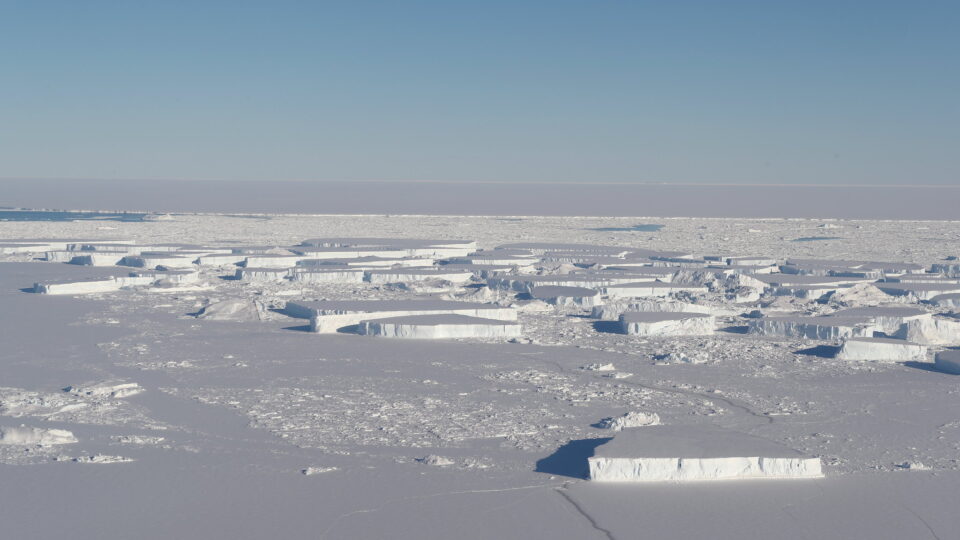
The end of a supergiant iceberg

November 16, 2023 By EarthWise Leave a Comment

In 2017, a supergiant iceberg known as A-68 calved from the Larsen C ice shelf in Antarctica. In 2020, it drifted close to South Georgia, a British island in the South Atlantic Ocean, and then began to break up.  This iceberg was enormous – nearly the size of Delaware.  When it started to break up, it released huge quantities of fresh, cold meltwater in a relatively small region.

Scientists from the British Antarctic Survey and the University of Sheffield have studied how the melting iceberg has affected the temperature and the salinity of the ocean surface in the area.  They found that the water near the surface was 8 degrees Fahrenheit colder than normal and the water only had about two-thirds of its normal saltiness.

The effects from the melted iceberg eventually extended well beyond South Georgia as the colder, less-salty water was carried by ocean currents to form a long plume that stretched more than 600 miles across the South Atlantic.  It also took several months to disappear.

The calving of this massive iceberg provided a unique opportunity for scientists to study the impact of iceberg melting on surface ocean conditions.  A-68 was one of the largest and most studied of all icebergs.  The study has shown that each individual melting giant iceberg can have widespread and long-lasting impacts on ocean conditions, which has consequences for the plant and animal life that lives there.

Climate change is likely to lead to more giant iceberg calving in the future.  It is important to monitor these events to assess their future impacts on ocean circulation, biology, and even seafloor geology.

**********

Web Links

Supergiant iceberg makes surrounding ocean surface colder and less salty

Photo, posted October 24, 2018, courtesy of Jefferson Beck / NASA via Flickr.

Earth Wise is a production of WAMC Northeast Public Radio
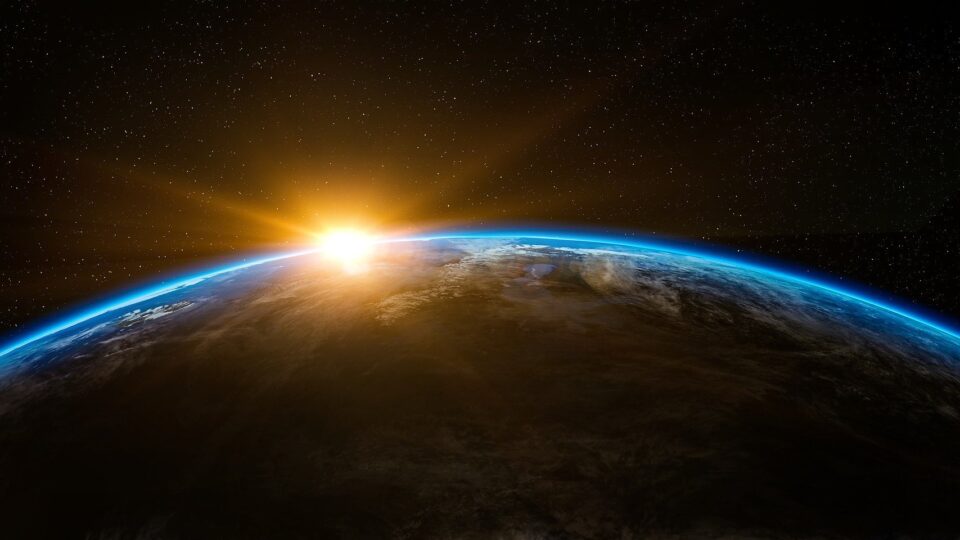
The Upper Atmosphere Is Cooling | Earth Wise

June 26, 2023 By EarthWise Leave a Comment

The upper atmosphere is cooling

The part of the atmosphere closest to the Earth’s surface has been warming since the Industrial Revolution.  This warming is associated with increasing amounts of carbon dioxide as well as other human-made chemicals that have been changing the makeup of the atmosphere. Climate change is generally thought about in terms of the lowest regions of the atmosphere – known as the troposphere – where our weather happens.

But climate models also predict that another result of the changes to the makeup of the atmosphere is that most of the atmosphere up higher will get dramatically colder.  The same gases that are warming the bottom few miles of air are cooling the much greater expanses above that extend to the edge of space.

Recent satellite data has confirmed the accuracy of these models and provide further confirmation of the human fingerprint of climate change. The natural variability of weather that complicates climate models does not play a role in the upper atmosphere.

In the higher levels of the atmosphere, the effects of increasing levels of carbon dioxide are quite different.  In the thinner air up there, the heat trapped and re-emitted by CO2 does not bump into other molecules creating warming.  Instead, it escapes to space.  Combined with the trapping of heat at lower levels, the result is a rapid cooling of the upper atmosphere.

There are potential problems associated with the cooling upper atmosphere including that it is contracting.  The result is that the crowd of manmade objects in low orbit remains there longer, and there is a potential increased degradation of the ozone layer. 

The changes we are making to the atmosphere are having significant effects from the surface of the earth to the edge of space.

**********

Web Links

The Upper Atmosphere Is Cooling, Prompting New Climate Concerns

Photo, posted August 18, 2021, courtesy of Arek Socha via Flickr.

Earth Wise is a production of WAMC Northeast Public Radio
Climate Change Is Not Natural

July 5, 2019 By EarthWise Leave a Comment

It has been the overwhelming consensus of the scientific community for a long time that human activity and other external factors are responsible for the continuing rise in global temperature.  Despite this widespread agreement, there have been those who argue that natural ocean cycles might be influencing global warming over the course of multiple decades.

A new study, published in the Journal of Climate, provides an answer to the question of how much influence natural cycles might have, and that answer is very little to none.

The study looked at observed ocean and land temperature data since 1850 and, apart from human-induced factors such as greenhouse gas concentrations, took into account other occurrences such as volcanic eruptions, solar activity, and air pollution peaks.  The findings demonstrated that slow-acting ocean cycles do not explain the long-term changes in global temperatures.

Based on the study, the researchers can state with confidence that human factors like greenhouse gas emissions and particulate pollution, along with year-to-year changes caused by natural phenomena like volcanic eruptions or El Niño, are sufficient to explain virtually all the long-term changes in temperature.  The idea that the oceans could have been driving the climate either in a colder or warmer direction for multiple decades in the past and therefore will do so in the future is unlikely to be correct.

A number of previous studies have compared flawed observations with flawed modeling results to claim that naturally-occurring ocean cycles have played a large role in global temperatures.  The new study shows that such cycles have little influence on the climate.  Reducing greenhouse gas emissions is really what we need to do.

**********

Web Links

Global temperature change attributable to external factors, confirms new study

Photo, posted November 13, 2007, courtesy of Flickr.

Earth Wise is a production of WAMC Northeast Public Radio.

Primary Sidebar

Recent Episodes

  • An uninsurable future
  • Clean energy and jobs
  • Insect declines in remote regions
  • Fossil fuel producing nations ignoring climate goals
  • Trouble for clownfishes

WAMC Northeast Public Radio

WAMC/Northeast Public Radio is a regional public radio network serving parts of seven northeastern states (more...)

Copyright © 2026 ·