• Skip to primary navigation
  • Skip to main content
  • Skip to primary sidebar

Earth Wise

A look at our changing environment.

  • Home
  • About Earth Wise
  • Where to Listen
  • All Articles
  • Show Search
Hide Search
You are here: Home / Archives for climate risks

climate risks

The U.N. meets about geoengineering

October 9, 2025 By EarthWise Leave a Comment

Geoengineering refers to a wide range of mechanical or chemical methods aimed at deliberately changing the global climate system.  It includes a number of unproven concepts, one of which is intentionally polluting the upper atmosphere with thousands of tons of artificial particles such as chemical sprays or mineral dust.  This is referred to as solar radiation management or SRM.  The idea is to dim sunlight, thereby slowing the rise of global temperatures by deflecting solar energy away from the Earth’s surface before it can be trapped as heat by greenhouse gases in the atmosphere.

The United Nations Environmental Program held workshops in May and September to address the issue of such strategies.  This official position of the UN is that strategies such as SRM are not a climate solution given that they do not actually address the underlying causes of climate change.  Recent research has shown that SRM efforts could potentially shift rainfall patterns, intensify heat waves or cold snaps, lead to overall drying, and have other unpredictable consequences.

Many participants expressed concern that the discussion focused too much on engineering aspects and not on the potential risks of such efforts.  The prevailing opinion among scientists is that SRM deployment is too dangerous and ungovernable and therefore should not be pursued.

Current geopolitical trends make the possibility of geoengineering efforts by authoritarian states disturbingly likely.  While there are international guidelines on geoengineering activities, the potential threat of unilateral efforts by rogue nations is growing.

**********

Web Links

UN Sessions on Solar Geoengineering Trigger Unease

Photo, posted May 12, 2016, courtesy of Susanne Nilsson via Flickr.

Earth Wise is a production of WAMC Northeast Public Radio

Living in a warming world

June 13, 2025 By EarthWise Leave a Comment

As global temperatures rise due to increased greenhouse gas emissions, communities around the world face more frequent and intense heatwaves, droughts, and extreme weather events. These growing climate pressures not only strain infrastructure and natural resources, but also play a critical role in shaping where people live. 

Recent projections from the First Street Foundation, which analyzes climate risks across the United States, highlight just how significant these shifts could be. In Sacramento County, California, rising flood risks, declining air quality, and soaring insurance costs could lead to a population decline of up to 28% by 2055. The risk assessment also projects that Monmouth and Ocean counties in New Jersey could each lose more than 30% of their populations. And Fresno County, California, could see nearly half of its residents relocate due to mounting climate-related pressures.

Urban areas like cities, towns, and suburbs are particularly vulnerable to the impacts of climate change.  Cities become significantly hotter due to the abundance of heat-absorbing surfaces and lack of green spaces, which intensifies heatwaves, worsens conditions for vulnerable populations, and may ultimately force some people to move.

Addressing these challenges requires a combination of climate solutions focused on both mitigation and adaptation. Solutions like expanding green infrastructure with urban parks and green roofs, and promoting sustainable development through energy-efficient buildings and transit-friendly design could all play a vital role in strengthening climate resilience.

As the planet warms, where we live – and how we live there – is rapidly being redefined.

**********

Web Links

The 12th National Risk Assessment

Solar on farmland

Photo, posted May 15, 2013, courtesy of Germán Poo-Caamaño via Flickr.

Earth Wise is a production of WAMC Northeast Public Radio
Unexplained heat wave hotspots

December 27, 2024 By EarthWise Leave a Comment

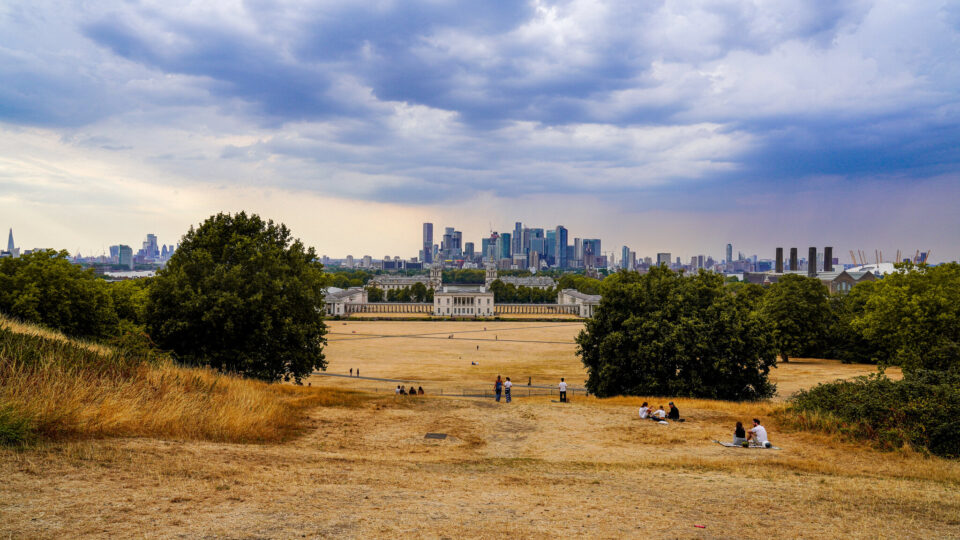
2023 and 2024 have been the hottest years since records have been kept.  But above and beyond the upward march of average temperatures around the globe, there has been the phenomenon of distinct regions across the globe experiencing repeated heatwaves that are so extreme that they cannot be accounted for in any models of global warming.

A new study by Columbia University’s Climate School has provided the first worldwide map of such regions, which have emerged on every continent except Antarctica.  Heatwaves in these regions have killed thousands of people, withered crops and forests, and triggered devastating wildfires.

These recent regional-scale record-breaking temperature extremes have raised questions about whether current climate models can provide adequate estimates of the relationship between global mean temperature changes and regional climate risks.

Some of these regional events in recent years include a nine-day heatwave in the U.S. Pacific Northwest and southwestern Canada in June 2021 that broke daily records in some places by 54 degrees Fahrenheit.  Across Germany, France, the UK, the Netherlands, and other countries, the hottest days of the year are warming twice as fast as the summer mean temperatures. 

There is yet little understanding of the phenomenon.  Some theories related to destabilization of the jet stream don’t really explain all the temperature extremes observed.  But regardless of the underlying causes, the health impacts of these heat waves are severe, as are the effects on agriculture, vegetation, and infrastructure.  Society is not built to quickly adapt to them.

**********

Web Links

Unexplained Heat Wave ‘Hotspots’ Are Popping Up Across the Globe

Photo, posted August 16, 2022, courtesy of Alisdare Hickson via Flickr.

Earth Wise is a production of WAMC Northeast Public Radio

Primary Sidebar

Recent Episodes

  • An uninsurable future
  • Clean energy and jobs
  • Insect declines in remote regions
  • Fossil fuel producing nations ignoring climate goals
  • Trouble for clownfishes

WAMC Northeast Public Radio

WAMC/Northeast Public Radio is a regional public radio network serving parts of seven northeastern states (more...)

Copyright © 2025 ·