• Skip to primary navigation
  • Skip to main content
  • Skip to primary sidebar

Earth Wise

A look at our changing environment.

  • Home
  • About Earth Wise
  • Where to Listen
  • All Articles
  • Show Search
Hide Search
You are here: Home / Archives for centuries

centuries

Disappearing Glaciers | Earth Wise

February 20, 2023 By EarthWise Leave a Comment

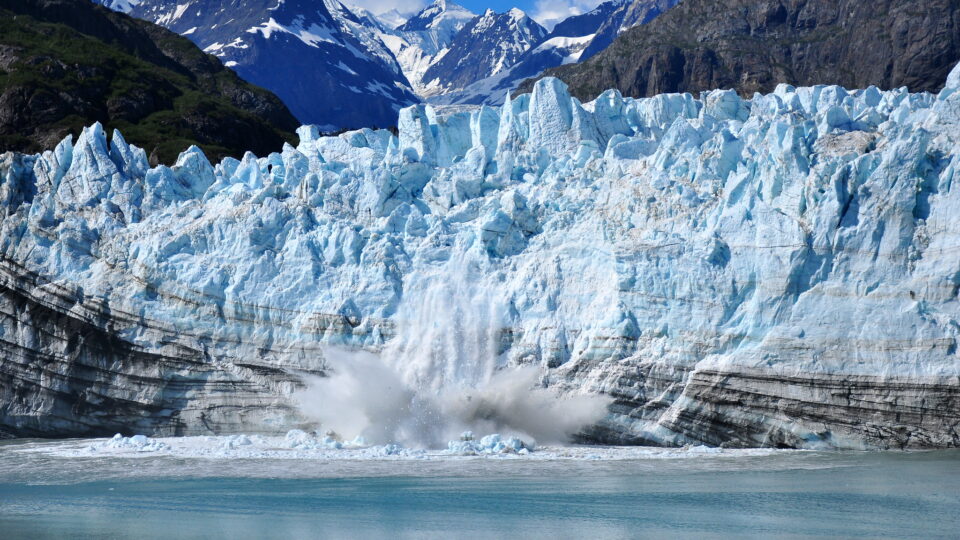
Glaciers are disappearing at a rapid rate

Glaciers are massive bodies of slowly moving ice.  Glaciers form on land, and represent the snows of centuries compressed over time.  They move slowly downward under the influence of their own weight and gravity. 

Most of the glaciers on the planet are found in the polar regions, including Antarctica, the Canadian Arctic, and Greenland.  Glaciers can also be found closer to the equator in mountain ranges, such as the Andes Mountain range in South America.  Glaciers are always changing, accumulating snow in the winter and losing ice to melting in the summer.  But in recent times, the melting has been outpacing the accumulation.

A new international study led by researchers at Carnegie Mellon University’s College of Engineering has produced new projections of glacier loss through the century under different emissions scenarios.  According to the projections, the world could lose as much as 41% of its total glacier mass this century – or as little as 26% – depending on climate change mitigation efforts. 

In a future with continued investments in fossil fuels (sometimes referred to as the “business as usual” scenario), more than 40% of the glacial mass will be gone by 2100, and more than 80% of glaciers by number could disappear.  Even in a best case scenario where the increase in global mean temperature is limited to 1.5° degrees Celsius relative to pre-industrial levels, more than 25% of glacial mass will be gone, and nearly 50% of glaciers by number will disappear.

Glaciers take a long time to respond to changes in climate.  A complete halt to emissions today would take anywhere from 30 to 100 years to be reflected in glacier mass loss rates.

**********

Web Links

Team projects two out of three glaciers could be lost by 2100

Ice, Snow, and Glaciers and the Water Cycle

Photo, posted August 13, 2010, courtesy of Kimberly Vardeman via Flickr.

Earth Wise is a production of WAMC Northeast Public Radio
Europe Is Warming Faster Than The Rest Of The Planet | Earth Wise

January 3, 2023 By EarthWise Leave a Comment

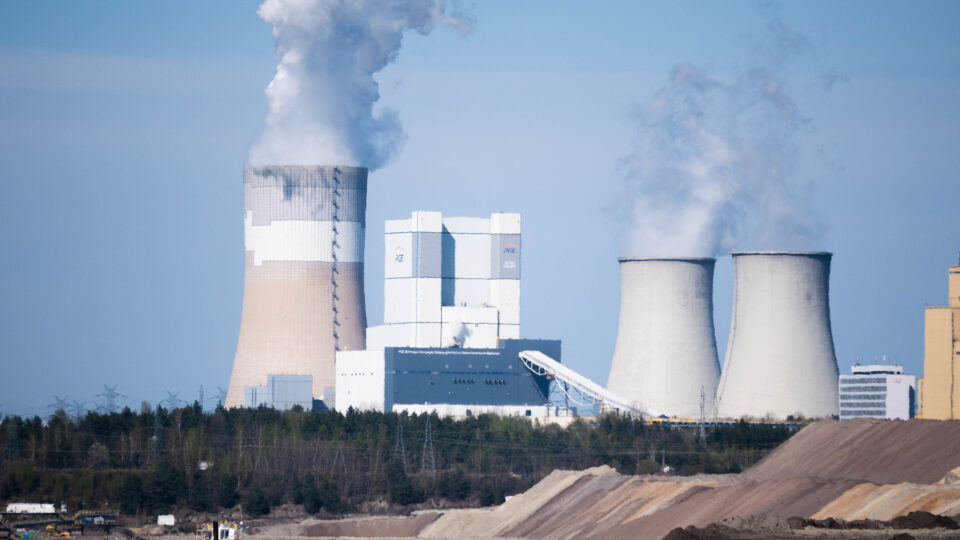
Europe is warming faster than the rest of the globe

A new study by researchers at Stockholm University has found that the warming during the summer months in Europe has been much faster than the global average.  The findings, published in the Journal of Geophysical Research Atmospheres, are that the climate across the European continent has become drier, particularly in southern Europe, leading to worse heat waves and an increased risk of fires.

Warming over land areas occurs much faster than over oceans.  The global average warming to date is 1.6 degrees Celsius over land and 0.9 degrees over oceans.   This means that the global emissions budget to keep warming below 1.5 degrees has already been used up over land.  The new study in fact shows that the emissions budget to avoid 2 degrees of warming has already been exceeded over large parts of Europe during the summer half-year (April to September).

This accelerated warming in Europe has led to more frequent heat waves.  These, in turn, increase the risk of fires, such as the devastating fires in southern Europe this past summer.

Southern Europe has been experiencing a positive feedback situation in which the ongoing warming has been amplified because of drier soil and decreased evaporation.  Added to that, there has been less cloud coverage over large parts of Europe, probably as a result of less water vapor in the air.

The study also looked at the impact of aerosol particles on temperatures in Europe.  As the amount of relatively short-lived aerosol particles has decreased with the reduction of coal-fired power plants, the temporary cooling effects of those particles partially masking the underlying warming trend have diminished.  In contrast, carbon dioxide emissions stay in the atmosphere for centuries.

**********

Web Links

Large parts of Europe are warming twice as fast as the planet on average

Photo, posted April 18, 2020, courtesy of Roman Ranniew via Flickr.

Earth Wise is a production of WAMC Northeast Public Radio
Plant-Based Bottles | Earth Wise

June 30, 2020 By EarthWise Leave a Comment

Single-use plastic soda and water bottles are a real problem.  Every year, billions of them are produced – comprising nearly 300 million tons of plastic that mostly ends up in landfills or in the ocean.   This discarded plastic ends up on remote islands, in the snow atop mountains, and in trenches in the deepest parts of ocean.

There has been increasing pressure on beverage companies to put an end to this environmental disaster, but the convenience and economy of disposable bottles is just too attractive.

These bottles are made of plastic derived from oil and once they are produced, they take decades or even centuries to decompose.  Recycling them is a not-starter because it is cheaper to just make new ones.

A possible solution has emerged.  A Dutch company called Avantium has found a way to take plant sugars and transform them into a plastic capable of standing up to carbonated beverages like soda and beer but that will also break down in as little as a year in a composter or 3 years if left exposed to the elements.

Coca Cola and Carlsberg are working with Avantium to develop new drink packaging based on their material that could be in stores as soon as 2023.  The new packaging would be quite different from what we use today.  Instead of a clear or tinted bottle, beverages would come inside a cardboard container with a liner made of plant-based plastic.

It may take a while for people to get used to the change, but we have already managed to get used to milk, juice and other liquids coming in cardboard containers instead of glass or plastic bottles.  The benefits to the planet would make the effort well worthwhile.

**********

Web Links

Plant-Based Bottles Could Degrade In One Year

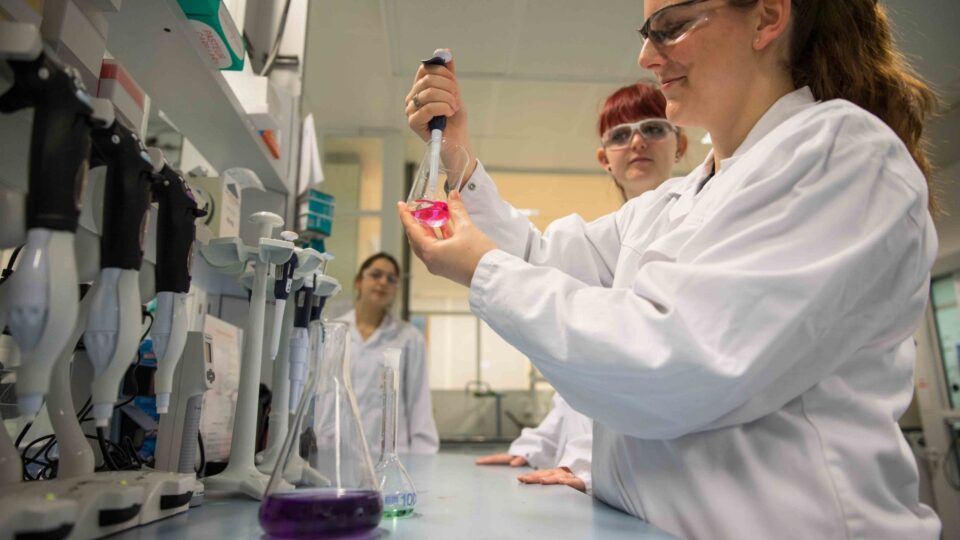
Photo courtesy of Avantium.

Earth Wise is a production of WAMC Northeast Public Radio.

Primary Sidebar

Recent Episodes

  • An uninsurable future
  • Clean energy and jobs
  • Insect declines in remote regions
  • Fossil fuel producing nations ignoring climate goals
  • Trouble for clownfishes

WAMC Northeast Public Radio

WAMC/Northeast Public Radio is a regional public radio network serving parts of seven northeastern states (more...)

Copyright © 2026 ·