• Skip to primary navigation
  • Skip to main content
  • Skip to primary sidebar

Earth Wise

A look at our changing environment.

  • Home
  • About Earth Wise
  • Where to Listen
  • All Articles
  • Show Search
Hide Search
You are here: Home / Archives for cassava

cassava

Food And Greenhouse Gas Emissions | Earth Wise

December 29, 2021 By EarthWise Leave a Comment

How to reduce the greenhouse gas emissions associated with food

According to a study published in the journal Nature Food, the world’s food systems are responsible for more than one third of global greenhouse gas emissions caused by human activities. 

‘Eat Local’ is often recommended as a way to minimize the carbon footprint of our diet.  But from a climate impact perspective, eating local only has a significant impact if transportation is responsible for a large portion of a food’s final carbon footprint.  And in many cases, greenhouse gas emissions related to transportation make up only a small portion of the emissions from food and what we eat is far more important. 

There are massive differences in the greenhouse gas emissions of various foods. 

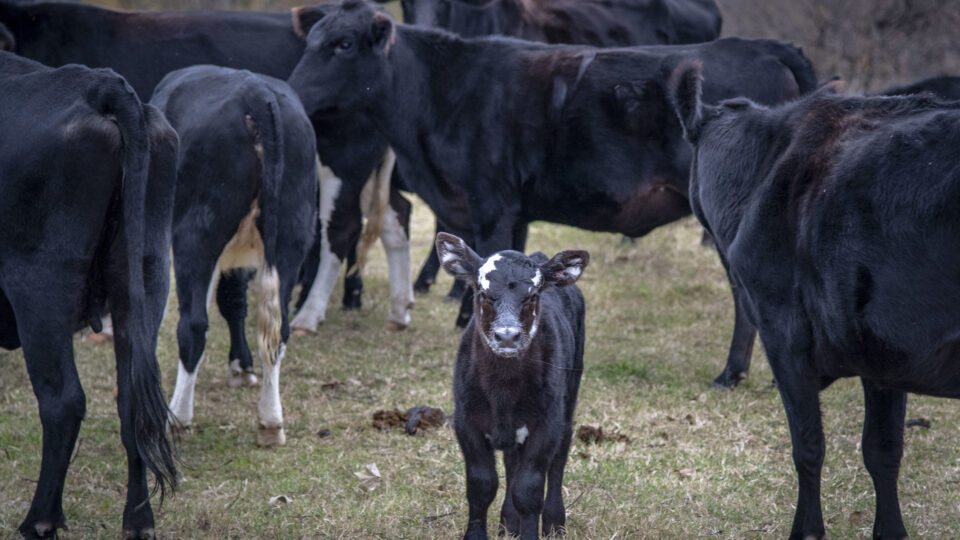
For example, producing one pound of beef generates 60 pounds of greenhouse gas emissions.  This is more than double the next closest food (lamb), and more than 60 times greater than some plant crops like corn and cassava. 

For most foods – especially the largest emitters – greenhouse gas emissions from land use change combined with the emissions from processes at the farm stage account for more than 80% of the environmental footprint.  Meanwhile, transportation accounts for less than 10%, and its contribution for the largest emitters is even smaller.  For example, transportation accounts for 0.5% of emissions from beef production.

Eating beef or lamb has many times the carbon footprint of most other foods.  It matters very little in terms of emissions whether it was grown locally or shipped from another part of the world.  It’s not the location that makes the carbon footprint of our dinner large.  It’s what is on our plate that matters.

**********  

Web Links

Food systems account for over one-third of global greenhouse gas emissions

You want to reduce the carbon footprint of your food?

Photo, posted November 7, 2018, courtesy of Preston Keres / USDA via Flickr.

Earth Wise is a production of WAMC Northeast Public Radio.

Hacking Photosynthesis | Earth Wise

September 14, 2020 By EarthWise Leave a Comment

benefits of hacking photosynthesis

A team led by the University of Illinois has been pursuing a project called Realizing Increased Photosynthetic Efficiency or RIPE, which has the aim of improving photosynthesis in order to provide farmers with higher-yielding crops in an increasingly challenging climate.  Photosynthesis is the natural, sunlight-powered process that plants use to convert carbon dioxide into sugars that fuel growth, development, and for us, crop yield.

If we think of photosynthesis as a factory line composed of multiple machines, the growth of plants is limited by the slowest machines in the line.  The RIPE project has identified some steps in photosynthesis that are slower than others and are attempting to enable plants to build more machines to speed up those slower steps.

The researchers modeled a total of 170 steps in the process of photosynthesis to identify how plants could manufacture sugars more efficiently.  In the study, the team increased crop growth by 27% by resolving two constraints:  one in the first part of photosynthesis where plants turn light energy into chemical energy and one in the second part when carbon dioxide is turned into sugars.

The researchers effectively hacked photosynthesis by adding a more efficient transport protein from algae to enhance the energy conversion process. 

In the greenhouse, these changes improved crop productivity by 52%, but in field trials, which are a more important test, these photosynthetic hacks boosted crop production by 27%.

Ultimately, the team hopes to translate these discoveries to a series of staple food crops, such as cassava, cowpea, corn, soybean and rice, which are needed to feed the world’s growing population this century.

**********

Web Links

Photosynthetic hacks can boost crop yield, conserve water

Photo, posted June 14, 2017, courtesy of Alex Holyoake via Flickr.

Earth Wise is a production of WAMC Northeast Public Radio.

Primary Sidebar

Recent Episodes

  • An uninsurable future
  • Clean energy and jobs
  • Insect declines in remote regions
  • Fossil fuel producing nations ignoring climate goals
  • Trouble for clownfishes

WAMC Northeast Public Radio

WAMC/Northeast Public Radio is a regional public radio network serving parts of seven northeastern states (more...)

Copyright © 2026 ·