• Skip to primary navigation
  • Skip to main content
  • Skip to primary sidebar

Earth Wise

A look at our changing environment.

  • Home
  • About Earth Wise
  • Where to Listen
  • All Articles
  • Show Search
Hide Search
You are here: Home / Archives for canopies

canopies

Cyber protection for apple orchards

April 2, 2024 By EarthWise Leave a Comment

How best to protect apple orchards as weather changes

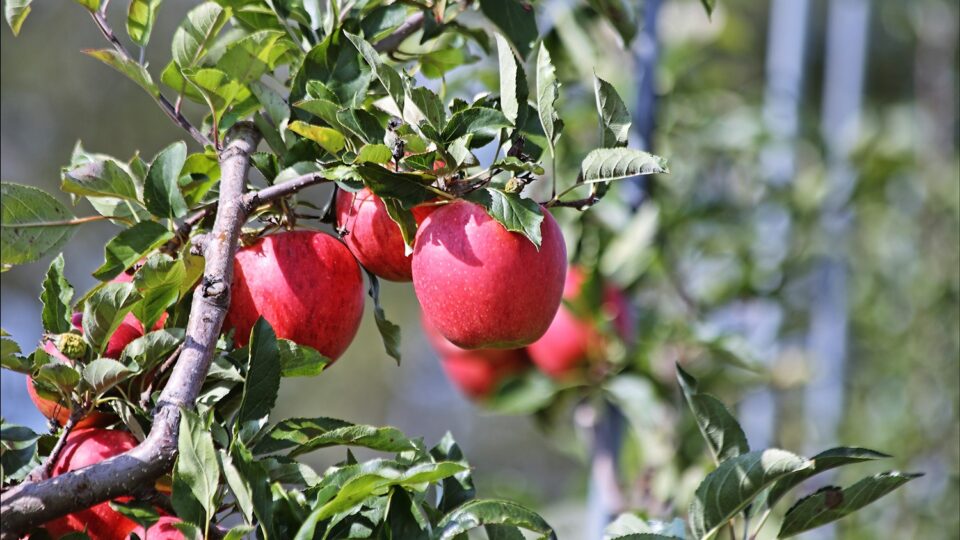
Spring frosts represent a real danger for apple orchards.  The changing climate has brought about periods of unusually warm weather at times early in the year that have caused trees and other flowering plants to bloom early.  For apple growers, this has made their orchards more susceptible to the damaging effects of extreme cold events.

Apple growers attempt to prevent this damage by heating the canopies of their orchards, but these efforts tend to be inefficient.  Applying heat is one of the most effective methods to prevent apple flower bud damage, but it is difficult to determine when and where to apply heat in orchards.

Researchers at Penn State University have developed a frost-protection cyber-physical system that autonomously makes heating decisions based on real-time temperature and wind-direction data.  Their system includes a temperature-sensing device, a propane-fueled heater that adjusts the direction where it provides heat, and an unmanned ground vehicle that moves the system through an apple orchard.

The results of tests of the system were published in the journal Computers and Electronics in Agriculture, and the findings show that it greatly reduced damage to apple tree buds in tests conducted at low temperatures, doubling or tripling the amount of time that trees were protected.

The equipment used for the study mostly consisted of off-the-shelf parts and cost about $5,000, most of which was for the vehicle.   The researchers envision that even a very large orchard could be protected by multiple units guided by an aerial drone monitoring canopy temperatures. Further research will aim to bring the technology to point where it can enter the marketplace and be available to apple growers.

**********

Web Links

Cyber-physical heating system may protect apple blossoms in orchards

Photo, posted September 6, 2017, courtesy of Sue Thompson via Flickr.

Earth Wise is a production of WAMC Northeast Public Radio

Help For Kelp | Earth Wise

April 10, 2023 By EarthWise Leave a Comment

Sea urchins and climate change is devastating ocean kelp

The warming of the oceans has been causing the decimation of kelp forests.  The thick canopies covering coastal ocean regions have been wilting in warmer and nutrient-poor water.  Making matters much worse has been the explosion in population of sea urchins that thrive in warmer water.  The urchins gobble up the kelp, often resulting in so-called urchin barrens, largely devoid of life.

Kelp are considered a foundation species that occupy nearly half of the world’s marine ecoregions.  They thrive in cold water, where they form large underwater forests that provide essential habitat, food, and refuge for many species.  Kelp are often harvested for use in products ranging from toothpaste and shampoo to puddings and cakes.  Including the other services kelp provide, they are associated with billions of dollars in value annually.

On the North American Pacific Coast, a species of sea star consumes sea urchins.  However, these creatures are critically endangered. A marine wildlife epidemic known as sea star wasting syndrome, which began 10 years ago, has killed off more than 90% of the sunflower sea star population.   A new study by researchers at Oregon State University looked at the ability of sea stars to control sea urchin populations.

Lab experiments showed that sea stars consume urchins at a rate sufficient to maintain and possibly even restore the health of kelp forests.  The study shows that there is a clear link between the population crash of sea stars, the explosion in sea urchin populations, and the decline in kelp.

The study’s authors are calling for active management and a coordinated sea star recovery program to try to deal with the effects of a disease whose cause has not been determined.

**********

Web Links

Sea stars able to consume kelp-eating urchins fast enough to protect kelp forests, research shows

Photo, posted December 14, 2015, courtesy of Ed Dunens via Flickr.

Earth Wise is a production of WAMC Northeast Public Radio
An Environmental Victory In Cameroon | Earth Wise

September 23, 2020 By EarthWise Leave a Comment

Preserving biodiversity in Cameroon

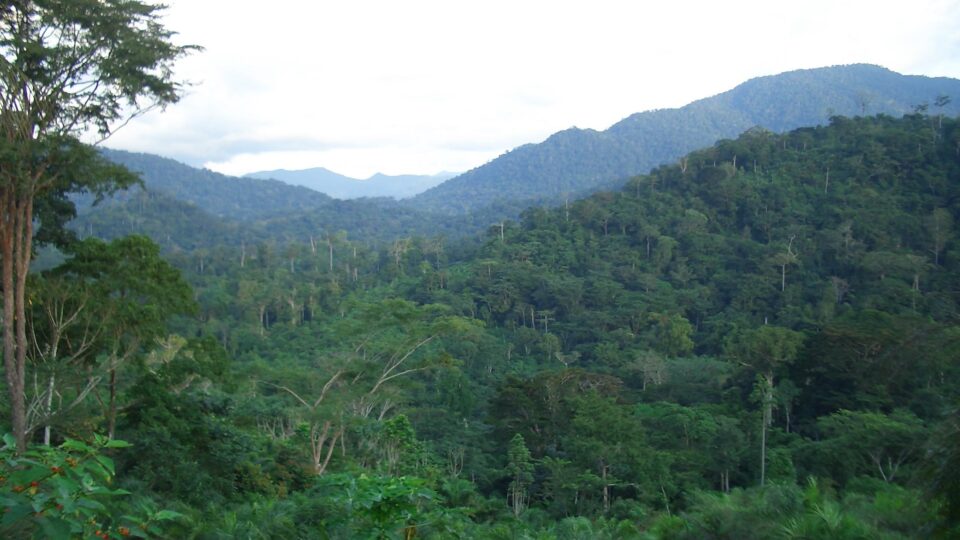
The Ebo Forest in Cameroon is one of the last intact forests in central Africa and is a biodiversity hotspot, home to hundreds of rare plants and animal species, including tool-using Nigeria-Cameroon chimpanzees, western gorillas, forest elephants, red colobus monkeys, and giant goliath frogs.  The 600 square miles of mountain slopes and river valleys are covered by thick tree canopies that shelter a fascinating array of species.

This past July, Cameroon Prime Minister Joseph Dion Ngute signed a decree that turned half of the Ebo Forest into a so-called forest management unit, meaning that the government could begin to sell logging concessions.

However, on August 11, Ngute, at the direction of President Paul Biya, withdrew the decree, suspending any logging plans.  President Biya also ordered a delay to reclassify an additional 160,000 acres of the Ebo, which might have opened up even more forest for logging.

Apart from its rich biodiversity, the Ebo Forest is culturally and societally important for the Banen Indigenous people, who consider it to be their sacred ancestral home.  The Banen were ousted from the forest in the 1960s but took up settlements just a few miles from its borders.  They still rely on the forest for food and medicines.  Meanwhile, the proximity of the forest to big cities makes it an easy target for bushmeat poachers.

Both conservation groups and indigenous leaders welcomed the withdrawal of the decree but remain concerned about the future of the Ebo Forest.  Conservation groups hope that the international community will seize the opportunity to work with the government of Cameroon to make the Ebo Forest a permanent showcase for long-term conservation in harmony with very challenged communities.

**********

Web Links

Cameroon Cancels Plan to Log Half of the Ebo Forest, a Key Biodiversity Hotspot in Central Africa

Photo, posted September 17, 2005, courtesy of Salva le Foreste via Flickr.

Earth Wise is a production of WAMC Northeast Public Radio.

Trees And The Future Of Cities

April 16, 2019 By EarthWise Leave a Comment

The shade of a single tree is a welcome source of relief on a hot summer day.  But even a relatively small patch of woods can have a profound cooling effect.  A new study at the University of Wisconsin-Madison looks at the role trees play in keeping towns and cities cool.

According to the study, the right amount of tree cover can lower daytime temperatures in the summer by as much as 10 degrees.  The effects are noticeable from neighborhood to neighborhood and even on a block-by-block basis.

Cities are well-known to be hot spots due to the urban heat islanding effect.  Using trees to keep temperatures more comfortable in cities can make a big difference for the people who live and work there.

The man-made structures of cities – roads, sidewalks, and buildings – absorb heat from the sun during the day and slowly release it at night.  Trees, on the other hand, not only shade those structures from the sun, but they also transpire -or release water in the air through their leaves – which helps to cool things down.

According to the study, to get maximum cooling benefits, tree canopies must exceed forty percent, meaning that city blocks need to be nearly halfway covered by tree branches and leaves.  To get the biggest bang for the buck, cities should start planting more trees in areas that are already near the forty percent threshold.  But

trees can’t just be in parks.  They need to be in places where people are active.

If we want the places where we live to be more comfortable and resilient in a warming world, we need to plant more trees.

**********

Web Links

Study suggests trees are crucial to the future of our cities

Photo, posted May 26, 2012, courtesy of Mislav Marohnic via Flickr.

Earth Wise is a production of WAMC Northeast Public Radio.

Primary Sidebar

Recent Episodes

  • An uninsurable future
  • Clean energy and jobs
  • Insect declines in remote regions
  • Fossil fuel producing nations ignoring climate goals
  • Trouble for clownfishes

WAMC Northeast Public Radio

WAMC/Northeast Public Radio is a regional public radio network serving parts of seven northeastern states (more...)

Copyright © 2026 ·