• Skip to primary navigation
  • Skip to main content
  • Skip to primary sidebar

Earth Wise

A look at our changing environment.

  • Home
  • About Earth Wise
  • Where to Listen
  • All Articles
  • Show Search
Hide Search
You are here: Home / Archives for brick

brick

Storing carbon in buildings

February 4, 2025 By EarthWise Leave a Comment

According to a new study by researchers at the University of California, Davis and Stanford University, construction materials used in buildings have the potential to lock away billions of tons of carbon dioxide.  The study, published in Science, shows that storing CO2 in buildings could be a major contributor to efforts to reduce greenhouse gas emissions.

Overall efforts in carbon sequestration take carbon dioxide – either as it’s being produced or once it’s already in the atmosphere – and store it away.  Storing it might involve injecting it into underground caverns or deep in the ocean.  Alternatively, storing it might involve converting it into a stable form using chemical reactions.  These various strategies involve both practical challenges and potential environmental risks.

The new study suggests that many materials that are already produced in large quantities have the potential to store carbon dioxide.  These include concrete, asphalt, plastics, wood, and brick.  More than 30 billion tons of these materials are produced worldwide every year.

Ways to accomplish carbon storage include adding biochar into concrete, using artificial rocks loaded with carbon as concrete and asphalt aggregates, plastic and asphalt binders based on biomass instead of petroleum, and including biomass fiber into bricks. 

The largest potential is using carbonated aggregates to make concrete.  Concrete is by far the world’s most popular building material with more than 20 billion tons being produced each year.

The feedstocks for these ways to store carbon in building materials are mostly low-value waste materials, so the economics of implementing these carbon sequestering strategies are likely to be quite favorable.

**********

Web Links

Storing Carbon in Buildings Could Help Address Climate Change

Photo, posted October 19, 2022, courtesy of Alexandre Prevot via Flickr.

Earth Wise is a production of WAMC Northeast Public Radio
Cooling cities

September 2, 2024 By EarthWise Leave a Comment

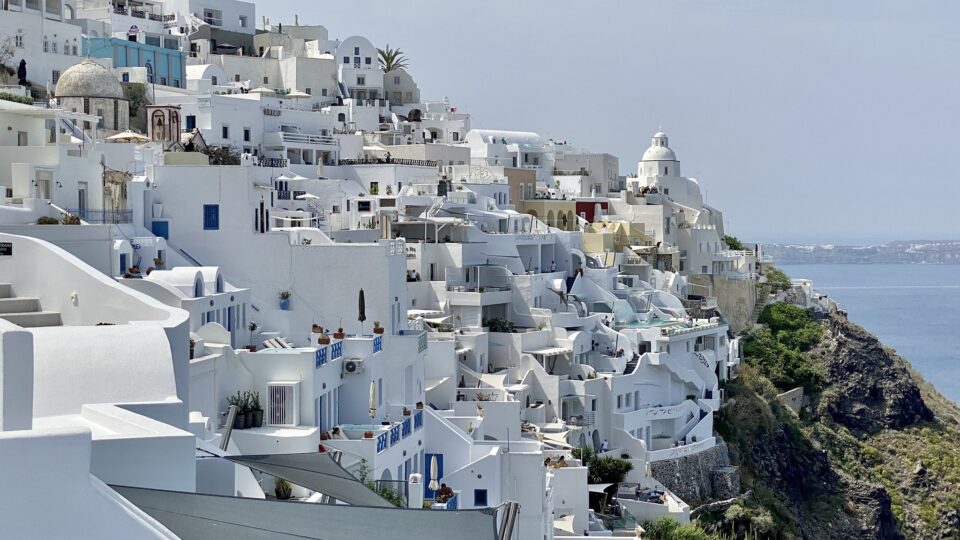
Cooling cities with white roofs

As the climate warms, city dwellers tend to suffer from extreme heat more than people in rural areas because of the urban heat island effect. Extensive surfaces of man-made materials like concrete, asphalt, and brick absorb the sun’s energy and lead to temperatures well above those in the surrounding countryside.

Cities can take countermeasures that include creating urban green spaces full of plants that cool the surrounding air and the use of cool roofs that reflect the sun’s energy back into space.  Local governments in many cities provide incentives for planting more trees.  But more could be accomplished by encouraging the use of cool roofs.

The heat island effect has been well-known for a long time, but scientists are only recently learning what interventions are most effective. A recent study modeled two days of extreme heat in London in 2018 and compared the potential effects of cool roofs, green roofs, roof-top solar panels, and ground level vegetation. They found that cool roofs are the most effective way to lower temperatures and would have reduced London temperatures by 2 degrees on average and as much as 3.6 degrees in some places.

Cool roofs are created by swapping out dark, heat-absorbing roofing materials with reflective materials or simply by painting roofs white. Los Angeles is the first major city to require that all new residential construction includes a cool roof. 

Apart from the effectiveness of passive cooling techniques, using them also reduces the reliance upon air conditioning to protect people from heat.  Air conditioners themselves contribute considerable amounts of heat to urban environments.

**********

Web Links

The surprisingly simple way cities could save people from extreme heat

Photo, posted February 21, 2024, courtesy of Warren LeMay via Flickr.

Earth Wise is a production of WAMC Northeast Public Radio

Primary Sidebar

Recent Episodes

  • An uninsurable future
  • Clean energy and jobs
  • Insect declines in remote regions
  • Fossil fuel producing nations ignoring climate goals
  • Trouble for clownfishes

WAMC Northeast Public Radio

WAMC/Northeast Public Radio is a regional public radio network serving parts of seven northeastern states (more...)

Copyright © 2025 ·