• Skip to primary navigation
  • Skip to main content
  • Skip to primary sidebar

Earth Wise

A look at our changing environment.

  • Home
  • About Earth Wise
  • Where to Listen
  • All Articles
  • Show Search
Hide Search
You are here: Home / Archives for brewing

brewing

Turning Plastic Into Protein | Earth Wise

November 18, 2022 By EarthWise Leave a Comment

Turning plastic waste into food

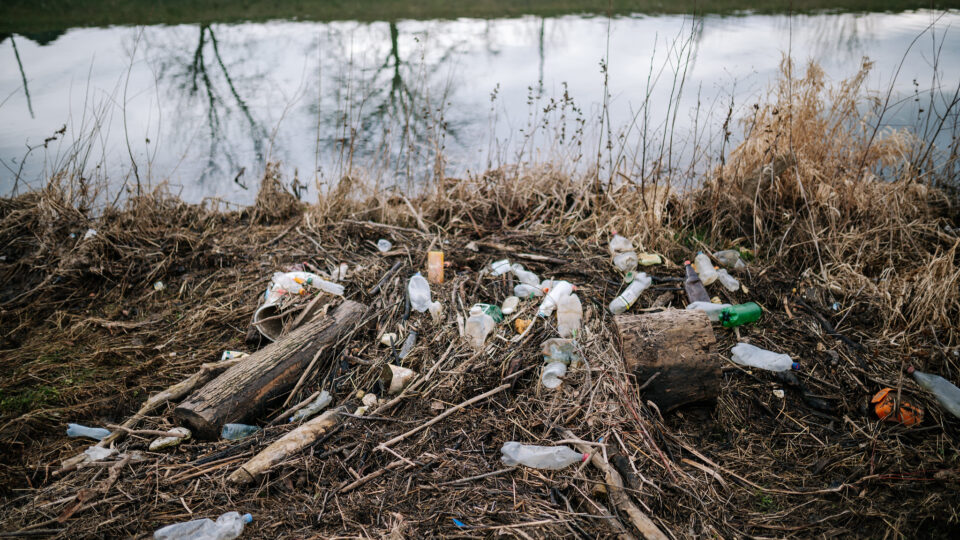
Our planet is choking on plastic.  According to the United Nations, 79% of the 6.3 billion tons of plastic produced every year accumulates in landfills.  Half of all plastic produced is actually designed to be used just once and thrown away.  But plastic is not only accumulating on land.  In fact, the world’s oceans are projected to contain more plastic by weight than fish by the year 2050.     

According to new research, solving the plastic waste issue could help address another prominent global issue: hunger.  A multidisciplinary team of engineers, chemists, and biologists led by researchers from Michigan Tech University has developed a process to break plastics down to be recycled into useful products, including edible protein powder.

The research team’s process converts plastic into compounds using heat and a reactor that deconstructs the material’s polymer chains. The oil-like substance is then fed to a community of oil-eating bacteria.  The bacteria grow rapidly on the oily diet, producing more bacterial cells composed of roughly 55% protein.  This majority-protein byproduct is then dried out and turned into an edible powder.   The end result doesn’t look like plastic at all.  In fact, it resembles a yeast byproduct that comes from brewing beer. 

This research is funded by an award from the US Department of Defense.  The DoD often deploys soldiers in areas where access to food is challenging.  Converting plastic to protein could be part of a solution to that problem. 

While eating something that began as plastic might take some getting used to, it could be part of the solution to both plastic pollution and global hunger.

**********

Web Links

Turning Trash Into Treasure: The Plastic to Protein Powder Solution

Beat Plastic Pollution

Photo, posted February 2, 2022, courtesy of Ivan Radic via Flickr.

Earth Wise is a production of WAMC Northeast Public Radio
Removing Lead From Water With Beer Yeast | Earth Wise

July 14, 2022 By EarthWise Leave a Comment

An innovative solution for removing lead from freshwater

Lead and other heavy metals in water are a serious global problem that is worsening because of electronic waste and discharges from mining operations.  In the U.S., over 12,000 miles of waterways are impacted by mine-drainage water that is rich in heavy metals.

Lead in particular is highly toxic, especially to children.  The European Union established a standard for allowable lead in drinking water of only 5 parts per billion.  In the US, the EPA has declared that no level of lead at all is safe.

Researchers at MIT have recently discovered that inactive yeast can be effective as an inexpensive, abundant, and simple material for removing lead contamination from drinking water supplies.  The MIT study shows that the method works even at parts-per-billion levels of contamination.

The method is called biosorption, in which inactive biological material is used to remove heavy metals from water.  Previously, it has been studied at parts-per-million contaminant levels, but the MIT study shows that it works at much lower levels as well.

The team studied a type of yeast widely used in brewing.   The yeast cells used are inactive and desiccated and require no special care.  Such yeast is abundantly available as a waste product from beer brewing and various other fermentation-based industrial processes. 

The researchers estimate that to clean a water supply for a city the size of Boston would require about 20 tons of yeast a day, or 7,000 tons a year.  That seems like a lot, but one single brewery, the Boston Beer Company, generates 20,000 tons a year of surplus yeast that is no longer useful for fermentation.

**********

Web Links

Could used beer yeast be the solution to heavy metal contamination in water?

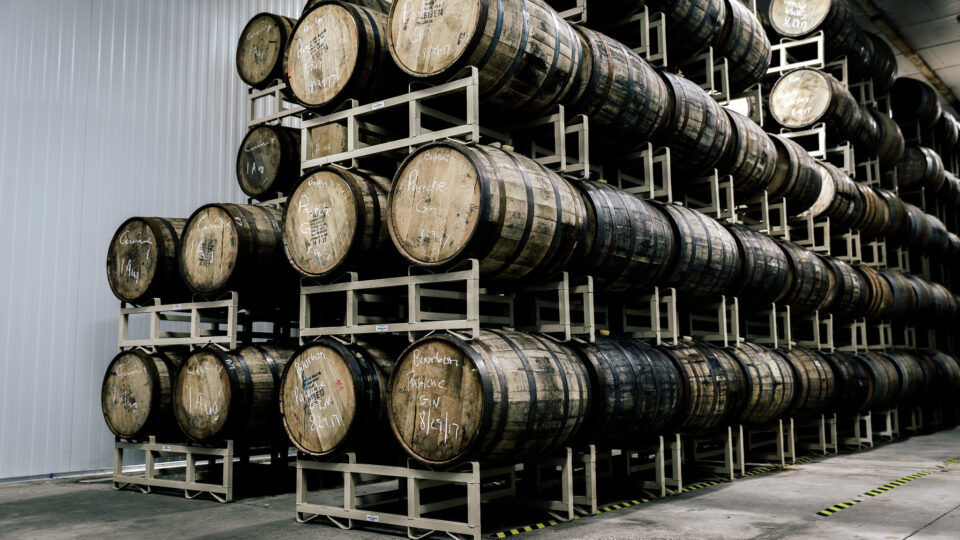
Photo, posted September 5, 2017, courtesy of Allagash Brewing via Flickr.

Earth Wise is a production of WAMC Northeast Public Radio.

A Pesticide From Beer | Earth Wise

July 23, 2021 By EarthWise Leave a Comment

Creating a pesticide from beer

Researchers from the Neiker Basque Institute for Agricultural Research and Development in Spain have demonstrated that a combination of rapeseed cake and beer bagasse can be used to reduce populations of soil parasites and increase crop yields. 

Beer bagasse is spent brewers’ grain – the stuff that is left over after the beer is made.  Beer brewing generates substantial amounts of by-products, including large amounts of spent grain.  It already has some practical uses, including as a feedstock for biofuel, as a food additive, and it even has some medical uses.  But the new research has shown that the bagasse can be the basis for a biodisinfestation treatment to be used in agriculture.  The aim is to disinfect soils, protect soil microorganisms, and increase crop yields.

The actual material studied was a mixture of beer bagasse, rapeseed cake, and a generous amount of fresh cow manure.  The high nitrogen content of the mixture promotes the activity of beneficial microorganisms in the soil, which helps to break down organic matter and kill off nematodes and other parasites that damage crops.

Nematodes are common parasites that can penetrate plant roots to lay their eggs, which damages the root and prevents the plants from absorbing nutrients effectively.  Application of the bagasse-based mixture over 12 months increased crop yields by 15% and boosted healthy soil microbes.

The study demonstrated that agricultural byproducts can be an effective treatment for root-knot nematodes and other soil parasites, increase crop yields, and help promote sustainable food systems to reduce waste from the agricultural industry.  The researchers hope to identify other potential organic treatments for tackling soil parasite problems.

**********

Web Links

Beer byproduct mixed with manure proves an excellent organic pesticide

Photo, posted July 1, 2011, courtesy of Quinn Dombrowski via Flickr.

Earth Wise is a production of WAMC Northeast Public Radio.

Edible Six-Pack Rings

June 4, 2019 By EarthWise Leave a Comment

There has much talk about plastic straws and their harmful effects on the environment.  But much like the straws, plastic six-pack rings are also enemies of the ocean.  While straws and six-pack rings account for only a tiny fraction of all the plastic trash in the ocean, images of marine animals tangled up in the rings have sparked public backlash against these common items.  The soft but tough plastic rings are transparent which means that in the water animals don’t even see them.  They end up tangled in the loops, which can cut into their skin and constrict parts of their bodies, leading to serious injury or death.  Birds, turtles, and otters are among the frequent victims of six-pack rings.

Plastic straws have readily available alternatives such as paper straws and reusable straws.  But the plastic rings that have been available for more than 40 years are not as easy to replace.  By law, six-pack rings are photo-degradable, so they do gradually disintegrate when exposed to direct sunlight.  But even then, they remain quite dangerous at least for a while.

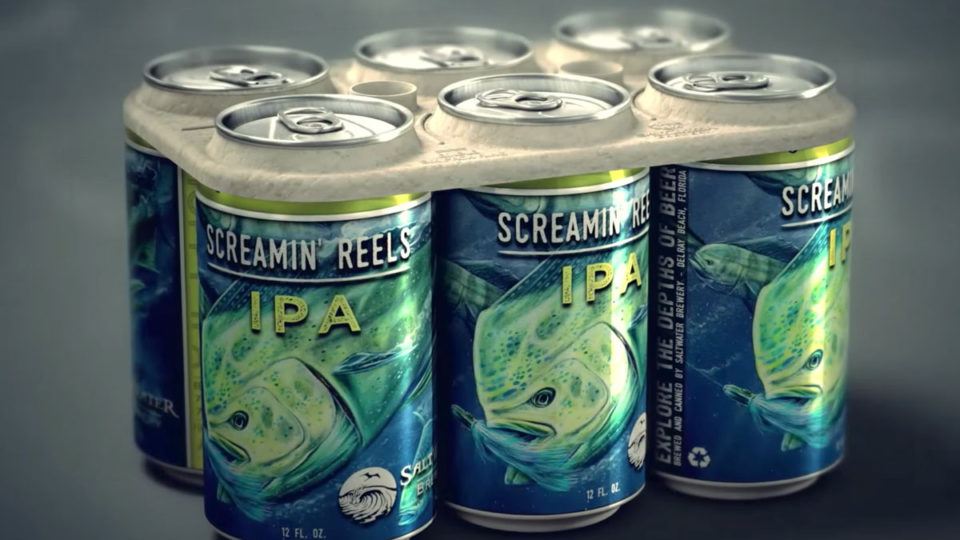
The Saltwater Brewery in Delray Beach, Florida, recently has released edible six-pack rings, representing a brand-new approach to sustainable beer packaging.  The rings are 100% biodegradable and edible.  They are actually made from barley and wheat ribbons from the brewing process.  This packaging can be safely eaten by animals that may come into contact with them in the wild.

Producing the edible rings represents a big investment for a small brewery but the company hopes to influence larger brewers and inspire them to get on board with the safer packaging.

**********

Web Links

Saltwater Brewery Creates Edible Six-Pack Rings

Photo courtesy of Saltwater Brewery.

Earth Wise is a production of WAMC Northeast Public Radio.

Primary Sidebar

Recent Episodes

  • An uninsurable future
  • Clean energy and jobs
  • Insect declines in remote regions
  • Fossil fuel producing nations ignoring climate goals
  • Trouble for clownfishes

WAMC Northeast Public Radio

WAMC/Northeast Public Radio is a regional public radio network serving parts of seven northeastern states (more...)

Copyright © 2026 ·