• Skip to primary navigation
  • Skip to main content
  • Skip to primary sidebar

Earth Wise

A look at our changing environment.

  • Home
  • About Earth Wise
  • Where to Listen
  • All Articles
  • Show Search
Hide Search
You are here: Home / Archives for bipartisan infrastructure law

bipartisan infrastructure law

Tearing down small dams to restore rivers

March 11, 2025 By EarthWise Leave a Comment

There are more than 31,000 dams in the northeastern United States.  More than 4,000 of them are in the Hudson River watershed.  Most of these dams are quite small and were built in the 19th century to form ponds and to power grist, textile, paper, saw, and other kinds of mills as the region developed its industrial infrastructure.  The nonprofit organization American Rivers estimates that 85% of U.S. dams are unnecessary at best and pose risks to public safety at worst. 

Dam removals have been occurring for over 100 years, but the vast majority have taken place since the mid-2010s and have increased dramatically since the 2021 Bipartisan Infrastructure Law, which provided funding for such projects.

So far, 806 Northeastern dams have come down and hundreds more are in the pipeline.

Dam removals improve aquatic fish passage, water quality, watershed resilience, and habitat for all the organisms in river ecosystem food chains, ranging from insects to fish to otters to eagles.  Small dams have degraded habitat and altered downstream hydrology and sediment flows.  They have created warm, stagnant, low-oxygen pools that trigger algal blooms and favor invasive species.

But removing even small dams is not an easy matter.  Projects range in cost from $100,000 to $3 million and qualifying for funding – whether federal or state – requires projects to meet a variety of requirements including community support.  Not all dams can be removed, but many more should.

**********

Web Links

How Tearing Down Small Dams Is Helping Restore Northeast Rivers

Photo, posted September 20, 2010, courtesy of Doug Kerr via Flickr.

Earth Wise is a production of WAMC Northeast Public Radio
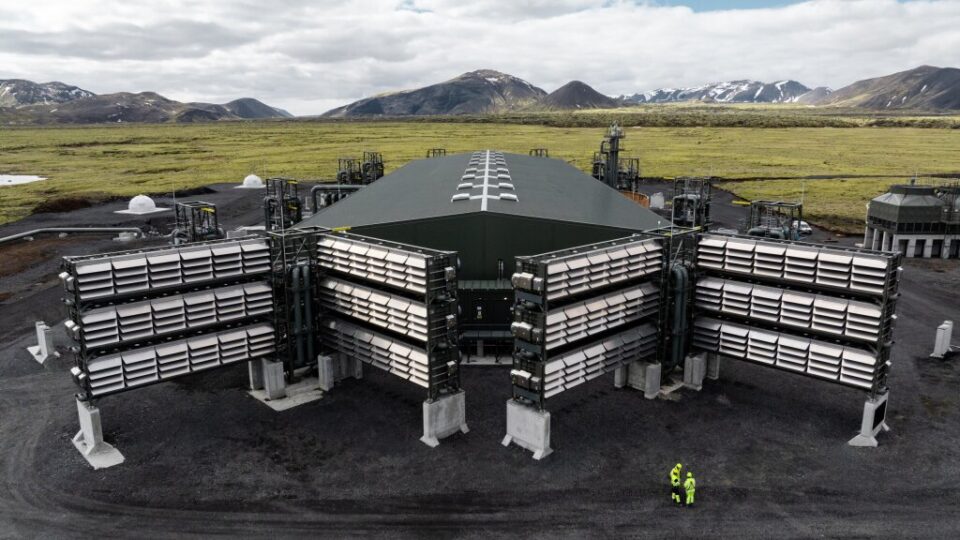
The largest carbon removal plant

June 11, 2024 By EarthWise Leave a Comment

Direct air capture (DAC) is process that removes carbon dioxide out of the air and stores it away where it can no longer trap heat in the atmosphere.  It is intended to be a way of getting rid of the greenhouse gases that have built up in the atmosphere.  In principle, it’s a great idea.  In practice, it is a huge challenge.

In 2017, a company called Climeworks became the first company to take carbon dioxide out of the air and sell it as a product for use in carbonated drinks and in greenhouses.  In 2021, the company opened a DAC plant called Orca in Iceland that captures CO2 and permanently stores it underground.  Clients like Microsoft pay Climeworks for doing this as a way of offsetting their own emissions.

Recently, Climeworks has started operating a new plant called Mammoth – also in Iceland – that will be able to capture about 10 times more carbon dioxide than Orca.  Iceland is a prime location for DAC technology because its abundant geothermal energy makes powering it cheap and environmentally friendly.

Mammoth, when fully operational, will remove about 36,000 tons of carbon dioxide a year, the largest DAC system in the world.  But there is a long, long way to go.  Microsoft alone emits nearly 13 million tons of carbon dioxide a year.

There are multiple DAC projects in development including several in the United States being funded by the Bipartisan Infrastructure Law.  The four DAC hubs being developed under the program are each supposed to have the capacity to capture at least a million metric tons of CO2 a year.

Whether DAC can make a real difference remains to be seen.

**********

Web Links

The world’s largest carbon removal plant is here, and bigger ones are on the way

Photo credit: Climeworks

Earth Wise is a production of WAMC Northeast Public Radio
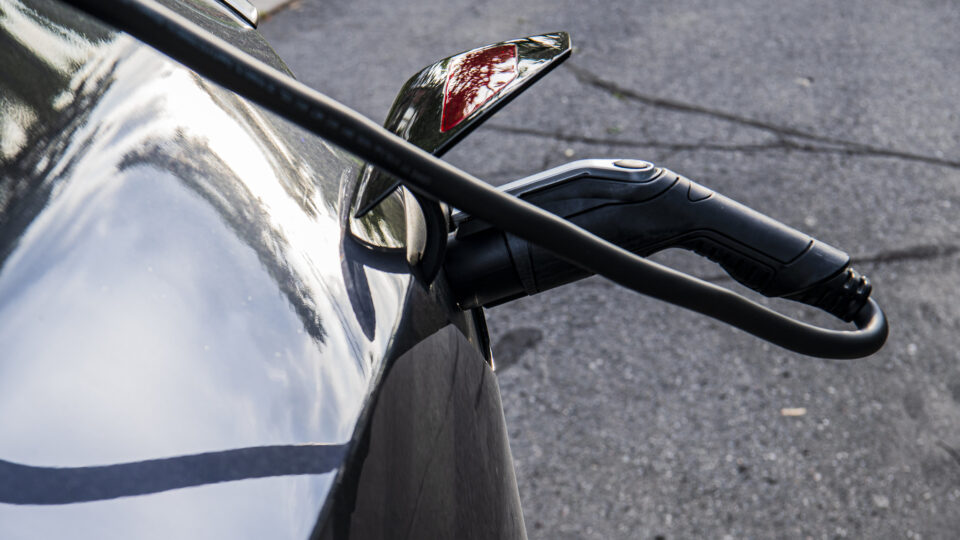
A plug for all cars

January 23, 2024 By EarthWise Leave a Comment

The Tesla charging standard is being renamed the North American charging standard

Different brands of electric cars have required different charging connections. There has been no standard connector for charging.  But now, as the transition to electric vehicles is accelerating, there is the North American Charging Standard, which within in the next couple of years, will be common to pretty much any new electric vehicle on the road.

There have been several different charging connector systems in use by auto manufacturers and each charging station offered only a particular one of them.  The largest charging network in the US has been Tesla’s Supercharger Network, which uses a proprietary standard it put in place in 2012.  Tesla offered to open up their charging technology to other cars but auto manufacturers declined to take them up on the offer for a number of years.  The Bipartisan Infrastructure Law, passed in 2021, provided federal subsidies for building out fast charging networks, provided a common charging standard was adopted.  That has broken the log-jam.

The Tesla Charging Standard has been renamed the North American Charging Standard and Tesla opened its technology to other manufacturers in November 2022.

Automakers who have signed on to the standard include BMW, General Motors, Honda, Hyundai, Jaguar Land Rover, Lucid, Mercedes-Benz, Nissan, Polestar, Rivian, Subaru, Toyota, and Volvo.  In December, the Volkswagen Group – which includes Volkswagen, Porsche, and Audi – announced that they are also implementing it for future vehicles in North America, starting in 2025.   (The only significant holdout is Stellantis, parent of Dodge, Chrysler, and Jeep).

It will be a year or two before cars from all these companies will have the NACS connector and be able to charge at the same stations, but it will happen.

**********

Web Links

Volkswagen, Audi, And Porsche Finally Commit To Using Tesla’s NACS Plug

Photo, posted July 8, 2023, courtesy of Michael Swan via Flickr.

Earth Wise is a production of WAMC Northeast Public Radio

Primary Sidebar

Recent Episodes

  • An uninsurable future
  • Clean energy and jobs
  • Insect declines in remote regions
  • Fossil fuel producing nations ignoring climate goals
  • Trouble for clownfishes

WAMC Northeast Public Radio

WAMC/Northeast Public Radio is a regional public radio network serving parts of seven northeastern states (more...)

Copyright © 2026 ·