• Skip to primary navigation
  • Skip to main content
  • Skip to primary sidebar

Earth Wise

A look at our changing environment.

  • Home
  • About Earth Wise
  • Where to Listen
  • All Articles
  • Show Search
Hide Search
You are here: Home / Archives for biomimicry

biomimicry

Seashells inspire better concrete

July 10, 2024 By EarthWise Leave a Comment

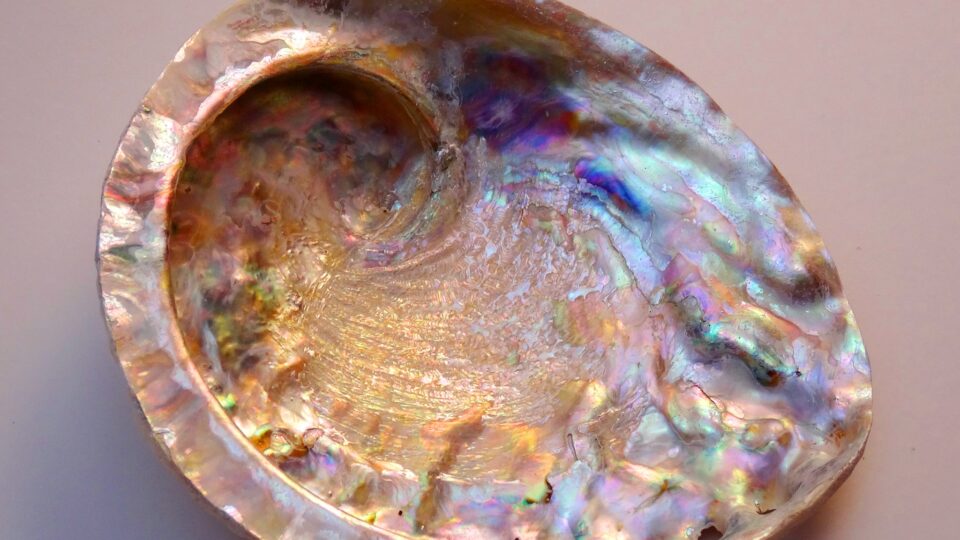
Seashells inspiring better concrete

Mother of pearl – also known as nacre – is a natural material found in certain seashells such as those of oysters and abalone.  On the microscopic level, it consists of hexagonal tablets of the hard mineral aragonite glued together by a soft biopolymer.  The aragonite gives nacre its strength, and the biopolymer adds flexibility and crack resistance. 

Scientists at Princeton University have developed innovative composite materials inspired by nacre by utilizing conventional construction materials like Portland cement paste combined with a limited amount of polymer.  The new material consists of alternating layers of cement paste sheets with the highly stretchable polymer polyvinyl siloxane.

The materials were subjected to bending tests to evaluate crack resistance or fracture toughness.  Three different versions of the material were tested that used different ways of interposing the polymer layers.  The new materials were compared with similar structures composed entirely of cement.

The concrete-only samples were brittle, breaking suddenly and completely upon reaching their failure point.  The samples with alternating cement and polymer layers demonstrated increased ductility and resistance to cracking. 

By fully mimicking the structure of nacre – using completely separated hexagonal cement tablets – the researchers demonstrated materials with 19 times the ductility and 17 times the fracture toughness of cement while retaining nearly the same strength as solid cement samples.

Engineered materials inspired by nature could eventually help increase the durability of a wide range of brittle ceramic materials, from concrete to porcelain.

**********

Web Links

From seashells to cement, nature inspires tougher building material

Photo, posted January 2, 2016, courtesy of Yantra via Flickr.

Earth Wise is a production of WAMC Northeast Public Radio
Polar Bears and Tires | Earth Wise

January 12, 2023 By EarthWise Leave a Comment

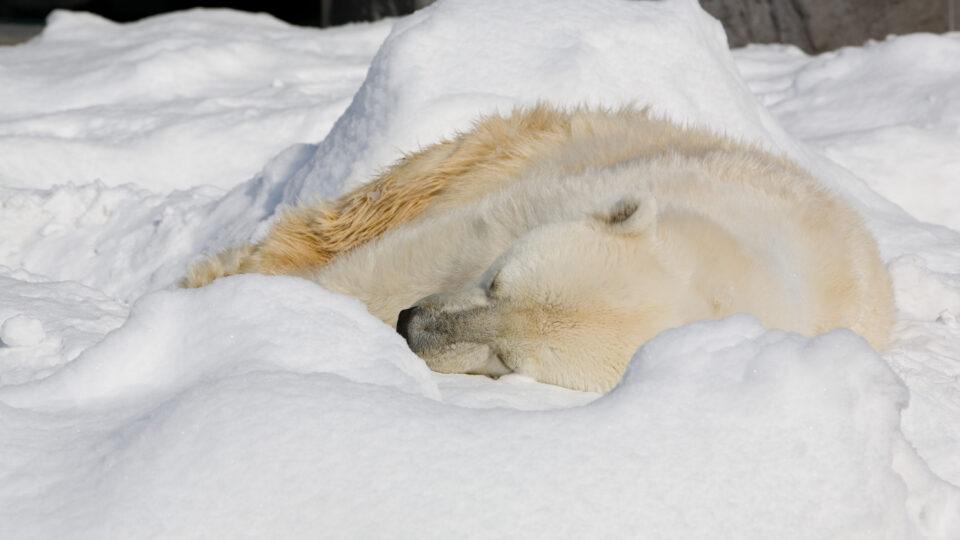
Researchers turn to polar bear paws to find better traction

There is lots of interest in traction.  People want to find better ways to move across wet and frozen surfaces safely.   This applies to both the shoes on our feet and the tires on our cars. 

Researchers at the University of Akron along with colleagues at Syracuse University and at Bridgestone, the tire company, have been studying how many arctic animals can walk and run across the ice without slipping and falling.  Their research focused on the paws of polar bears.

Previous studies discovered that polar bears have papillae – little bumps on the pads of their feet – that provide improved traction on snow.  The new research also looked at the paws of other species of bear – brown bears and black bears – and found that these others also have papillae on their paw pads, but that those of polar bears are as much as 50% taller.  These taller bumps give the pads a 30-50% increase in frictional shear stress.

The research may lead to various applications. For example, snow tires typically have deeper treads, but the polar bear study may lead to some new designs that would improve traction.  People who do high-altitude climbing are interested in the research as are companies that deliver goods in bad weather.  Anyone who has to be out and about in bad weather would like to get a better grip.

There are various other animals with traction-improving adaptations that are probably worth studying.  These include dogs, wolves, foxes, and mountain goats.  The same researchers at Akron have also studied other animals with unique abilities to deal with challenging surfaces including geckos, spiders, and mussels.  The natural world is filled with examples of creatures who can easily function in environments that we humans find very challenging.

**********

Web Links

UA researchers’ focus on tire traction leads to investigation of polar bear paws

Photo, posted March 2, 2008, courtesy of Sam Weng via Flickr.

Earth Wise is a production of WAMC Northeast Public Radio.

Collecting Clean Water From The Air

February 6, 2019 By EarthWise Leave a Comment

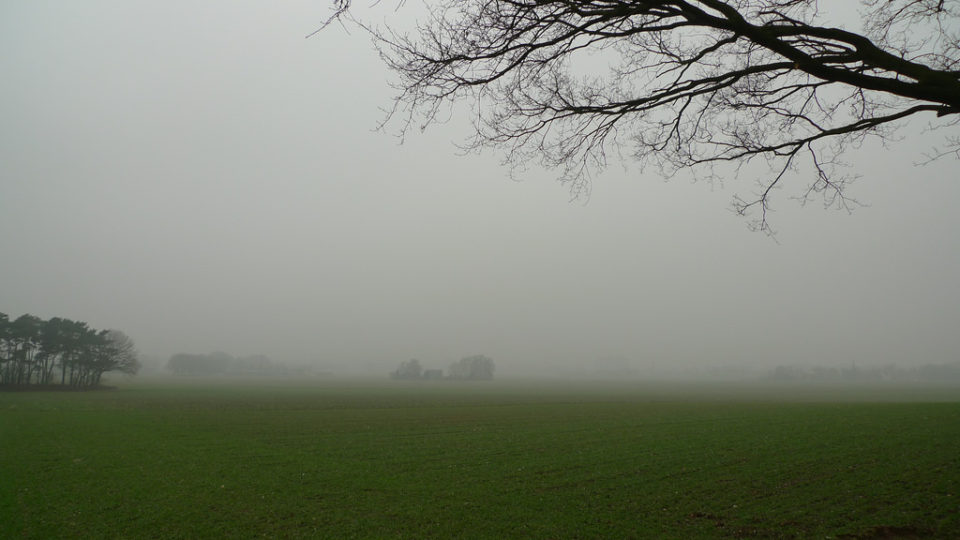
Clean water is an essential requirement for human life and there are many places where it is a scarce commodity.   In the world’s deserts, getting water to people requires feats of engineering and irrigation that can be cumbersome and expensive.

Researchers at Ohio State University have produced a couple of new studies that explore options for gathering water from fog and condensation that are based on principles of biomimicry:  copying strategies already in use by plants and animals.

The researchers looked at how cactus, beetles and desert grasses all collect water condensed from nighttime fog, gathering droplets from the air and filtering them to roots or reservoirs.

The cactus they studied collects water on its barbed tips before guiding droplets down conical spines to the base of the plant. They learned that conical shapes gather more water than do cylindrical shapes.  This is because of a physics phenomenon called the Laplace pressure gradient.

The beetles they studied collect drops of water on waxy, water-repellent bumps on their backs.  The water then slides towards the beetle’s mouth on the flat surface between the bumps.  Based on this, the researchers experimented with structures that include multiple hydrophilic cones with spaces in between where water droplets can coalesce.

From grasses, they learned that grooved surfaces move water more quickly than ungrooved surfaces – in fact, about twice as much.

The work so far has been on a laboratory-level, but the researchers envision scaling up to structures in the desert that can gather water from fog or condensation and supplement public systems or wells either on a house-by-house basis or on a community-wide basis.  Copying cacti, beetles and grasses could supply clean water to people in the desert.

**********

Web Links

Collecting clean water from air, inspired by desert life

Photo, posted February 7, 2010, courtesy of Remko van Dokkum via Flickr.

Earth Wise is a production of WAMC Northeast Public Radio.

Biomimicry Is Big

February 8, 2018 By EarthWise Leave a Comment

https://earthwiseradio.org/wp-content/uploads/2018/02/EW-02-08-18-Biomimicry-is-Big.mp3

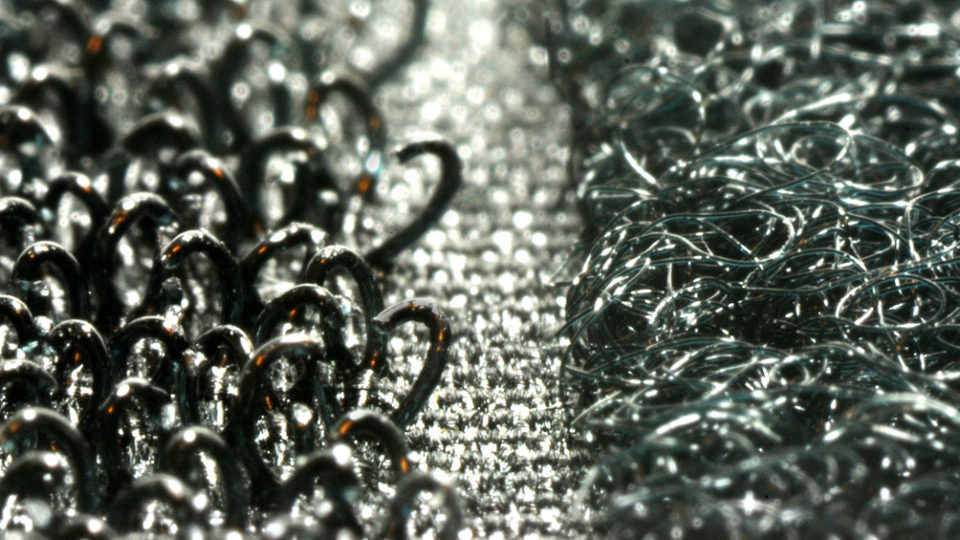
Biomimicry is learning from and then emulating nature’s forms, processes, and ecosystems to create more sustainable designs.   Mother Nature is already the inspiration for countless products and designs ranging from Velcro copied from plant burs to the shape of wind turbines modeled after whale fins.  There are wetsuits inspired by beaver pelts and office buildings that copy termite dens.  Increasingly, innovators are looking at nature for designs in architecture, chemistry, agriculture, energy, health, transportation, computing, and even for the structure of organizations and cities.

[Read more…] about Biomimicry Is Big

Primary Sidebar

Recent Episodes

  • An uninsurable future
  • Clean energy and jobs
  • Insect declines in remote regions
  • Fossil fuel producing nations ignoring climate goals
  • Trouble for clownfishes

WAMC Northeast Public Radio

WAMC/Northeast Public Radio is a regional public radio network serving parts of seven northeastern states (more...)

Copyright © 2026 ·