• Skip to primary navigation
  • Skip to main content
  • Skip to primary sidebar

Earth Wise

A look at our changing environment.

  • Home
  • About Earth Wise
  • Where to Listen
  • All Articles
  • Show Search
Hide Search
You are here: Home / Archives for biofilm

biofilm

Microplastics and antibiotic resistance

April 14, 2025 By EarthWise Leave a Comment

Microplastics are a real problem.  They are pretty much everywhere.  They are in our food, in the oceans, on mountains, up in the clouds, and most alarmingly, in our bodies.  All of that is already bad news, but researchers at Boston University have found that microplastics may also be contributing to antibiotic resistance in dangerous bacteria.

The researchers observed that bacteria exposed to microplastics become resistant to multiple types of antibiotics commonly used to treat infections.  Bacteria can become resistant to antibiotics for a number of reasons, including misuse and overprescribing of medications.  However, a major factor influencing antibiotic resistance is the microenvironment – the immediate surroundings of a microbe – which is where bacteria and viruses replicate.

The Boston University study tested how the common bacterium E. coli reacted to being in a closed environment with microplastics.  The plastics provide a surface that the bacteria can attach to and colonize.  When attached to a surface, bacteria create a sticky substance called a biofilm that acts like a shield, protecting the bacteria and keeping them affixed securely.  The tests showed that microplastics supercharged the biofilms so much that when antibiotics were introduced, they were unable to penetrate the shield.

Microplastics are everywhere, but they are especially prevalent in impoverished places where sanitation may be limited.  Refugees, asylum seekers, and forcibly displaced populations are already at increased risk of contracting drug-resistant infections.  The prevalence of microplastics adds another risk to the already difficult lives of these people.

**********

Web Links

Microplastics Could Be Fueling Antibiotic Resistance, BU Study Finds

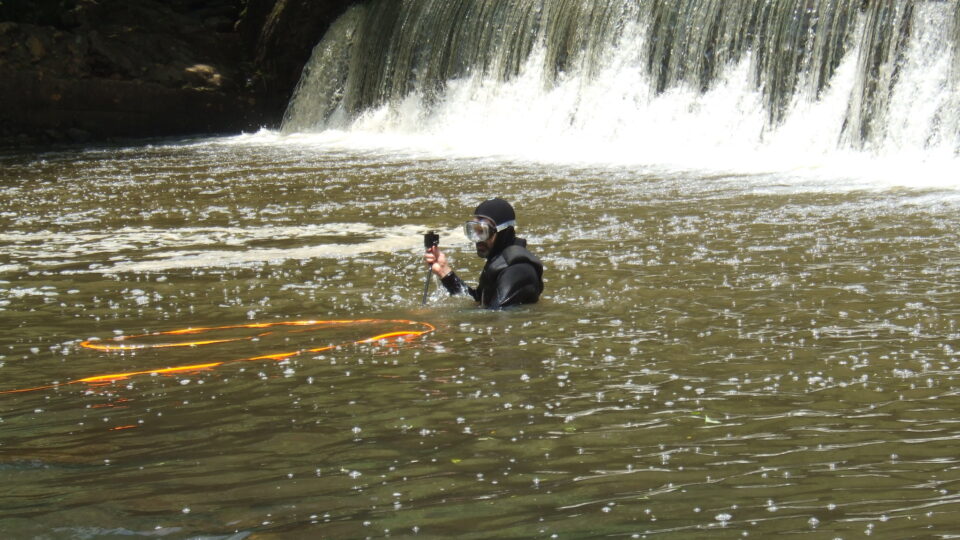
Photo, posted May 15, 2021, courtesy of Felton Davis via Flickr.

Earth Wise is a production of WAMC Northeast Public Radio
PFAS In The Food Chain | Earth Wise

July 8, 2020 By EarthWise Leave a Comment

PFAS in the food chain

Per- and polyfluoroalkyl substances (PFAS) are a family of human-made chemicals that have been manufactured and used in a variety of industries around the globe.  PFOA and PFOS have been the most extensively produced and the most extensively studied of these chemicals. 

Exposure to PFAS has been linked to a host of adverse health effects, including thyroid hormone disruption and cancer.

PFAS compounds can be found in such things as non-stick cookware, stain-resistant carpets, water-repellent outdoor gear, and food packaging, like fast food wrappers and microwave popcorn bags. 

According to a new study, researchers from North Carolina State University have found PFAS substances in every step of the Yadkin-Pee Dee River food chain, even though the river doesn’t have a known industrial input of these compounds. 

The team collected water, sediment, algae, plant, insect, fish, crayfish, and mollusk samples at five sites along the river and analyzed them for 14 different PFAS compounds.  Nearly every sample tested contained PFAS compounds.  Biofilm contained the largest concentrations of 10 of the 14 PFAS compounds measured.  Insects, which primarily eat biofilm, had the greatest accumulation of PFAS compounds of all the living taxa the researchers sampled. 

When PFAS compounds are present at every step of the food chain, the compounds accumulate at each step leading to greater concentrations in animals that sit higher on the food chain – including humans.  This is known as biomagnification. 

Studies like this that reveal how prevalent PFAS can be within ecosystems without an industrial input highlight the need for further research into how these compounds affect the environment and human health.

*********

Web Links

PFAS present throughout the Yadkin-Pee Dee river food chain

Photo, posted May 24, 2011, courtesy of the U.S. Fish and Wildlife Service via Flickr.

Earth Wise is a production of WAMC Northeast Public Radio.

Primary Sidebar

Recent Episodes

  • An uninsurable future
  • Clean energy and jobs
  • Insect declines in remote regions
  • Fossil fuel producing nations ignoring climate goals
  • Trouble for clownfishes

WAMC Northeast Public Radio

WAMC/Northeast Public Radio is a regional public radio network serving parts of seven northeastern states (more...)

Copyright © 2026 ·