• Skip to primary navigation
  • Skip to main content
  • Skip to primary sidebar

Earth Wise

A look at our changing environment.

  • Home
  • About Earth Wise
  • Where to Listen
  • All Articles
  • Show Search
Hide Search
You are here: Home / Archives for berries

berries

Building better blackberries

June 6, 2025 By EarthWise Leave a Comment

The Human Genome Project is one of the greatest scientific feats in history.  It was launched in 1990 and completed in 2003.  The international group of researchers wanted to comprehensively study all of the DNA – the genome – from a select set of organisms, foremost of which being that of human beings.  The results accelerated the study of human biology and has led to improvements in the practice of medicine.

Every living thing – animal, plant, fungus, and various single-celled organisms – has a genome – a genetic blueprint.  A recent study by researchers at the University of Florida has done genome sequencing of blackberries with the hope of being able to achieve more efficient and targeted breeding.

Over the past 20 years, consumer demand for blackberries has increased leading to farmers growing more of the fruit in the United States.  The U.S. produces 37 million pounds of processed blackberries and almost 3 million pounds of fresh berries each year.

The Florida researchers made use of a large collection of DNA sequences to computationally piece together the entire genome of the blackberry variety in the study.  The genome study uncovered the secrets behind key traits that could lead to growing blackberry plants with no thorns and increasing the production of anthocyanin, which affects the color and health benefits of the fruit. 

For Florida, the southeastern United States and regions with similar climates, the genetic research holds the promise of accelerating the process to create blackberry varieties that are better suited to local growing conditions, enhancing both the yield and the quality of the increasingly popular fruit.

**********

Web Links

Decoding blackberry DNA: UF study paves way for enhanced breeding strategies

Photo, posted September 18, 2016, courtesy of Theo Crazzolara via Flickr.

Earth Wise is a production of WAMC Northeast Public Radio
Plastic food packaging

May 9, 2024 By EarthWise Leave a Comment

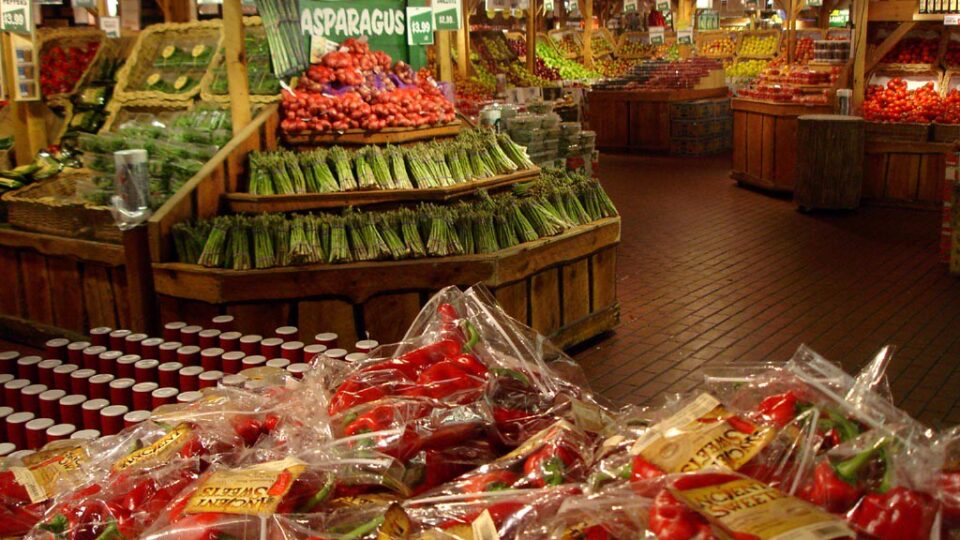
Reducing the use of plastic is an important environmental goal.  Plastic is made from fossil fuels and plastic pollutes the land and the oceans.  It is estimated that 40% of plastic waste comes from packaging.  Plastic packaging is extremely common in the supermarket and there is a growing desire to reduce its use.  But it isn’t that easy.

Plastic packaging works well to slow the decay of vegetables and fruit.  Its use results in less produce being tossed into the garbage, where it creates almost 60% of landfill methane emissions.  In fact, food is the most common material in landfills.  The average American family of four spends $1,500 a year on food that ends up uneaten and nearly half of all household food waste is fruits and vegetables.

Products like bagged salads, berries in plastic clamshells, and plastic sealed potatoes and cucumbers are popular with shoppers because they stay fresh longer.  They are popular with grocers because the items don’t have to be weighed.  But all these things result in plastic waste.  It is a tradeoff that is difficult to make between food quality and safety vs. the environmental harm caused by plastic.

There are a variety of alternatives to plastic packaging of food that are being explored.  They range from biodegradable, organic coatings that can take the place of plastic films, to cardboard and paper produce packaging. 

But practically, there is yet no affordable and biodegradable plastic alternative that keeps fruits and vegetables safe and fresh.  Solving the food packaging problem is not easy.

**********

Web Links

So Much Produce Comes in Plastic. Is There a Better Way?

Photo, posted July 1, 2007, courtesy of Brian via Flickr.

Earth Wise is a production of WAMC Northeast Public Radio
Protecting berries with sunflower extract

November 30, 2023 By EarthWise Leave a Comment

Using sunflower extract to protect berries from molding

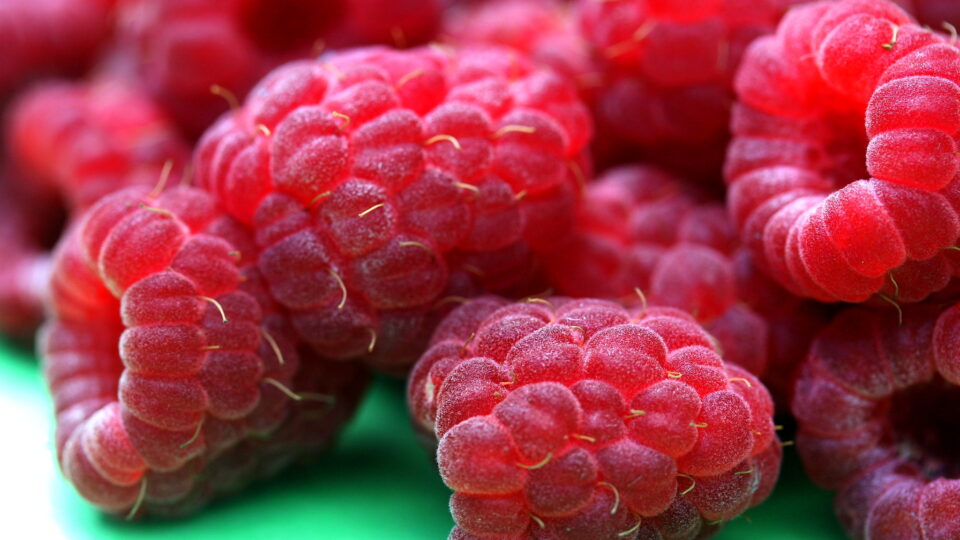
Many of us buy blueberries, raspberries, blackberries, and more in those little clear plastic clamshell boxes.  We try to check them out at the store to make sure they are ok and even if are, many soon end up coated with gray mold and other fungi.  It is a problem that is both disappointing and expensive.

Researchers from several Chinese Universities recently reported that compounds extracted from sunflower crop waste are quite effective at preventing rotting in blueberries.  They suggest that the food industry could use these natural compounds to protect berries from postharvest diseases.

Sunflowers are grown globally for their seeds and oil.  The flower stems themselves are generally considered to be a waste product.  Sunflowers are known to be particularly resistant to many plant diseases so the researchers decided to investigate whether there might be chemical constituents within the plants that are responsible for the protective property.

Their research led to the isolation of 17 different compounds known as diterpenoids, including four that have never been identified before.  They found that 4 of the compounds, including 2 of the newly discovered ones, were effective at preventing the growth of fungus on the blueberries. 

Berries were wetted with the compounds and then dried off and injected with mold spores.  Half of the treated berries were protected from the mold.

There is no reason that the method couldn’t be applied to a variety of crops.  There is great appeal in the concept of using a harmless extract from a plant to render a food crop safe from fungal infestation.  The technique holds great promise in preventing postharvest disease in fruit.

**********

Web Links

Sunflower extract fights fungi to keep blueberries fresh

Photo, posted August 26, 2006, courtesy of Liz West via Flickr.

Earth Wise is a production of WAMC Northeast Public Radio

Primary Sidebar

Recent Episodes

  • An uninsurable future
  • Clean energy and jobs
  • Insect declines in remote regions
  • Fossil fuel producing nations ignoring climate goals
  • Trouble for clownfishes

WAMC Northeast Public Radio

WAMC/Northeast Public Radio is a regional public radio network serving parts of seven northeastern states (more...)

Copyright © 2026 ·