• Skip to primary navigation
  • Skip to main content
  • Skip to primary sidebar

Earth Wise

A look at our changing environment.

  • Home
  • About Earth Wise
  • Where to Listen
  • All Articles
  • Show Search
Hide Search
You are here: Home / Archives for atoll

atoll

Natural solutions for disappearing islands

June 12, 2025 By EarthWise Leave a Comment

Natural solutions to preserve and protect disappearing atoll islands

Atoll islands are made from sediment produced by corals, clams, snails, and varieties of algae that secrete carbonate.  Under the right conditions, over time, fragments of coral skeletons, shells, and other sediments made by marine life are piled up by waves.  Eventually, islands are formed – some large and some small.  Atoll islands are home to a diversity of human cultures and are important refuges for a quarter of the world’s seabirds as well as numerous nesting sea turtles and tropical plants.

Rising sea levels – the rate of which has more than doubled over the past 30 years – are a mounting challenge for atoll islands.  And by the end of this century, sea level is projected to rise between 11 and 40 inches, depending on the world’s actions with regard to greenhouse gas emissions.

The ability of atoll islands to persist depends on the health of their ecosystems and the extent to which their natural processes have been disrupted by human activity.  To protect the most vulnerable islands, some researchers now propose using nature-based solutions – like restoring and protecting coral reefs and native forests.

Reclaiming seabird habitat can help reefs persist and restore the resilience of atoll islands.  Seabird guano washes off islands and into reefs, providing nutrients that boost coral growth and fish populations. 

Nature-based solutions cannot help the most urbanized atoll islands.  These islands have already irreversibly lost their natural adaptive capacity.  For those places, engineered approaches such as concrete seawalls are needed.

**********

Web Links

How Natural Solutions Can Help Islands Survive Sea Level Rise

Photo, posted July 3, 2014, courtesy of Roderick Eime / MG Media via Flickr.

Earth Wise is a production of WAMC Northeast Public Radio
Carbon levies for shipping

November 27, 2024 By EarthWise Leave a Comment

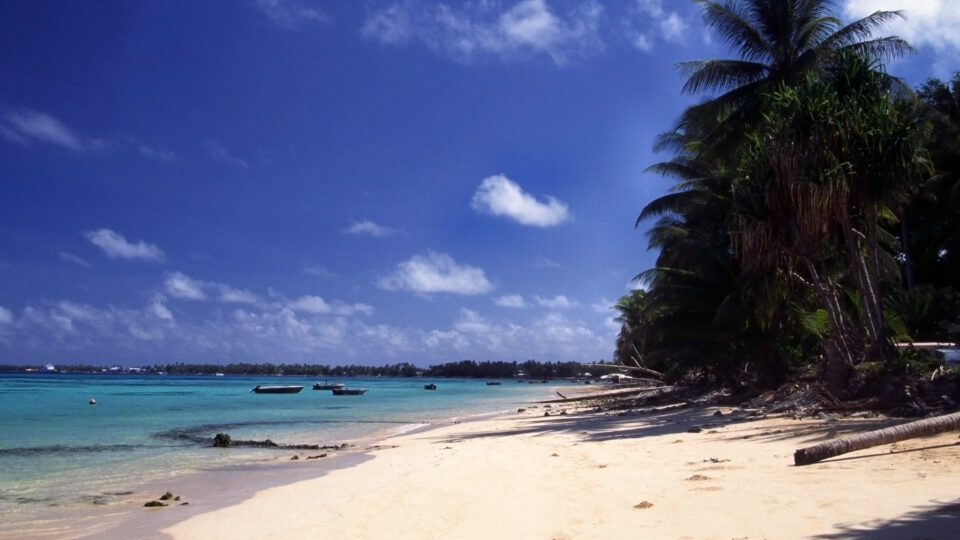
The global shipping industry is responsible for 90 percent of world trade.  The ships crossing the world’s oceans emit nearly 3% of the global greenhouse gas emissions caused by human activity that are contributing to climate change.  Among the effects of climate change are sea level rise, which is threatening the very existence of small island nations.

One such nation is Tuvalu, which is a group of islands in the South Pacific.  Tuvalu has a total landmass of just 10 square miles, and sea level there is rising 1.5 times faster than the global average.  Predictions are that within 50 to 100 years, low-lying islands like those of Tuvalu could be fully submerged by the ocean.

Representatives from six Pacific Island states and a growing number of Caribbean nations known as the 6Pac+ Alliance are urgently calling upon the International Marine Organization to enact a mandatory universal levy of $150 per ton of shipping emissions from large commercial vessels. 

Most marine vessels typically run on highly polluting heavy fuel oil.  Burning really filthy fuel is the cheapest way to cross the oceans.  There are alternatives including entirely carbon-free technologies, but they will be expensive to implement and utilize.  The cost of shipping would undoubtedly go up and be especially felt by small island nations and in developing countries where most food is imported.

The idea behind putting a price on ships’ carbon emissions is to both provide a financial incentive for the shipping industry to reduce its emissions and provide revenue for countries that incur costs from dealing with rising seas.

**********

Web Links

Pacific and Caribbean Island Nations Call for the First Universal Carbon Levy on International Shipping Emissions

Photo, posted November 23, 2006, courtesy of Stefan Lins via Flickr.

Earth Wise is a production of WAMC Northeast Public Radio
The Cost of Cleaning Up Ocean Plastic | Earth Wise

October 7, 2020 By EarthWise Leave a Comment

Cleaning up ocean plastic carries a large price tag

Small island developing states increasingly find themselves with large amounts of plastic waste.  A recent study looked at the financial cost for removing it.

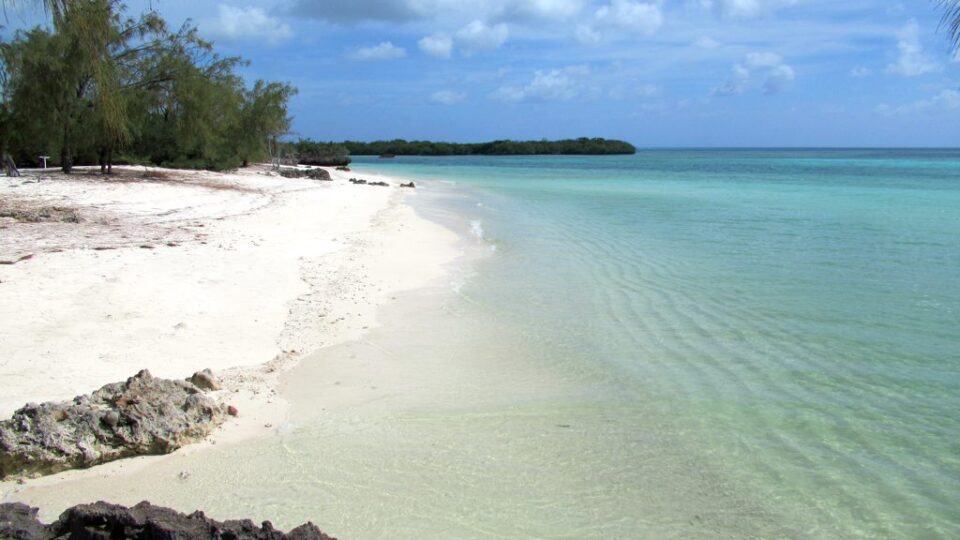
Aldabra Atoll is a UNESCO World Heritage Site in the Seychelles.  It is the world’s second-largest coral atoll and is the home of 307 species of animals and plants, including the largest population of giant tortoises in the world.  Aldabra has been called one of the wonders of the world and one of the crown jewels of the Indian Ocean.

Last year, a team from the University of Oxford and the Seychelles Island Foundation, spent five weeks removing litter that had washed up on Aldabra’s shores.  In total, they removed 25 tons of plastic litter which, to their surprise, was dominated by waste from the fishing industry.  The researchers now estimate that over 500 tons of litter remain on the island, 83% of which consists of buoys, ropes, nets, and, of all things, over 300,000 individual flipflops.  This is the largest accumulation of plastic waste reported for any single island in the world.

According to the study, the cost to clean up the entire island would be nearly $5 million, requiring 18,000 person-hours of labor.  A project of this magnitude is beyond the capacity of non-profit organizations like the Seychelles Islands Foundation.

The plastic pollution in Aldabra is related to the fishing industry in Seychelles, which provides tuna to high-income markets around the world.  The research highlights how even remote highly protected island ecosystems are impacted by global pollution and how difficult and costly it is to remedy.

**********

Web Links

Millions of dollars to clean up tuna nets and flip flops from island state

Photo, posted December 27, 2016, courtesy of David Stanley via Flickr.

Earth Wise is a production of WAMC Northeast Public Radio.

Primary Sidebar

Recent Episodes

  • An uninsurable future
  • Clean energy and jobs
  • Insect declines in remote regions
  • Fossil fuel producing nations ignoring climate goals
  • Trouble for clownfishes

WAMC Northeast Public Radio

WAMC/Northeast Public Radio is a regional public radio network serving parts of seven northeastern states (more...)

Copyright © 2025 ·