• Skip to primary navigation
  • Skip to main content
  • Skip to primary sidebar

Earth Wise

A look at our changing environment.

  • Home
  • About Earth Wise
  • Where to Listen
  • All Articles
  • Show Search
Hide Search
You are here: Home / Archives for approach

approach

Modeling geoengineering

May 19, 2025 By EarthWise Leave a Comment

Modeling the impacts of geoengineering

As the impacts of climate change continue to mount up, there is increasing interest in radical intervention measures designed to keep a lid on rising global temperatures.  Such measures are fraught with potential dangers and unintended consequences but there is no guarantee that one or another of them might still be attempted in the future.  Increasing international interest in geoengineering as a potential strategy for mitigating climate change has created a pressing need to consider its impact before any potentially irreversible actions are taken.

The Natural Environment Research Council in the UK is funding four research projects aimed at understanding the potential consequences of solar radiation modification (SRM) being deployed in the real world.

SRM consists of methods to reflect some of the Sun’s radiation back into space instead of allowing it to reach and warm the earth. 

One approach is stratospheric aerosol intervention in which particles such as sulfates are introduced into the upper atmosphere to reflect sunlight thereby producing a dimming effect.   The idea is to mimic the effects of large volcanic eruptions, which naturally send sulfates into the atmosphere.

A second approach is marine cloud brightening, which increases the reflectivity of clouds over the ocean by spraying very small droplets of sea water into the air.  The fine particles of sea salt enhance cloud condensation nuclei, producing more cloud droplets and making clouds more reflective.

The research aims to deliver independent risk analyses to inform policymakers about the potential environmental impacts of SRM.

**********

Web Links

Scientists to model the impact of controlling Earth’s temperature by reflecting solar radiation

Photo, posted May 6, 2009, courtesy of Denys Zadorozhnyi via Flickr.

Earth Wise is a production of WAMC Northeast Public Radio
Trapping carbon with rocks

March 25, 2025 By EarthWise Leave a Comment

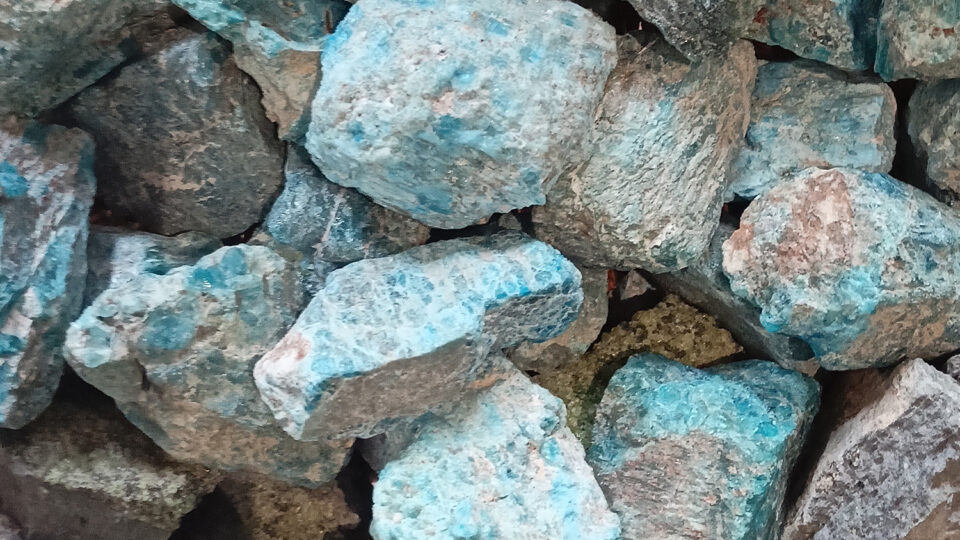
Many experts say that combating global warming will require both drastically reducing the use of fossil fuels and permanently removing billions of tons of CO2 already in the atmosphere.  Developing practical, large-scale technologies for carbon removal is a significant challenge.

There is a nearly inexhaustible supply of minerals that are capable of removing carbon dioxide from the atmosphere, but they don’t do it quickly enough to make a significant dent in the ever-growing supply in the atmosphere.  In nature, silicate minerals react with water and atmospheric CO2 to form minerals in the process called weathering.  But this chemical reaction can take hundreds or even thousands of years.

Researchers at Stanford University have developed a new process for converting slow-weathering silicates into much more reactive minerals that capture and store carbon quickly.  The new approach resembles a centuries-old technique for making cement.  They combine calcium oxide and another common mineral containing magnesium and silicate ions in a furnace.   The result are new materials that, when exposed to water, quickly trap carbon from the atmosphere.

In their experiments, the carbonation process took weeks to months to occur, thousands of times faster than natural weathering.

The idea would be to spread these materials over large land areas to remove CO2 from the air.  Meaningful use for trapping carbon would require annual production of millions of tons.  But the same kiln designs used to make cement could produce the needed materials using abundant minerals found in many places.  In fact, the required minerals are often common leftover materials – or tailings – from mining.

**********

Web Links

Scientists discover low-cost way to trap carbon using common rocks

Photo courtesy of Renhour48 via Wikimedia.

Earth Wise is a production of WAMC Northeast Public Radio

Storing Carbon Dioxide In The Ocean | Earth Wise

May 11, 2023 By EarthWise 2 Comments

Storing carbon dioxide in the ocean

Reducing the amount of carbon dioxide entering the atmosphere means either shutting down emission sources (primarily curbing the use of fossil fuels) or capturing the CO2 as it is emitted.  Capturing carbon dioxide from smokestacks and other point sources with high concentrations is relatively efficient and can make economic sense.  Removing it from the air, which even at today’s dangerously high levels contains only 400 parts per million, is difficult and energy intensive.  And even when it is removed, it then must be stored somewhere.

Researchers at Lehigh University have developed a novel way to capture carbon dioxide from the air and store it in what is effectively the infinite sink of the ocean.  The approach uses an innovative copper-containing filter that essentially converts CO2 into sodium bicarbonate (better known as baking soda.)  The bicarbonate can be released harmlessly into the ocean.

This technique has produced a 300 percent increase in the amount of carbon dioxide captured compared with existing direct air capture methods.   It does not require any specific level of carbon dioxide to work.  The filter becomes saturated with the gas molecules as air is blown through it.  Once this occurs, seawater is passed through the filter and the CO2 is converted to dissolved bicarbonate.  Dumping it into the ocean has no adverse effect on the ocean.  It doesn’t change the salinity at all, and the stuff is slightly alkaline, which will help reduce ocean acidification.

Reusing the filter requires cleaning it with a sodium hydroxide solution, which can be created from seawater using electricity generated by waves, wind, or sun.

The filter, called DeCarbonHIX, is attracting interest from companies based in countries around the world.

**********

Web Links

Path to net-zero carbon capture and storage may lead to ocean

Photo, posted March 10, 2007, courtesy of Gail via Flickr.

Earth Wise is a production of WAMC Northeast Public Radio

What Is Healthy Soil? | Earth Wise

August 30, 2022 By EarthWise Leave a Comment

Defining what constitutes healthy soil

Soil supports life by providing many critical ecosystem services.  For example, soil acts as a water filter, a growing medium, and provides habitat for billions of organisms.  Soil is also the foundation of our cities and towns, and the basis of global agroecosystems, which provide humans with feed, fiber, food, and fuel.

For all of these reasons and many more, having healthy soil is vital.  But what does soil health mean? And how should it be measured?

According to new analysis by researchers from Cranfield University and Nottingham University in the U.K., how we think about, measure, and study soil must change in order to better understand how to manage this resource effectively. 

While the term ‘soil health’ is widely used, it means different things to different people.  There is no single agreed upon way to gauge the overall health of soil. 

Current approaches to assess soil health measure individual soil properties and use findings  to assign a single number giving an overall score.  But according to the research team, this does not reflect the wider system perspective that’s needed to fully evaluate the health of soil over time.

Instead, the researchers propose a new system to assess soil health based on a hierarchical framework that takes in several measures, including signs of life, signs of function, signs of complexity, and signs of emergence, which is the extent to which soils recover from multiple stressors. 

This new approach, which can be applied to all soils, moves us closer to an interdisciplinary understanding of the whole picture of soil health.  After all, healthy soil is fundamental to our survival.

**********

Web Links

We need to change how we think about soil

Photo, posted April 8, 2008, courtesy of Brian Boucheron via Flickr.

Earth Wise is a production of WAMC Northeast Public Radio.

Conflicts In Conservation

July 20, 2018 By EarthWise Leave a Comment

https://earthwiseradio.org/wp-content/uploads/2018/07/EW-07-20-18-Conflicts-in-Conservation.mp3

In recent years there has been a great deal of discussion about animal intelligence and the idea of animal consciousness.   In the past, the notion that animals have feelings had been relegated to fringe status, but these days, a wealth of scientific findings has made it much more mainstream to entertain such ideas.

[Read more…] about Conflicts In Conservation

Primary Sidebar

Recent Episodes

  • An uninsurable future
  • Clean energy and jobs
  • Insect declines in remote regions
  • Fossil fuel producing nations ignoring climate goals
  • Trouble for clownfishes

WAMC Northeast Public Radio

WAMC/Northeast Public Radio is a regional public radio network serving parts of seven northeastern states (more...)

Copyright © 2025 ·