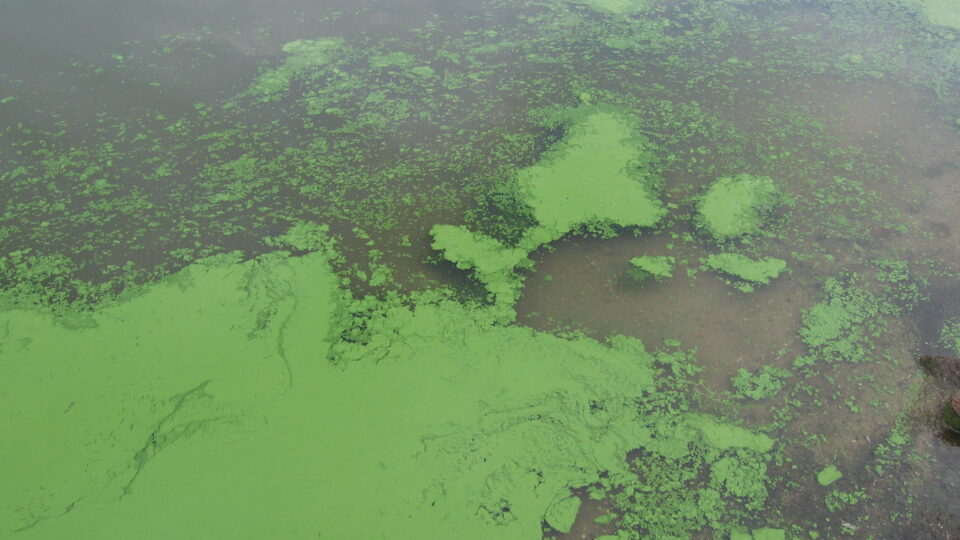
An algal bloom is a rapid increase in the density of algae in an aquatic system. Harmful algal blooms occur when bodies of water get overloaded with nitrogen and phosphorus runoff from agriculture and other human activities. These excess nutrients can facilitate the out-of-control growth of cyanobacteria, also known as blue-green algae.
Some species of blue-green algae produce a toxin called microcystin. These toxins pose a serious health hazard to people, animals, and the environment. Microcystin affects liver function and can cause death in animals, as well as humans in rare instances. A notable incident occurred in the summer of 2014, when cyanobacteria contamination in Lake Erie left 500,000 residents in Ohio and Michigan without water for 72 hours and sickened more than 100 people.
According to a study led by researchers from Carnegie Science, as climate change warms the earth, higher-latitude regions will be at a greater risk for microcystin produced by algal blooms. The study found water temperatures of 68 to 77 degrees Fahrenheit as being at the greatest risk for developing dangerous levels of microcystin.
In the study, which was published in the journal Nature Water, the research team also demonstrated that the areas most susceptible to high toxin concentrations will continue to move northward. And in some areas, researchers say the relative risk of exceeding water quality guidelines will increase by up to 50% in the coming decades.
The research team hopes its findings raise more awareness about water sustainability, and the need to focus on the quality of the water as much as the quantity of water.
**********
Web Links
Geographic redistribution of microcystin hotspots in response to climate warming
Photo, posted October 27, 2010, courtesy of Nara Souza / Florida Fish and Wildlife Commission via Flickr.
Earth Wise is a production of WAMC Northeast Public Radio