• Skip to primary navigation
  • Skip to main content
  • Skip to primary sidebar

Earth Wise

A look at our changing environment.

  • Home
  • About Earth Wise
  • Where to Listen
  • All Articles
  • Show Search
Hide Search
You are here: Home / Archives for 20th century

20th century

Hydroclimate whiplash

January 30, 2025 By EarthWise Leave a Comment

Hydroclimate whiplash has increased as much as 66% since the mid-20th century

Hydroclimate whiplash is a term that describes rapid swings between intensely wet and dangerously dry weather.  Global weather records show that the occurrence of hydroclimate whiplash has increased by 31% or as much as 66% since the mid-20th century. 

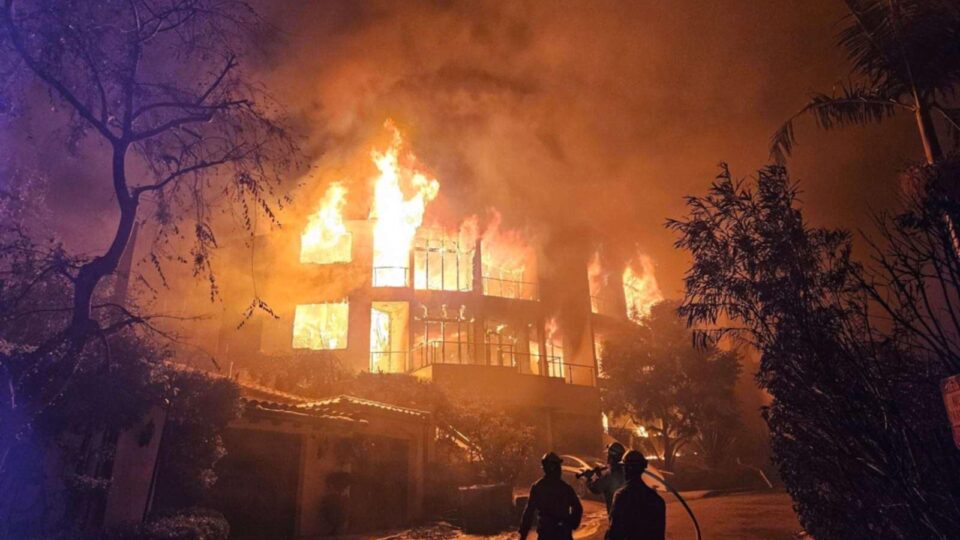
California’s experience is a prime example of this phenomenon.  After years of severe drought, dozens of atmospheric rivers subjected the state to record-breaking amounts of precipitation in the winter of 2022-23.  A second extremely wet winter in the southern parts of the state the following year resulted in the growth of abundant amounts of grass and brush. 2024 saw a record-hot summer which was then followed by a record-dry start to the 2025 rainy season.  The result was the catastrophic wildfires in the Los Angeles area in January.

Research by UCLA climate scientists explains that the primary driver for the increasing occurrence of hydroclimate whiplash is the expansion of the atmospheric sponge – that is, the growing ability of the atmosphere to evaporate, absorb and release water.  Every degree Celsius that the planet warms increases this ability by 7%. 

The global consequences of hydroclimate whiplash include not only floods and droughts but also the increased danger of whipsawing between the two, leading to the bloom and burn cycle that California recently faced. The risk of wildfire is twofold:  first by increasing the growth of flammable grass and brush in the months before the fire season, and then by drying it out to dangerous levels with extremely warm and dry weather.

**********

Web Links

Floods, droughts, then fires: Hydroclimate whiplash is speeding up globally

Photo, posted January 13, 2025, courtesy of Victor Guillen / USDA Forest Service via Flickr.

Earth Wise is a production of WAMC Northeast Public Radio
Shrinking African glaciers

March 27, 2024 By EarthWise Leave a Comment

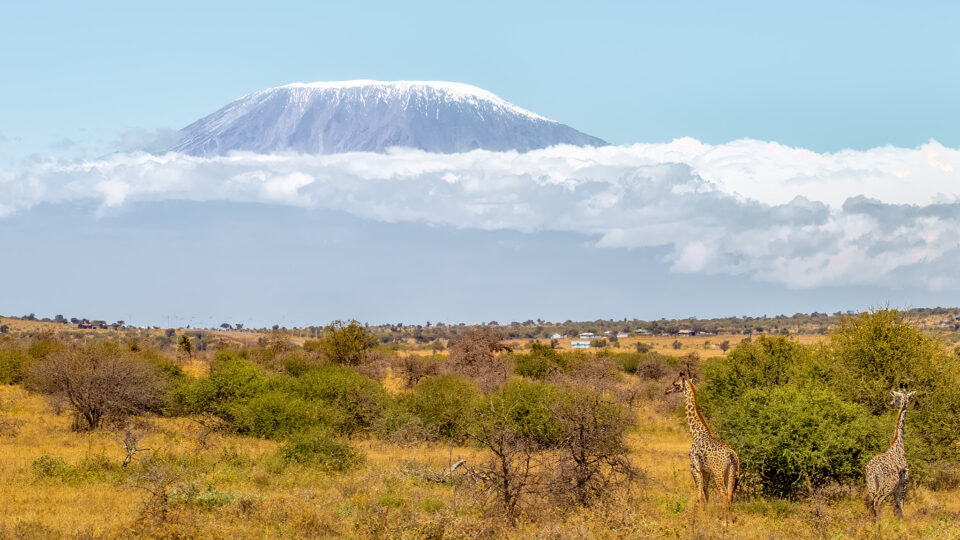
We don’t usually associate Africa with glaciers, but the continent has had glaciers on its highest peaks for the past 10,000 to 15,000 years.  Africa’s glaciers are found in three regions:  the Rwenzori Mountains along the border between Uganda and the Democratic Republic of the Congo, Mount Kilimanjaro, and Mount Kenya.  At the turn of the 20th century, there were 43 glaciers scattered across 6 peaks within the Rwenzori Mountains.  In the intervening years, things have greatly changed.

 Since the early 20th century, Africa’s glaciers have shrunk by 90%.  Because all these glaciers are close to the equator, they are especially vulnerable to warming.  According to a new study published in the journal Environmental Research: Climate, in the last two decades, Africa’s glaciers have lost roughly half their area.

This rapid decrease is alarming to climate scientists because they represent a clear indicator of the impact of climate change.  A major factor in the decline of the glaciers is the reduction in cloud cover over the mountains.  Sunshine is melting glaciers and turning ice directly into water vapor even when temperatures are below freezing.  Reductions in snowfall at the same time means that the melting glaciers are not being replenished.

Scientists believe that the tropical glaciers of Africa may all but disappear over the next 25 years.

Roughly three-quarters of the Earth’s freshwater is stored in the world’s more than 200,000 glaciers.  According to scientists, if the world reaches but maintains 1.5 degrees of warming, half of the world’s glaciers could be gone by the end of this century.  If the world continues to warm as it has been without slowing down, more than 80% of the glaciers will disappear.

**********

Web Links

Africa’s Tropical Glaciers Have Shrunk by 90 Percent, Research Shows

Photo, posted February 26, 2022, courtesy of Ray in Manila via Flickr.

Earth Wise is a production of WAMC Northeast Public Radio
The warmest fall

December 12, 2023 By EarthWise Leave a Comment

The warmest fall on record

The National Oceanic and Atmospheric Administration has global climate records dating back 174 years.  As the planet continues to heat up, both September and October set new records as the warmest of those months in history.

September was the fourth month in a row of record-warm global temperatures.  Not only was it the warmest September on record, but it was also the most atypically warm month of any month of the entire 174 years of record keeping.  In fact, September 2023 was warmer than the average July from 2001-2010.

For the sixth consecutive month, September also set a monthly record for global ocean surface temperature.

Not to be outdone, the planet added a fifth straight month of record-warm temperatures in October.  The average global temperature for October was 1.34 degrees Celsius above the 20th century average.  This was .24 degrees higher than the previous October record set in 2015.  And, for the seventh straight month, global ocean surface temperatures were also at a record high. 

October was the 47th consecutive October and the 536th consecutive month with global temperatures above the 20th century average.  In fact, the past 10 Octobers have been the 10 warmest Octobers in the global climate record.

With only a short time remaining in the year, according to the National Centers for Environmental Information, there is a greater than 99% chance that 2023 will rank as the warmest year on record for the world.  It is no cause for celebration.

**********

Web Links

The planet just had its warmest October on record

Topping the charts: September 2023 was Earth’s warmest September in 174-year record

Photo, posted October 18, 2016, courtesy of Dave Roberts via Flickr.

Earth Wise is a production of WAMC Northeast Public Radio

Primary Sidebar

Recent Episodes

  • An uninsurable future
  • Clean energy and jobs
  • Insect declines in remote regions
  • Fossil fuel producing nations ignoring climate goals
  • Trouble for clownfishes

WAMC Northeast Public Radio

WAMC/Northeast Public Radio is a regional public radio network serving parts of seven northeastern states (more...)

Copyright © 2025 ·