
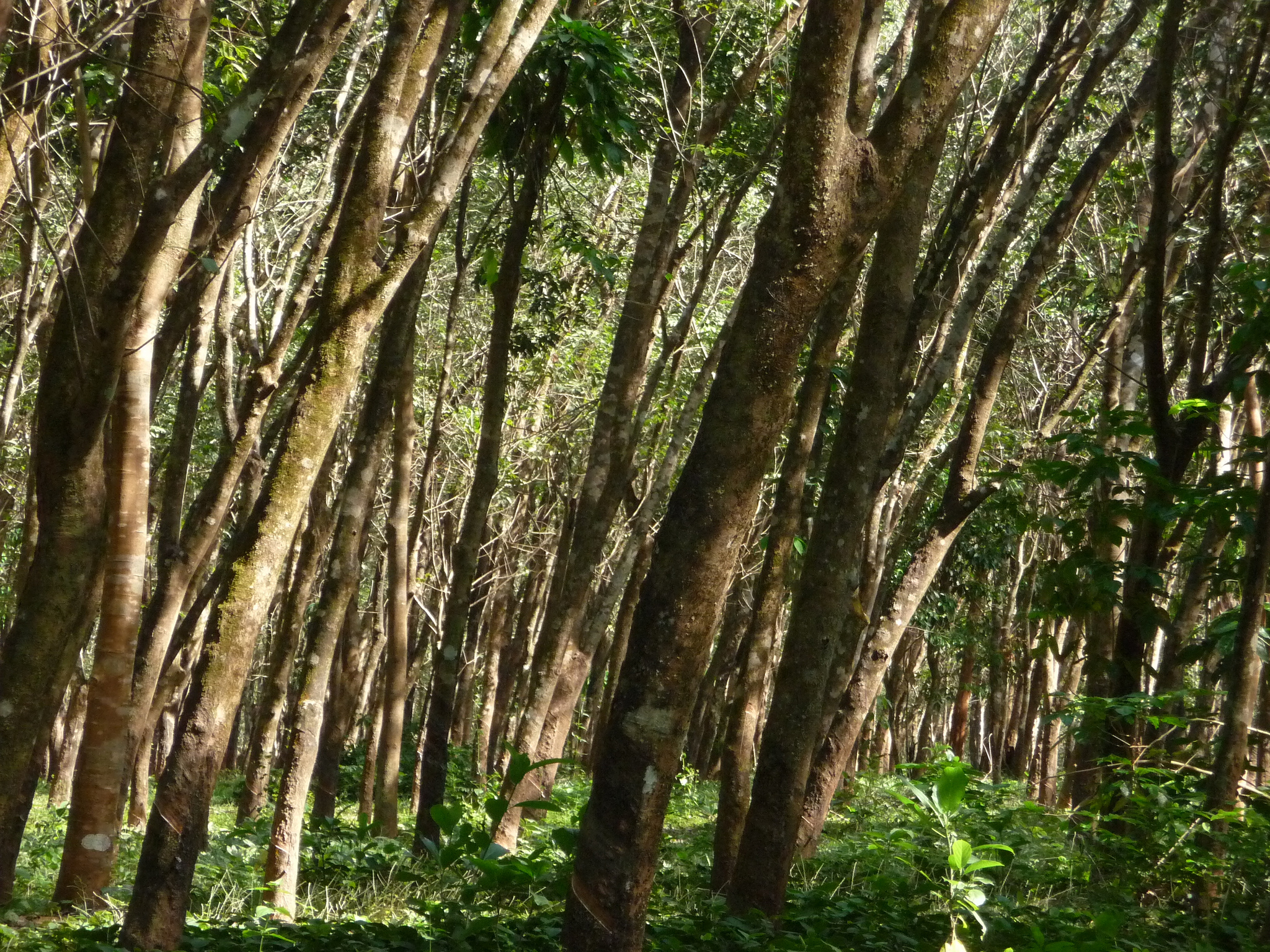
Over the past decade, more than five million acres of forests and farms worldwide have been cleared for agro-industrial rubber plantations. The driver is the growing demand for rubber products – especially tires – which use 70% of the annual rubber production.
Rubber is the most rapidly expanding tree crop in Southeast Asia. Researchers warn that this switching of land over to rubber plantations is negatively affecting soil, water, and biodiversity.
The research, which was recently published in the journal Conservation Letters, reveals that converting tropical forests to rubber monoculture dramatically decreases the number of bird, bat, and insect species. Researchers say the change in landscape also threatens the habitat of endangered species, including the white-shouldered ibis, the yellow-cheeked crested gibbon, and the clouded leopard.
Pesticide, herbicide and sediment runoff from rubber plantations enters nearby waters, affecting aquatic life. And the removal of smaller trees and shrubs of the plantations increases soil erosion and landslide risk.
And the problem is likely to be magnified. Studies suggest that rubber consumption will increase 3.5% annually, leading to 10 to 20 million more acres of rubber plantations by 2024.
There may be some hope. Scientists hope that a sustainability certification may be successful in helping conserve biodiversity and promoting the sustainable cultivation of rubber. In January, The Sustainable Natural Rubber Initiative was launched seeking to get everyone involved in rubber production to comply with voluntary guidelines to produce it more sustainably.
The adoption and acceptance of this initiative is where the rubber meets the road.
**********
.
Web Links
The tires on your car threaten Asian biodiversity
Demand for rubber ‘threatens forests’
Photo, posted November 18, 2013, courtesy of Sean Beesley via Flickr.
.
Earth Wise is a production of WAMC Northeast Public Radio.