
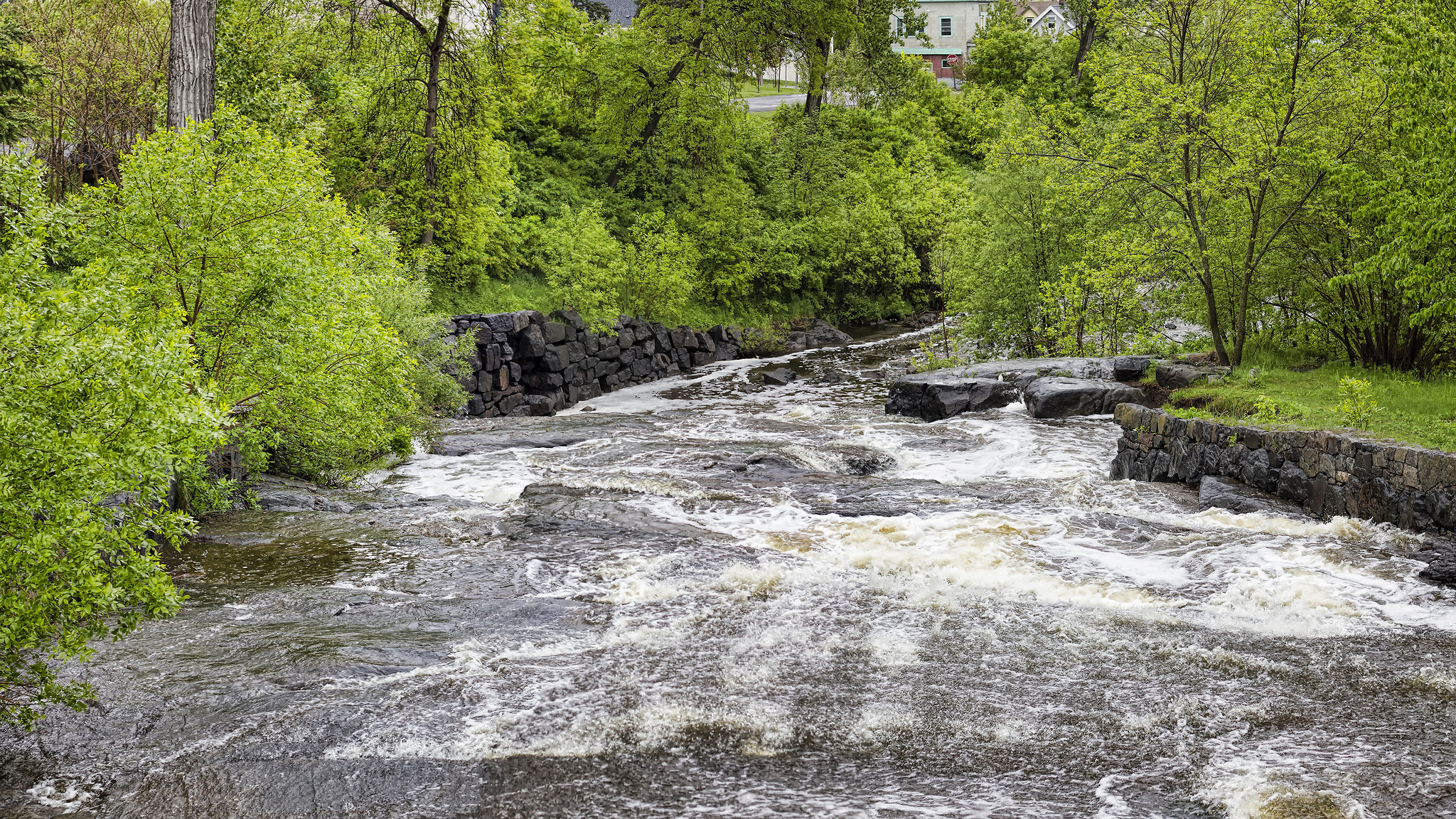
In the Northeast, streams once covered in ice are flowing again. The floods that often accompany spring thaw bring big changes to these ecosystems.
Moving water shapes a stream’s physical and biological characteristics. Stream beds are altered as silt, sand, gravel, and even boulders are rolled about or swept away by the current. Steam-dwelling animals have evolved adaptations for life under flood conditions. Some insects burrow into the streambed or clasp tightly to structures, so as to not be washed away. When habitat allows, fish and other creatures retreat into sheltered areas.
Dave Strayer, an aquatic ecologist at the Cary Institute of Ecosystem Studies, has found that freshwater mussels depend on protected areas. Mussels, which can remain buried in the streambed for more than 30 years, live mainly in the small stable bits of streambed that are not disturbed during flood events.
Algae, on the other hand, are well equipped to take advantage of flood conditions. In spring, ample sunshine reaches streams before trees leaf out. This allows algae to rapidly re-colonize bare surfaces that have been scoured and polished clean by currents.
Flooding also transports wood and fallen leaves downstream. These materials are a source of nutrients and structure – building streambed and floodplain habitat, and providing food for creatures that feed on organic matter.
Now is a good time to get outside and see how spring flooding is transforming a stream near you. Remember the role that branches and logs play in sheltering stream life and avoid disturbing these important habitats.
**********
–This segment was adapted from an essay by Mike Fargione is a wildlife biologist and manager of Field Research and Outdoor Programs at the Cary Institute
.
Web Links
Photo, posted June 15, 2014, courtesy of Randen Pederson via Flickr.
.
Earth Wise is a production of WAMC Northeast Public Radio, with script contribution from the Cary Institute of Ecosystem Studies.