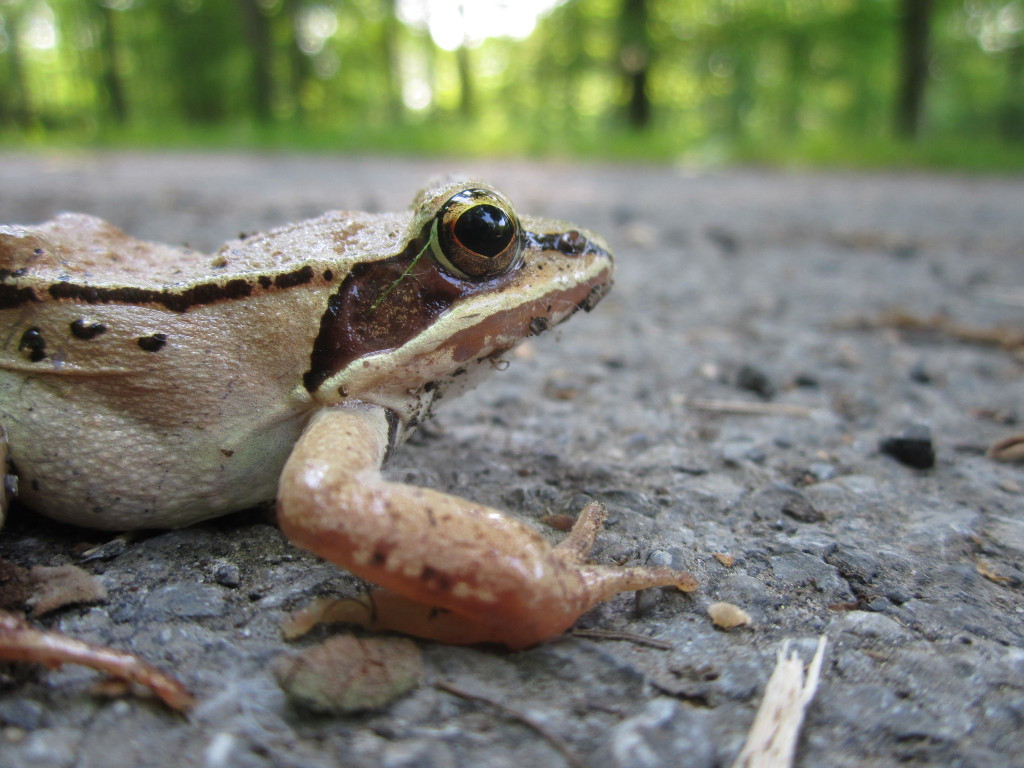
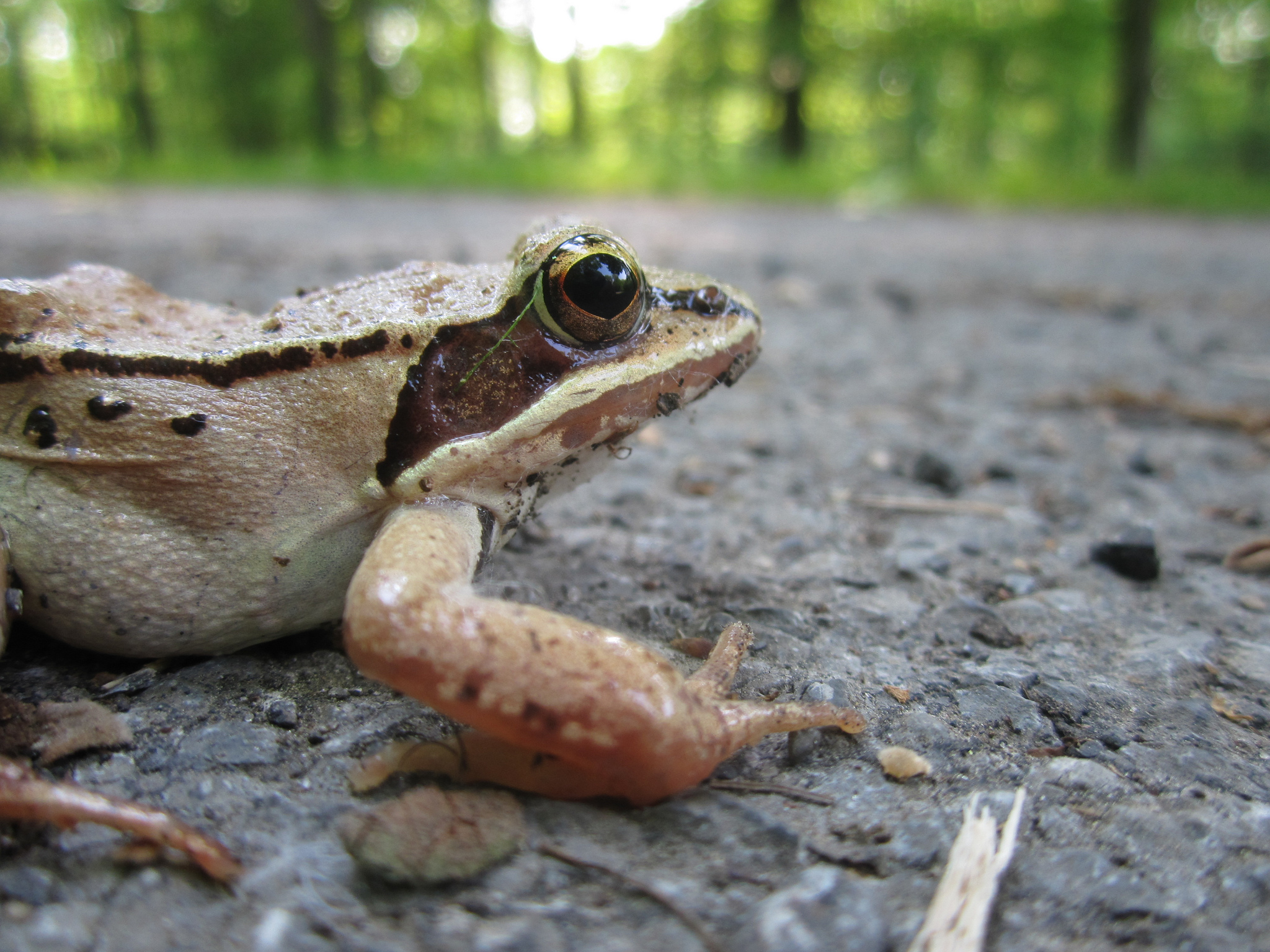
Here in the Northeast, after a long winter signs of spring have finally arrived. Many of us are tuned into budding plants and migratory birds. It’s also a great time to take a hike and observe the awakening of amphibian life.
Animals like spotted salamanders, spring peepers, and wood frogs spend the winter in forest uplands, burrowed in the soil or tucked among dead leaves and bark. Warming temperatures rouse the animals. When conditions are just right, they seek out the temporary pools that form in lowlands for courtship and breeding.
Amphibian mating events are short and busy. After snowmelt, animals wait for the first mild and rainy night, when temperatures are between 35 and 45 degrees Fahrenheit. Then thousands of animals descend from the forest to find woodland pools. Many amphibians are faithful to breeding sites, returning year after year to mate in the pools where they were born.
Vehicles are one of the greatest threats to migrating amphibians. On their journey from the forest to the lowlands, fragmented landscapes often force frogs and salamanders to cross roads. In suburban areas, and on well traveled roads, fatalities are high.
There are ways to minimize losses. Culverts can be installed under roads that intersect migration routes, allowing animals to travel beneath traffic. Monitoring data can be used to temporarily close roads or reroute traffic in sensitive areas. And citizens can act as crossing guards, encouraging drivers to slow down and assist animals across the road.
**********
.
Web Links
Amphibian Migrations and Road Crossings
Photo, posted May 25, 2012, courtesy of Ezra Wolfe via Flickr.
.
Earth Wise is a production of WAMC Northeast Public Radio, with script contribution from the Cary Institute of Ecosystem Studies.